Image
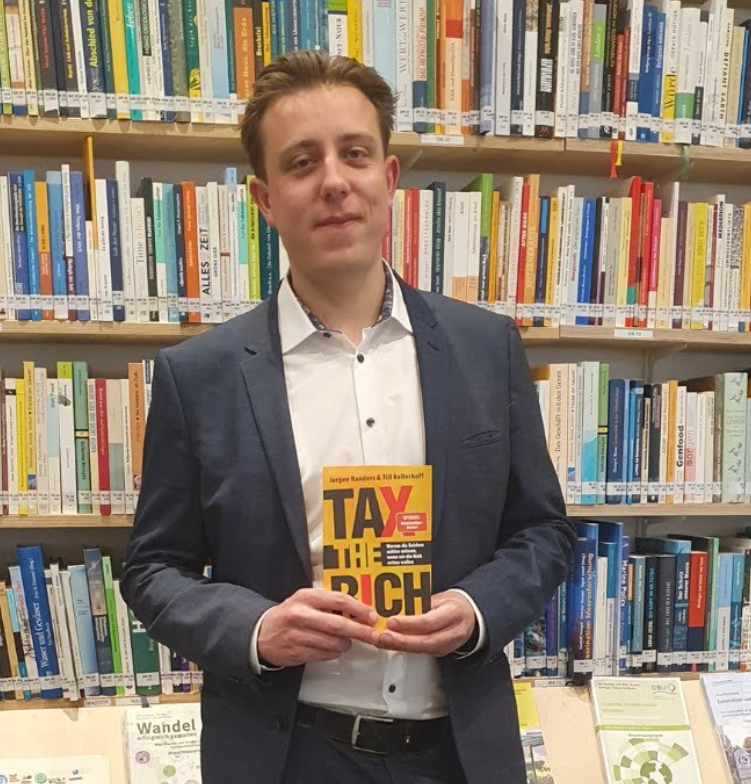
On Future Economies and Social Entrepreneurship, Yunus Erduran and Uygar Özesmi speak with Till Kellerhoff, Director of the Club of Rome and Earth for All, about the more than 50-year journey from The Limits to Growth to Earth for All; the climate crisis, inequality, just transition, and the need for systemic change; the future of climate policies ahead of COP31 in Antalya; and the five key transformations proposed to build a fairer, more sustainable economy.
Yunus Erduran: Hello and welcome to Next Economies and Social Entrepreneurship program here on Apaçık Radio. I'm Yunus Erduran and we are together with my co-host, Uygar Özesmi.
Uygar Özesmi: Hello.
Y.E.: Yes, as you know, every week we are talking about a movement of Next Economies in the world, and today we're going to talk about a story of 50-55 years, starting from 1972, a book called The Limits to Growth. That book warned the world that endless growth on a finite planet cannot last. 50 years later, we have another research project, survey, a report, and a book, Earth for All, and it set out a way forward to us from The Limits to Growth. Today we are going to talk about what has changed since and what it means as COP31 comes to Antalya, as we all know. Uygar, let us know who our guest is today.
U.Ö.: Yes, we are very privileged today. We have Till Kellerhoff with us. He's the director of content and programs at the Club of Rome and, at the same time, the director of Earth for All. It's one of the two very important initiatives of the Club of Rome and an international initiative working towards the well-being for all of us on this finite planet. He studied in Erfurt, in Mexico City, and the London School of Economics, and has been with the Club of Rome since 2017. He is a contributing author of Earth for All and the co-author of Tax the Rich and Earth for All Deutschland's publication. Till, welcome.
Till Kellerhoff: Thank you for the invitation, and looking forward to talking to both of you.
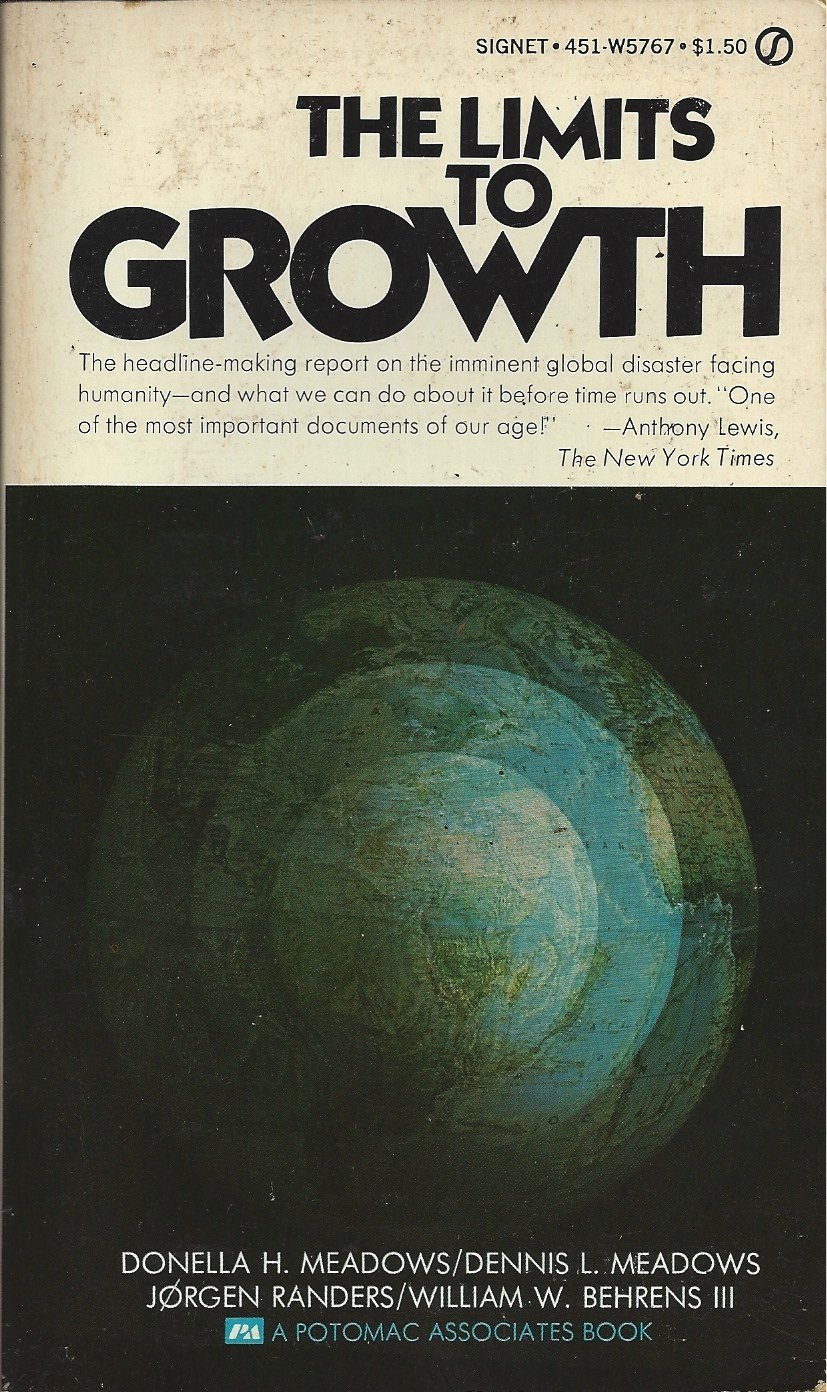
Y.E.: Yes, lots of things to talk about, Till, but let's start with the book, a very popular one, The Limits to Growth. At that time, the models looked at five dimensions together: population, food, industry, resources, and pollution. And at that time, the book clearly showed us that if the world continues pushing the boundaries, we are going to head to the wall. So, it was very clear, and 50 years later, you and your colleagues updated this work from another angle, putting more dimensions on the social side —well-being, inequality, social tension— and you came with proposals to change the course. And you also wrote that there are real reasons for optimism after 55 years of findings. So, looking back over these 50 years, what has genuinely changed for the better, and why hasn't that been enough to change direction for us?
T.K.: Actually, the reception of The Limits to Growth is probably just as interesting as the book The Limits to Growth itself, because indeed it was revolutionary back then. Based on a system dynamic model, trying to map the interactions and all of that before the times of big computing power, there were these big machines at MIT in Boston and the researchers trying to collect data from all different places in the world and put it into the machine and make a consistent story out of it. And indeed, you said that The Limits to Growth tried to map what happened if the world continued in the trends described back then. And that if is very important, because The Limits to Growth was not a prediction, it was a scenario analysis trying to describe different scenarios of which pathways could the world go. And as you ask about optimism, the authors back then, they were not super pessimistic. They didn't think The Limits to Growth was kind of a doomsday apocalyptic book. They were thinking that The Limits to Growth could shake people up and say: “Look, we are living on a finite planet. We can't have unlimited material growth. So, let's change course and let's go into a different scenario.” That was the starting point in '72.
But the book, of course, was rejected, ridiculed—particularly mainstream economists said “it misses the price mechanisms, therefore resources can't become scarce” and all these things. Dennis Meadows, one of the main authors, later said: “Millions of people thought we were right. Millions of people thought we are wrong, and very few people have actually read the book.” And I think that's a very accurate description because The Limits to Growth itself became kind of an ideologically loaded project. But what happened since then, I would say we see 2 different trends. On the one side, and that's not the positive story, we see that the environmental harm increased massively. In '72, we were not yet exceeding the ‘planetary boundaries’, as we would call it today, or the carrying capacity of the planet. It was still a warning that this would happen in the future. We are there today.
We know the concept of the planetary boundaries by Johan Rockström and his colleagues, where we now transgress 7 out of 9. We see the environmental harm in the world, and climate change and biodiversity loss and all the environmental challenges are not a project in the future or a warning in the future, but they are there. But you asked about optimism and there is indeed optimism. One, the kind of idea laid out by The Limits to Growth that we are living on a finite planet, that “unlimited material growth on this planet is not possible” found its way into the mainstream debate, I would say. The Limits to Growth was a first of a series of studies, reports, projects such as the Brundtland Report describing sustainability, but also the Planetary Boundaries Framework as we see it today, which is widely accepted. All of that found its way into international agreements such as the SDGs. At COP today, you talk about these things. We had a Beyond Growth conference in the European Parliament 2 years ago…
So, the ideas are out there. The interesting thing is also different to '72, today we do have the technology to solve the problem. If you look at the renewable energy aspect, the problem is not a lack of technology. Solar costs fell about 90% since 2010. It's incredible what progress is being possible there. So, it has really moved to a question of political will and of course our economic system, and we will talk about that. But I think it's this itself provides cause for optimism, that we know a different future is possible and the possibility itself, even if we don't see it implemented currently, I think is a positive contribution.
U.Ö.: All those things came out of the report, the book maybe, but if you look at, overarchingly, what's happening, the direction is still the same, right? Fossil fuels are still increasing in the amount. I mean, we just crossed this year, the seventh boundary: ocean acidification, from Johan Rockström's work. So, it is still going towards a disaster. Maybe we can't be optimistic in the sense, when we look at the trends, right? And to all of this, I think with Earth for All you're doing a fantastic thing, because you're not only saying “it's better research”, but it's really the people who will make that change.
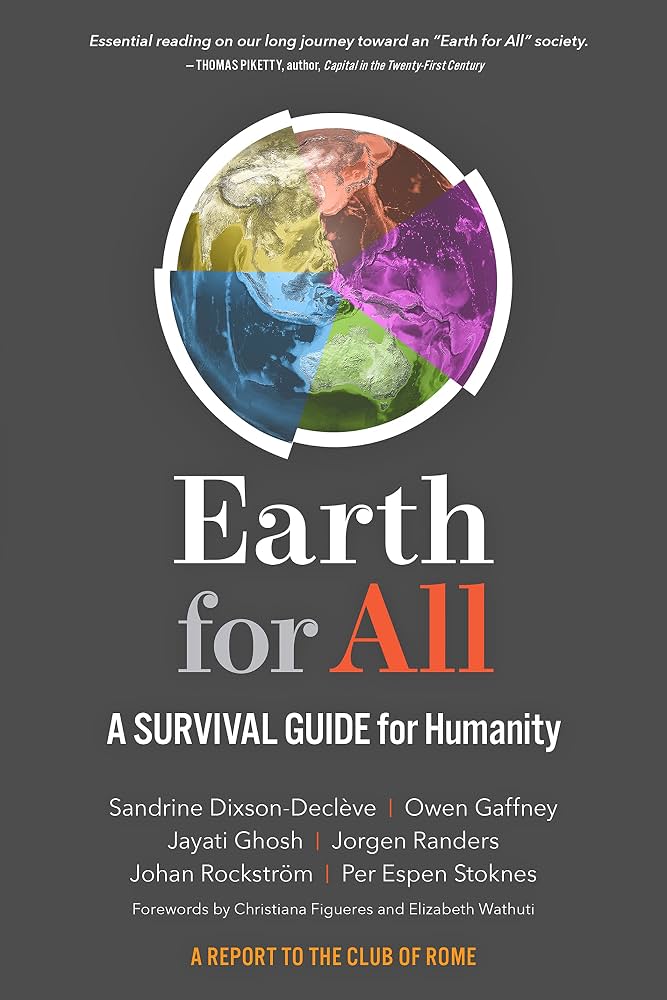
Earth For All describes its mission as advancing systems change through three things: science, new cultural narratives, and movement building. That is unusual for an initiative that drew out of the report, the Club of Rome, and your own survey also hints that 69% of the people want major changes to the economy. 69%, it's amazing if you think of it. Yet only 31% trust their government to deliver in the long term. So, 70% of the population essentially says: “this economy sucks”, they say it doesn't work. Why did you decide that research alone is not enough? And how is Earth for All going to build that movement, Till?
T.K.: I think it's learning from The Limits to Growth. That book was very good science, but it did shake the world in a certain direction. But the resistance and the not picking up the ideas and continuing with the trend, as you describe it, shows that what John Sterman later described as “science shows that showing people science doesn't work”. Just showing graphs and saying: “Hey, we have done the math, we have done the calculations, here's the direction, let's go for it”. That's obviously not been successful in the last 60 years. There needs to be different kind of mechanisms to do that.
And I agree with you, we should also not fall into naïve optimism. One reason for that, is that changing politics is always a struggle. It's always a fight. It's also about power; it's not about only the big ideas. Good ideas are useful and are the basis for change, but good ideas themselves, without the political struggle and without power, don't come into reality. So, we need to make sure that the ideas are also being picked up.
You mentioned the survey we published this year, together with Ipsos and partners—the first of a series—a survey on rebuilding trust. I think that's already an important aspect because we see in the survey that the mandate for change, in a way, is there: 70% say there's too much inequality, 65% say the system is rigged for the rich and powerful. But, as you also say, less than one-third trust their government to implement those changes. And we think that Earth for All, the book that followed The Limits to Growth 50 years later and is much clearer in the political demands across five different sectors, which tries to combine the ecological dimension and the social one. So, we talk about the political changes in the fields of energy, food, inequality, poverty, and empowerment; we think all of those have a participatory element, that people change power. People suffer under wrong politics, but people are also able to shape the politics in the right direction. And in that sense, Earth for All is very, very consciously, both a top-down and a bottom-up project. Top-down in the sense, of course, we need the right science, of course we need the political demands, we need to make sure that what we suggest is politically implementable.
But also, in societies where we see that trust is eroding, we see that there are not only ecological limits to growth, but also social limits to our economic system. Because we see that, at the moment, politics seem to fuel right-wing parties and polarisation. And building on that basis, we need to make sure to take people with us, as it's always mentioned, through fairness, through justice, through the right kind of political demands. And therefore, we said from the very beginning, it's a book, but the book is accompanied by a campaign, and the campaign is carried by people all over the world.
Y.E.: Exactly. You presented in COP30. So, let's slowly come to COP31 in Antalya. We're going to open in a couple of weeks, as you know. In the previous COP in Belém, Earth for All presented the first modelling for Brazil, right? So, the host country at that time was Brazil, and your report and campaign put trust and fairness at the centre of the climate talks. Another thing happened in 2024: The Club of Rome wrote an open letter on COP reform, saying that the process of COP is not working. It asked for smaller and more frequent meetings between countries, more accountability—especially for the rich countries, the North—and a real focus on poverty and inequality.
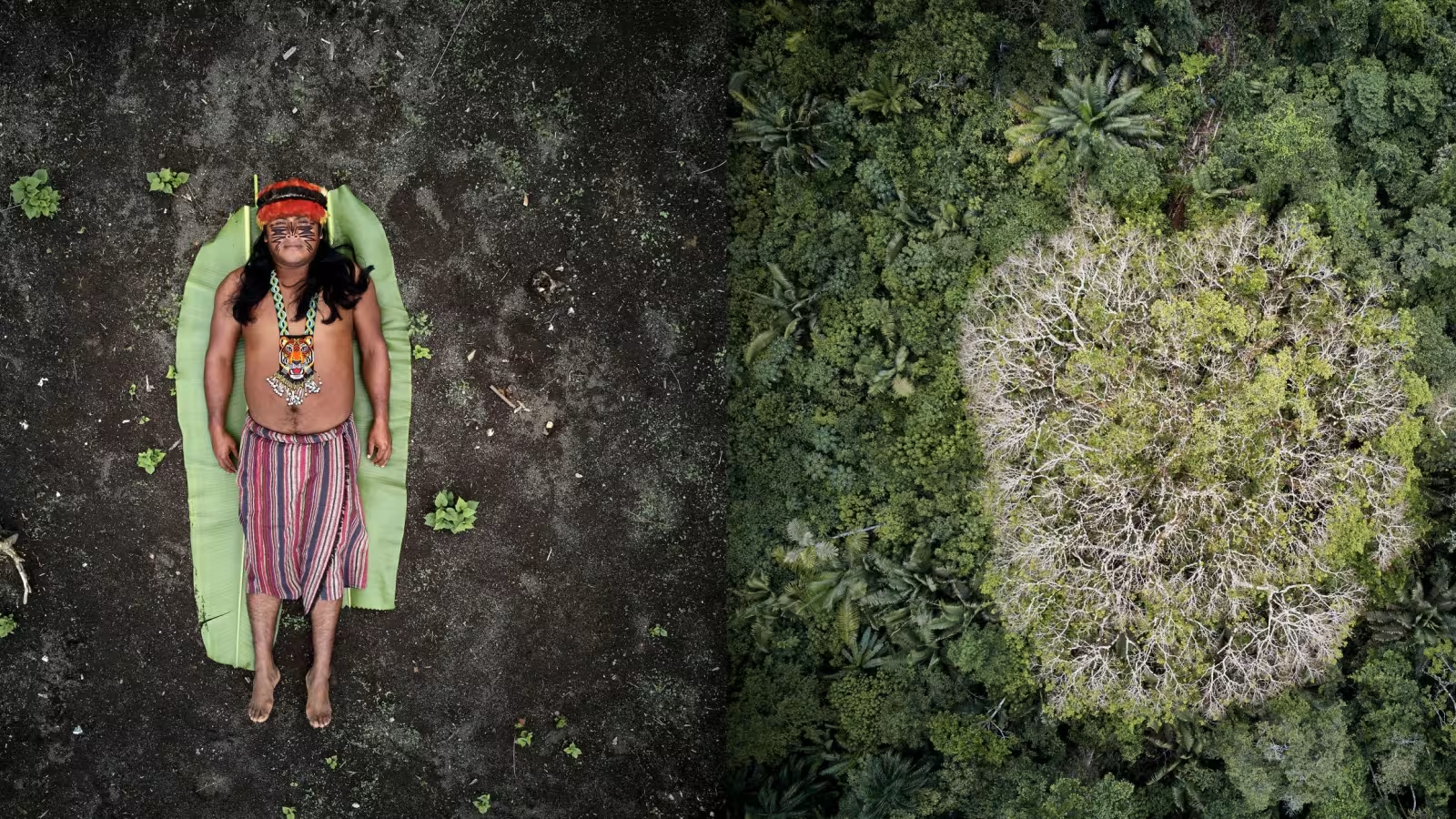
Antalya is coming, so all learnings from Earth for All, previous campaigns in different countries; I wonder what would you want Antalya to take from Earth for All's work, and why does the Club of Rome believe the COP itself needs to change?
T.K.: I think why the COP has to change is quite obvious if we look at the developments of the last 30 years. We saw a lot of ambition at different COPs, we saw a lot of goals; we saw a lot of nice photos of people coming together and suggesting changes, making agendas, plans. And we see, at the same time, rising CO2 curves, rising impacts of climate change and the ecological crisis that is unfolding. So, I think it's obvious to see that there is a mismatch between the ambitions, that very often are laid out correctly, and the implementation. And in that sense, I think it's correct to say that this COP must be an implementation COP. We need to go from just setting new goals, that are very often not fulfilled, to being able to implement that.
Admittedly, in the current political environment, this is, of course, very difficult. We have climate change deniers at the top of the US government. We have many governments pulling money out—even if they believe officially still in the causes of climate change—of climate payments to vulnerable countries, for example. The agenda is being overshadowed by many other things currently, such as the war and international geopolitical conflict. So, I think, out of this mismatch between the goals laid out at previous COPs and the implementation that we need to see, the Club of Rome indeed suggests changes to reforms, to the government structure of the COPs.
You mentioned some clear selection criteria for COP hosts, making sure that COPs themselves are not dominated by lobbying groups, but that it's a stronger emphasis on the science there. We saw at many COPs before that there were more gas and oil lobbyists than scientists. So, it's an important factor that this needs to be based on science. We also need to make sure that we have a robust tracking of climate finance, because we headed very wrong directions in the past where money to vulnerable countries was given as interest-bearing loans, instead of direct payments that now creates new dependencies. So, we also need to see COP as freeing ourselves from these dependencies and reproduction of patterns of dependency on the international level. And all of that won't just fall from the sky, all of that needs reforms in the COP process itself.
We have started this letter, with signatories such as Ban Ki-moon, Mary Robinson, Christiana Figueres, Johan Rockström, Jayati Ghosh… So many people coming behind that agenda, and both demanding that the plans and that the goals are being implemented but also asking for more ambition in certain directions. And you mentioned our Brazil report too. I think that's a good example because what we try to do with Earth for All, besides laying out some policy suggestions for the global level, is to zoom in and go deeper on country-level policies. And we have done the five turnarounds of Earth for All, an analysis in different countries such as Germany, Kenya, Austria, etc., but also Brazil. And this Brazil report indeed was launched last year at the COP in Brazil to show we have an international dimension, but also a national dimension, where we need to see what does the transformation mean for people on the ground. And in this case, Brazil as kind of the green lung of the world, of course, absolutely crucial. There, we noticed, through system dynamic modelling, but also through participation—working with scientists on the ground, including Carlos Nobre—that trust and fairness are amongst Brazil's most powerful climate tools. I think that's a message we need to always repeat. It's not that fairness and justice are moral high ground metaphors; we just want to be nice people and fair to each other. It also means we need fairness and trust in societies to be able to implement any kind of political goals of climate change, and if we don't have that, we don't have to talk about the climate goals themselves. So, this is so strongly connected and that's what we showed in the Brazil work as well.
U.Ö.: Till, you talked about the fossil fuel lobbyists in Brazil, in Belém. One report says that there were 1,602 such lobbyists on the ground in Belém. I wonder what's going to happen in Antalya, because if we are going to have that many fossil fuel lobbyists on the ground, how can we talk about fairness and representation? But let's look at Türkiye. The Club of Rome’s survey gives a snapshot of Türkiye going into COP31. So, 52% worry they won't be able to cover their basic needs next year. Yet trust, at the same time, the government will act in the long term for this because it's 39% and it's above the global average of 31%. If your idea of a new social contract where the cost of change is shared fairly, then, we talked about fairness. If it would come to the table in Antalya, how would it look like? What do you think would be the fairness that comes out of COP, that we could call a success, essentially.
T.K.: It is very interesting, this COP in Antalya. And you mentioned some numbers of the Turkey-specific survey. And it is an interesting case here because we kind of have an above-average climate mandate, but also an above-average cost of living anxiety at the same time. I think that is already a sign of this element of fairness that needs to happen. There are two elements that I see particularly important.
If we look at inequality in the world, we also need to look at who caused climate change and who is bearing the cost of it. And we see that, internationally, the top 10% of income earners are responsible for 50% of emissions. The top 1% of 17%, there is a huge inequality in the carbon emissions; while the people, particularly in low-income countries, are the ones suffering from drought, heat, low food production and all of that through the consequences of rich countries, that they have not caused. So, one element of fairness needs to be the implementation of all the goals that have happened in terms of climate finance for vulnerable countries. We have set out gigantic goals, but we have not fulfilled them. And I think it is important to hold countries accountable and make sure that countries understand that climate finance for vulnerable groups is not a question of moral, I would keep moral out of this. It's not a goodwill kind of thing. It's also an intrinsically security-related self-interest question; we can't just, in Europe, talk all the time about the migrant issue and building higher fences without recognizing that our policies lead to the fact that many people can't live in certain countries anymore, if climate change really hits.
U.Ö.: Some numbers say that 350 million climate refugees are moving from south to north. 350 million—this is just mind-blowing, isn't it? That is a security issue. That is a security issue for the refugees to start with, of course.
T.K.: Of course. And it is those people suffering- there is, of course, a moral responsibility here. But I also just want to say that I think it is in the self-interest to make sure that the world doesn't become an even more barbaric place and insecure for countries that can't protect themselves with higher fences. So, I think this international payment thing is important, but also, it relates to the general aspect of the transition as we have to see it, because of the transition out of fossil fuels. And you mentioned that at the beginning, we are still, although we expand a lot of renewable energy, in the phase of adding instead of moving away from fossil fuels. It's important to recognize that as well. While we see all the progress, it's still topping up.
One thing we have identified, in Earth for All and the Tax the Rich books, is that what needs to be done now in the short term is more expensive than business as usual. That doesn't account for the medium-term and long-term. Long-term climate change, even if you look at numbers, is way more expensive if you just let it go than making the measurements now. But on the short term, and our economic systems are very often built on short-term incentives, it is more expensive to implement the infrastructure, the pipes, the new energy grids, and all of that, to benefit from the cheapness of solar and wind.
That needs to be paid by the people who, firstly, can afford it, those who have mostly benefited from our economic system as well in the last years and decades—this is not the bottom 40%. And second, by those who have caused most emissions in the last decade. The fairness element here is crucial. How do we make the transition possible in terms of fair financing? Turkey in the survey also voted very highly for high taxes on wealthy people. It's an interesting number. It's important to put down that fairness matters more than technology, and this is important at that COP as well.
U.Ö.: Seems like where the Turkish public is of the same opinion with the Club of Rome on this.
T.K.: Yeah, in many countries people are of the same opinion.
Y.E.: That shows exactly that. I have the numbers here again, from the same survey. 68% of people who have joined the survey said that a wealth tax on wealthy people is needed. That's a huge majority. And additionally, 54%, they need support for strong climate action, even if prices are rising; thinking of current energy prices, etc. So, people are ready because the majority doesn't have this privilege, we know that. And they want rich to pay their fair share. So that is quite evident with the numbers as well. But again, Till, this climate debate often ends up on the household bill of ordinary families, whatever we discuss. Why do you think so?
T.K.: Because we approach this topic with the wrong economic ideology. I do think that this aspect of fairness and distribution and that climate policy has an intrinsic distributional component was not recognized by neo-classical economists, in a way of only thinking about efficient allocation, price mechanisms, fixing the debate for us—less state intervention as possible. Because if you have a situation where short-term investments are needed, the question is, who pays that? And indeed, very often it goes through higher energy bills to the average person, and that then decreases the trust in the transition.
If we approach the climate energy transition debate through an ideological mindset of: “Okay, we might have CO2 prices and try to internalize externalities, but we don't do any other subsidies or even state support for the people suffering with that”, then it of course lands on the people's household bills because people can't just switch so quickly from a combustion engine to an electric car if they don't have the finances to pay for that. If you look at the successful countries where they switched to e-cars, as an example, like Norway, they did heavily work with subsidies for a time to make sure that it doesn't end up on the plate of the low-income households. I think that is an important element, economic policy must go beyond some kind of framework and price-fixing capabilities, but to an active protector of low-income people. Therefore, we need a new economic mindset that enables us to do so, as well. So, I think the economic question is a crucial one.

U.Ö.: So, there's the issue of inequality, there's the issue of power, yes. Earth for All, though, proposes five big turnarounds: First, ending poverty. Second, reducing inequality. Third, empowering women and marginalized groups. Fourth, transforming our food system. And finally, the fifth one, switching to clean energy. Now, if I said that to the public, our listeners would probably think: “Wow, how do you do that? How do you change those five things?” How do we do that, Till?
T.K.: First, I think it is a lesson from '72 that, fixing just one variable shifts the pressure elsewhere in the system. If we look at one turnaround, look only at energy—it's like this frog game you might have played where you hit one with a hammer but then they pop up at a different place again. And that's the case here as well: if you just look at energy, it pops up at the unfairness of the household bill on the average household, as we just said. I think these five turnarounds are for us the description of how to achieve systemic change. We want system change, not climate change.
Some of you might know Donella Meadows, I would say the true author of The Limits to Growth; she spoke about places to intervene in systems. We need to look at leverage points in systems, where changes can have bigger effects on the whole system itself. And that is the goal with that, that through a combined and symbiotic approach to these topics, it becomes easier, not harder.
One example to make it more concrete: the resistance towards the energy transition in the population becomes lower if you tackle inequality in the same direction. It becomes easier to implement it. And providing fairness in terms of poverty makes it easier to implement the food turnaround needed. Because if people have to fight for their hunger, you know, Bertolt Brecht said: “First comes the eating, then comes the moral”, and that's true. You first think of what's on your plate, and then afterwards you think about what you can do better for the world. So, all these things are closely interlinked and interacted, you can't just untangle them. And even though it sounds big, they are mutually reinforcing and they make themselves easier to implement if you collect all of that at the same time. And therefore, we think the systemic approach is needed rather than siloed approach in this question.
Y.E.: Thank you very much, Till. Thanks a lot for joining us today.
T.K.: Thank you.
Y.E.: We had lots of important topics. The Limits to Growth told us where we were going 55 years ago, and now Earth for All tells us how to change the direction. So, we have five turnarounds. We have to work together, and the cost has to be paid fairly, is the message.
U.Ö.: Yes, thank you, Till. Having joined the Club of Rome this year, as a member, is wonderful, to be together with wonderful people like you, who are working towards a better world and thinking about it systemically, and I think that's really the crux of it. If we don't think systemically, we won't be able to make the changes necessary in order to have this new economy that we all aspire to. So, thank you very much, Till, for joining us.
For all our listeners, you can find us on the Apaçık Radio app and the website. Thank you for the whole team. Special thanks to Iraz, Erdem, and Zeynep as well. Take care.
Y.E.: We will meet again next week with another guest from a Next Economies Movement. Until then, goodbye and take care of yourselves.
U.Ö.: Goodbye.
T.K.: Goodbye. Thank you.