Image
On Hüsnükabul, Waseem Ahmad Siddiqui speaks with Claudia Neubern, director of the documentary Missing Rio Doce, about the devastating impact of the 2015 mining dam disaster in Brazil on the Rio Doce River and surrounding communities, the struggle for justice and resistance of those who lost access to water, land, and their livelihoods, and the vital connection these communities maintain with the river.
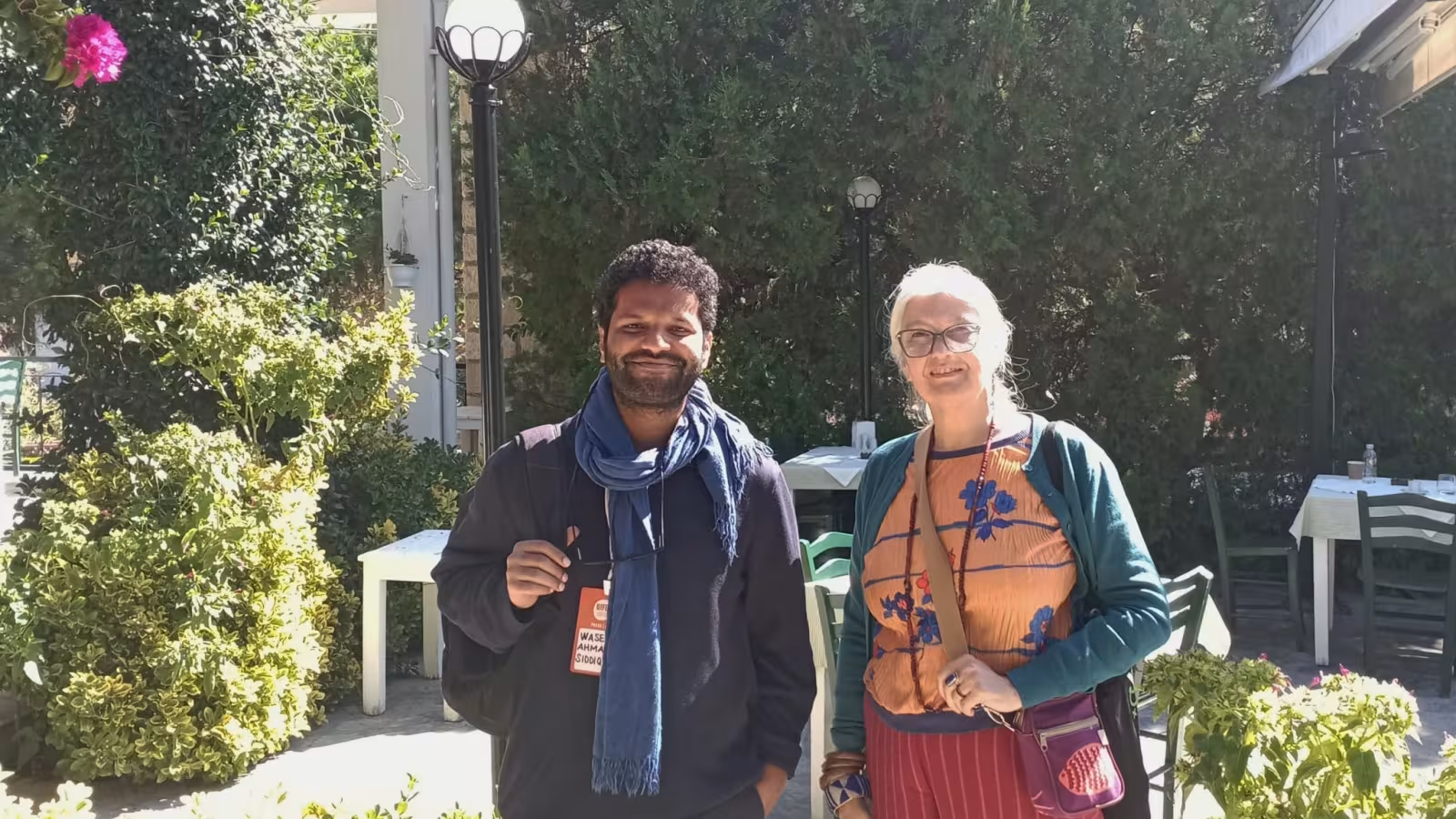
Waseem Ahmad Siddiqui: Director of Missing Rio Doce, Claudia Nauben, is with us today. We are at the 4th day of Bozcaada Film Festival. Claudia, thank you for being with us. May you first very briefly introduce yourself and also where are you coming from?
Claudia Neubern.: I am from Brazil but I've been living in France for 20— no, 30 years. And I began in fiction films, not like a director, but I was a script supervisor before. After, I changed to my own documentaries, and I'm a director from documentaries.
W.A.S.: On November 5th, 2015, a toxic mining dam collapsed Collapsed in Minas Gerais, Brazil. 40 million cubic meters of sludge flooded the Rio dock, pushing pollution 650 kilometers straight into the Atlantic. It remains the worst ecological disaster in Brazilian history. Please give us the historical context. What makes this ecological disaster worst in Brazilian history?
C.N.: It's not an ecological disaster in the means that it was provoked by manmade industry. It's not natural or natural disaster. It was very important because the river, I would say, 650 kilometers until the ocean, from the mine until the ocean. Most of the population, in the riverbank, they live with the river, with the resources from the river, like fishes, like water to the agriculture. And the problem after because they take the water to prepare their meals before, not now, because now water is forbidden for long years. We don't know when it will be possible again, if it will be possible again. I don't know exactly how much people it effected but perhaps 1000 people who lives in this valley until the ocean, you know. Um, but it's a small, small city. Not one city between the dam and the ocean. Just one city 3,000 million, 3,000 million people. And the other, it's small cities until the ocean.
Then the problem is mostly with people lives in the riverside. Because people live along with health problems and problems with the the agriculture. Yes, it's important. That's why it was very important, because the soil was contaminated by the dam, by the flush.
W.A.S.: Yesterday when I was watching the documentary, what I have seen that especially after this disaster, people, those who were living there, they were not even able to use the soil for their everyday lives. Their whole amount of farming, and soil, it's almost gone, no?
C.N.: Yes, that was a big problem. That is a big problem until today because the water goes inside the soil and it's completely unable to grow up vegetables or something like this. Then That's a big, big problem because people, they don't eat what they grow up in the soil.
W.A.S.: Now I want to speak about the peoples of this land. I believe they are the indigenous peoples who lives there. It seems that these peoples are very strengthful and they have the power of resistance. I want to ask you, how was your first impression when you saw this kind of life? in this part of the place, which is Minas Gerais. Tell me about your first impression when you saw the resistance of the people.
C.N.: I was looking for their resistance and to find this kind of people, but I was surprised to discover a lot of people in resistance, all the path until the ocean, different resistance for the different reasons. Because of course about the water, everything is about the water, but fishermen has a problem, agriculture another problem. Common people have problems with their health. Then everybody has the problems, different problems, comes from the relationship with water because they need water, this water, this river. They need. The skin problems, because they used to take shower with this water and now it's forbidden. Everything is forbidden.
W.A.S.: And what I also have found very much important that these peoples are struggling until today.
C.N.: Yes event, 10 years after.
W.A.S.: After 10 years also. So I want to also ask you, about how they are coming together. because I see in the movie they are coming together and they speak about the problem and solutions. It is a very different kind of methodology. Peoples, when themselves come together and speak about the problems of the land and the solution, I believe it is more correct way of finding the solution. Could you speak about their, way of life and when they were coming together, what kind of problems and what kind of solutions they were speaking about? Because I saw that in the movie, they used to sit in the room, 5 or 6 people,
C.N.: Each of them are family. They speak together in the house, outside in all the film you see people together. People speaking about the problem and the solutions, but who listens to them? That's the problem, the main problem. Because the government, for example, they listen, they listen to them, but they said, okay, okay, I under— we understood, we understood, but nothing happens after that. Yhe government and the companies, the companies, because the companies are our awareness. Awareness— they caused a big problem, a big problem for a lot of people. And they know that. But they say to you we listen to you and your problems and we will take care. When? When? That's the problem.
W.A.S.: The government is not taking the action. And they are not even listening.
C.N.: They are doing very little about the enormous, enormous, enormous catastrophe. And they did, they do little, little about that. But it's not enough. It's not enough.
W.A.S.: It's not enough. Exactly. But what I saw in the movie, they were not even allowed to protest.
C.N.: Yes, because the policy was there. Because we are in Brazil, we are a country, we have corruption. And the policy is not there for the poor people. They are defending the companies. They are defending, but not to say, they don't say, we are here to the company, but certainly they have money Outside, you know? And it's very complicated to manage because they say, we are here for you, for the poor people. He is— they are in the— saying, it's not good. We need help. You need to help. The policy, someone do things, the companies must pay us, to pay our damage. But it's impossible to discuss, to discuss with them.
W.A.S.: I have 2 questions more. Yesterday I asked you, after the movie, I asked you about specifically that the peoples, when they were explaining their life, they were explaining as a victim. They are victim because they have lost each and every aspect of the life.
C.N.: Yes because I said their life is in communication directly with the river. They need the river. They live with the river.
W.A.S.: They are claiming that river as a reference of life, protecting life.
C.N.: Yes.
W.A.S.: In fact, in the movie, the woman said that we are the peoples of the resistance. Tell us, to what extent they have claimed the life and the justice.
C.N.: After 10 years. The scientific people say we need to wait. Maybe it must be— we need 3 years, for example. A lot of time, because we don't know exactly when, when, because the river is so big. It's difficult to imagine how we can repair that. And then one day, but we don't know when.
W.A.S.: It's a deep sense of uncertainty. You don't know.
C.N.: Yeah. You don't know. And for the people who live there, There is the same. That's the problem.
W.A.S.: Yes. And it's very hard emotions, actually, to— waiting, only waiting.
C.N.: And generations after, my son, my daughter, I don't know. I don't know. And the people stay there. They stay there because they are with the parents there, the family there. then it's impossible to move away.
W.A.S.: Last question, I was very touched when the woman sitting with other people and using the card.
C.N.: Yeas, a playing card.
W.A.S.: A playing card.
C.N.: Yes, I did that.
W.A.S.: You did that?
C.N.: Yes. It didn't exist before. I did that to discuss with the people because I know it was interesting to put together people they know about the problem. And I'm not from there, this place exactly. And I don't know, I'm not suffering directly the problem. It was empathy, if I say something because it's more interesting. interesting to give them the word. Yeah, the word.
W.A.S.: And yes, giving the word, it's a very important sentence you used. I just want to come back there. The woman asked about home. Where is home? And she asked, where is home?
C.N.: The main character?
W.A.S.: Yes, the main character. And she respond the home is where our river is. Your final thoughts?
C.N.: For them, it's that. That's what I learned. And I understood it's the river for them, it's the life, it's the future, it's all possibilities because they live with the river and they love this river. And the river is part of their memories. It's completely polluted.
W.A.S.: Polluted?
C.N.: Today, because they used to do barbecues near the river on Sunday with the family, with some other peoples from the family coming there to— that's the life. That's the life.
W.A.S.: Director of Missing Rio Doce, Claudia Neuburn. She was with us today. Thank you so much for being with us.
C.N.: Thank you for listening me.