Image
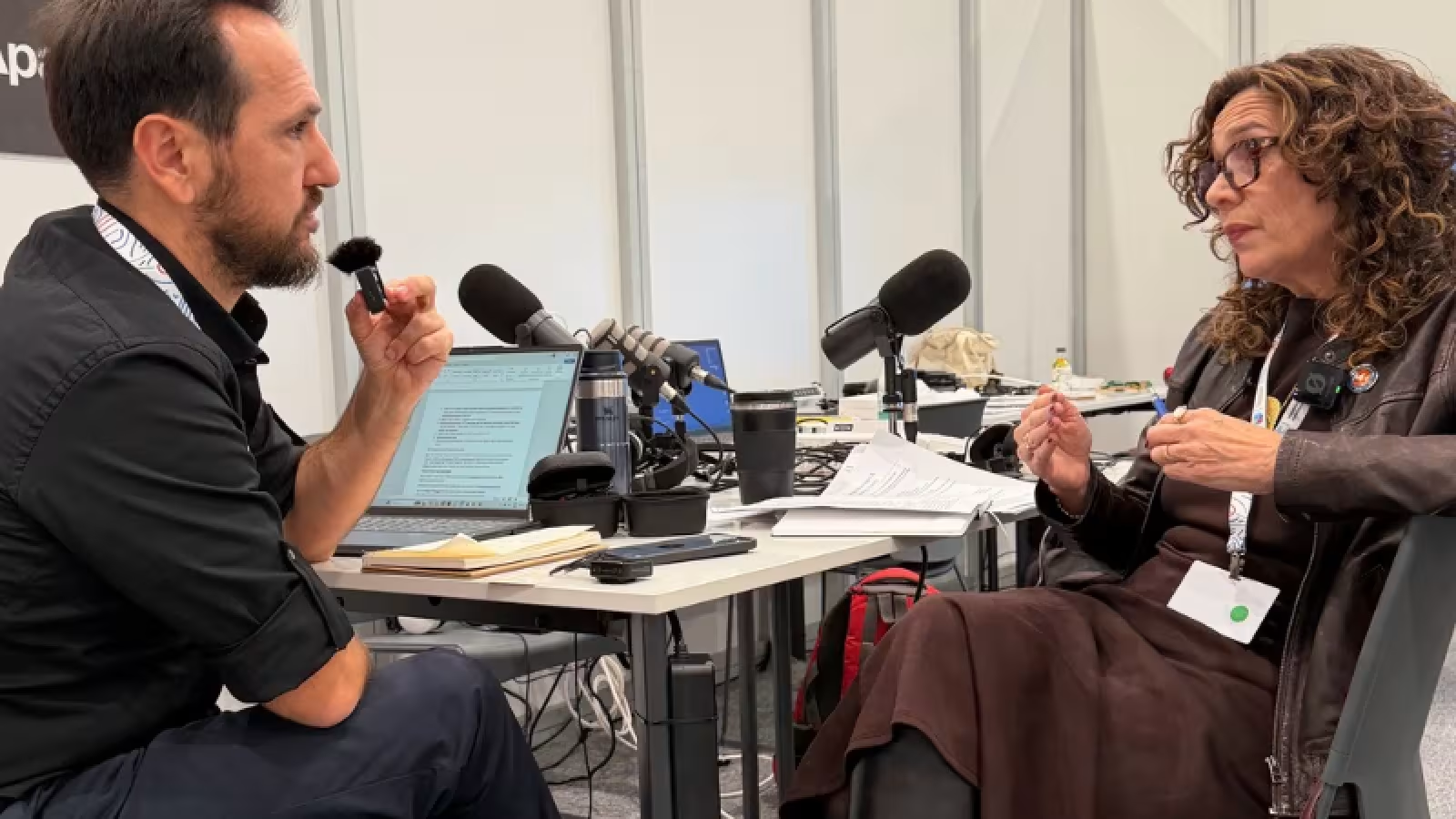
In the COP31 Climate Special Broadcast, Özdeş Özbay speaks with Tzeporah Berman, founder and chair of the Fossil Fuel Non-Proliferation Treaty Initiative, about the importance of international cooperation in phasing out fossil fuels, the Santa Marta Process, Brazil’s Global Roadmap, and the Just Transition Mechanism. They also discuss expectations for COP31, limiting fossil fuel production, and how natural gas has become one of the obstacles to the energy transition.
Özdeş Özbay: So now we are joined by Tzeporah Berman, Chair and Founder of the Fossil Fuel Non-Proliferation Treaty Initiative. Thank you for being with us today.
Tzeporah Berman: Thanks for having me.
Ö.Ö.: Let's start with the Fossil Fuel Non-Proliferation Treaty Initiative. How did it begin? What is its purpose, and who is involved in the initiative?
T.B.: The initiative started about six years ago, in part because a group of us—lawyers, diplomats, and advocates—realized that for 30 years, well, now 31 years, we've been negotiating on climate change, but really only negotiating around emissions targets, demand reduction, and pollution. But our governments haven't been setting any limits on how much fossil fuel can be produced.
So we're actually on track to produce 120% more oil, gas, and coal by 2030 than we can ever use if we want to meet the goals of the Paris Agreement.
The Fossil Fuel Treaty is designed to complement the Paris Agreement and help countries cooperate on phasing out fossil fuel production and use. And in some ways, it's almost impossible for many countries to do that at the national level because international structures and systems are forcing them into more fossil fuel production. Some countries are drilling for new oil just to service their debt.
And so that's what the countries currently at the Fossil Fuel Treaty table are looking at: What are the ways they can cooperate to remove the barriers to phasing out fossil fuels?
Ö.Ö.: So who is involved in the initiative? Are they NGOs, or are there countries involved as well?
T.B.: It started as a civil society initiative. In the first year, 101 Nobel laureates endorsed it, along with 4,000 scientists. Then cities started passing motions calling on their governments to support the initiative. We now have 200 cities around the world that have done this.
Ö.Ö.: Could you please give us a few examples? Do you have any in mind?
T.B.: Oh, everywhere from Vancouver to Calcutta, you know, all over the world, city governments have passed motions. But now we actually have over 25 countries sitting at the table, working on the design of a fossil fuel treaty.
So we have many of the most vulnerable countries on Earth, including nations from the South Pacific, which were the first to form a bloc of nations working on a fossil fuel treaty. Countries like Vanuatu, Tuvalu, and Fiji.
But then we started to see some fossil fuel producers come on board as well. Countries like Timor-Leste and Colombia, which said, you know, we're producing fossil fuels, but we know that we're making the problem worse. However, we can't stop unless there's more international cooperation and agreement.
In the last couple of years, we've had countries join from Southeast Asia. We now have Cambodia and Pakistan at the table. So the bloc is growing. We're now seeing more participation from African nations as well.
Ö.Ö.: That's very important for us, actually. We've been following the COP summits for a long time, and this year is quite special because the Coalition of Willing Countries came together in Santa Marta. As far as I know, your initiative was there as well. So what is the relationship between the Coalition of Willing Countries and your initiative?
T.B.: The idea of having a diplomatic conference outside of the UN framework on phasing out fossil fuels actually came from the Fossil Fuel Treaty Initiative. We looked at history. The Ottawa Convention, which Canada hosted outside the UN framework on landmines, was absolutely critical in breaking the deadlock on landmines and led to the Landmine Ban Treaty.
Because sometimes there are issues that have become intractable within the UN framework, and certainly within the COPs, the consensus-based rules have meant that any country, like Saudi Arabia, which has frequently blocked any conversation on fossil fuels, can prevent progress.
So we had this idea, and we proposed it to the countries at the Fossil Fuel Treaty table. Colombia was the first country to raise its hand and say, "You know what? We want to do this. We'll host it." And then, in Belém, the Netherlands joined as co-host.
At that point, the conference became much bigger than just a fossil fuel treaty. A fossil fuel treaty is one of the solutions being discussed. But these conferences—the one that happened in Santa Marta and the second conference that will be hosted next year by Ireland and Tuvalu—are not negotiating spaces.
They're really about coalitions of the willing, plurilateral and multilateral coalitions forming around different issues related to fossil fuels, including subsidies, tax agreements, international cooperation, new legal governance, and a treaty.
So the treaty is now one part of a much larger conversation about phasing out fossil fuels. And as you said, 57 countries came to Santa Marta, and that coalition is growing. We expect more countries to participate next year.
Ö.Ö.: And maybe some more countries will join this initiative here as well, or next year?
T.B.: I think we'll hear from the host countries that more countries are joining the initiative. The fact is, I think what's happened is that the conference in Santa Marta, the Fossil Fuel Treaty Initiative, and many others have kicked open the door, or in some ways pulled back the curtain, on the issue of fossil fuels, which wasn't really a main topic of discussion in the climate negotiations.
And now we're seeing new initiatives emerge from the Santa Marta process. We're seeing more countries join the Fossil Fuel Treaty Initiative, but we're also seeing initiatives here at COP, like the Brazilian roadmap, and more countries announcing national roadmaps for phasing out fossil fuels.
Ö.Ö.: So I'm going to come to the Brazilian roadmap, actually. But before that, you know, the countries that came together in Santa Marta are now a group trying to push things in this direction at the COP summit. How do you think they will influence the outcomes of COP31?
T.B.: I think these countries are already having an impact because they're increasing climate ambition. They're making countries really take a hard look, not just at their promises or their targets, but at what they're actually doing on the ground.
I think increasingly what we're seeing is a lack of tolerance for countries announcing new fossil fuel projects while saying that they are climate leaders. And that shift, almost a shift in social norms, is absolutely critical because what we build today will be what we use tomorrow.
And for too long, we've had countries saying, "Yes, yes, we're going to phase out fossil fuels," but then announcing that they're going to build more fossil fuel projects. The atmosphere can't afford it, and we can't afford it.
Every new fossil fuel project will cost lives now. We know that. There is a direct correlation between the lethal heat we're experiencing on the planet, the floods and fires, and fossil fuel projects.
And so, while climate policy is complicated, what's not complicated is that three products—oil, gas, and coal—are responsible for 86% of the emissions trapped in our atmosphere and the extreme impacts we're seeing on the planet.
And I think that shift is changing ambitions significantly. What I hope is that here at COP, it will make more countries commit to, for example, making the just transition mechanism a reality.
So the mechanism was created last year in Belém, but countries have yet to actually create frameworks for it, ensure accountability, put more money on the table, and set guidelines for what that looks like.
And so I think progress can be made here at COP on the just transition framework. We can also see countries strengthening their own nationally determined contributions and starting to include fossil fuel phase-out roadmaps. And I think we will see that here at COP.
Ö.Ö.: All right. You know, every year at the end of the COP summits, there's a debate, especially about the wording around fossil fuels. They were never mentioned until Dubai, when they were mentioned for the first time, and then they weren't mentioned again.
Do you think that, after Santa Marta, this still matters? I mean, does explicitly mentioning fossil fuels in the outcome text of this summit still matter, or have we moved beyond that, given that some countries have already started developing roadmaps and are coming together to take practical action?
Some believe that it doesn't matter anymore because we've already taken some steps beyond that stage. Do you agree with that?
T.B.: Look, I think the fact is, given where we are right now, it all matters.
Ö.Ö.: Yeah.
T.B.: But we know that there are structural problems, like consensus-based decision-making here, that make it impossible for fossil fuel phase-out or meaningful wording on fossil fuels to be included in the agreement here at COP. And I think we've been banging our heads against the wall for 31 years.
Now, most of the hope for addressing fossil fuels lies outside this process, in creating new agreements and through the diplomatic efforts taking place as part of the Santa Marta process. Those new agreements could come back into the UN framework in the future.
Ö.Ö.: Yeah.
T.B.: And I certainly hope they will. But whether or not the outcome text includes "fossil fuel phase-out," given the fights that have gone on for the last five years—actually, six years, because that fight started in Glasgow—I don't think we're going to see meaningful, negotiated text on fossil fuels here. But I think that's okay because of the new hope we have in the diplomatic process taking place outside of this process.
Ö.Ö.: Okay. You already mentioned Brazil's global roadmap. What's your opinion on that?
T.B.: I think the Global Roadmap is really important because it's setting out a direction of travel. And it's incredible leadership from Brazil, especially after the disappointment in Belém. You know, when the formal process wouldn't recognize it, Brazil continued to move forward, and I certainly applaud them for that.
I think the guidance they've put forward in the roadmap is helpful, but it's not binding. It doesn't set any targets. It's helpful guidance, but it only matters if countries commit to the policies and mechanisms that the roadmap describes.
So, in some ways, the Brazilian roadmap leaves each country to write its own plan, and we'll go further if countries collaborate. There are many countries that can't write a roadmap or a national plan for fossil fuel phase-out because they're expanding fossil fuel production due to crippling debt.
So we need that international cooperation. We need some new tools, especially new legal governance. And that's how we'll get a global roadmap.
Ö.Ö.: And do you think other countries will follow Brazil's lead? We've heard that some countries are planning to develop their own roadmaps.
T.B.: Absolutely. We're going to see more countries announcing their own national roadmaps, and certainly every wealthy Global North nation should be doing that on its own.
Ö.Ö.: Yeah.
T.B.: And we're also seeing more countries join the Santa Marta Process and the Fossil Fuel Treaty Initiative because they would like to phase out fossil fuels, but they need international cooperation on trade, tax agreements, and debt in order to make that viable.
Ö.Ö.: And one last question about the just transition mechanisms you already mentioned. You said that they were established at COP30, but there's still some homework to be done at COP31. So, in practical terms, what should these just transition mechanisms look like? What was discussed in Brazil, and what outcomes do you expect on this issue at COP31?
T.B.: What was discussed in Brazil, or what was actually agreed upon in Brazil, which was really exciting, was the creation of a new institutional mechanism on just transition.
But now, here at COP, we need agreements on how the mechanism will work to support countries that want to advance a just transition. We need resources, we need to define best practices, and we need to create standards and expectations for just transition.
I mean, let's be clear. There are just transition plans out there that have been released over the last several years that include expanding fossil fuel production. Well, it's not a transition if you're building more of it.
And so we need those standards, frameworks, and expectations to establish a common definition.
Ö.Ö.: As you know, some countries consider natural gas a transitional energy source.
T.B.: Well, maybe 15 years ago. You know, a lot of people used to say that gas was a bridge fuel. I think now it's a barrier to the transition because the fact is that we're seeing new gas and LNG projects displace renewable energy development. And now we know, as a result of methane satellite data, that gas is far worse for the climate than we ever thought.
Ö.Ö.: Okay. Thank you so much for being here. We've been speaking with Sephora Berman from the Fossil Fuel Non-Proliferation Treaty Initiative. Thank you again.
T.B.: Thank you.
Who is Tzeporah Berman?: Tzeporah Berman is a Canadian environmental activist, author, and climate policy expert who has spent more than three decades advocating for forest protection, the phase-out of fossil fuels, and climate justice. She is the International Program Director at Stand.earth and the founder and chair of the Fossil Fuel Non-Proliferation Treaty Initiative. A leading advocate for a just and planned phase-out of fossil fuels, Berman was named to TIME's list of the 100 most influential climate leaders in 2024.