Image
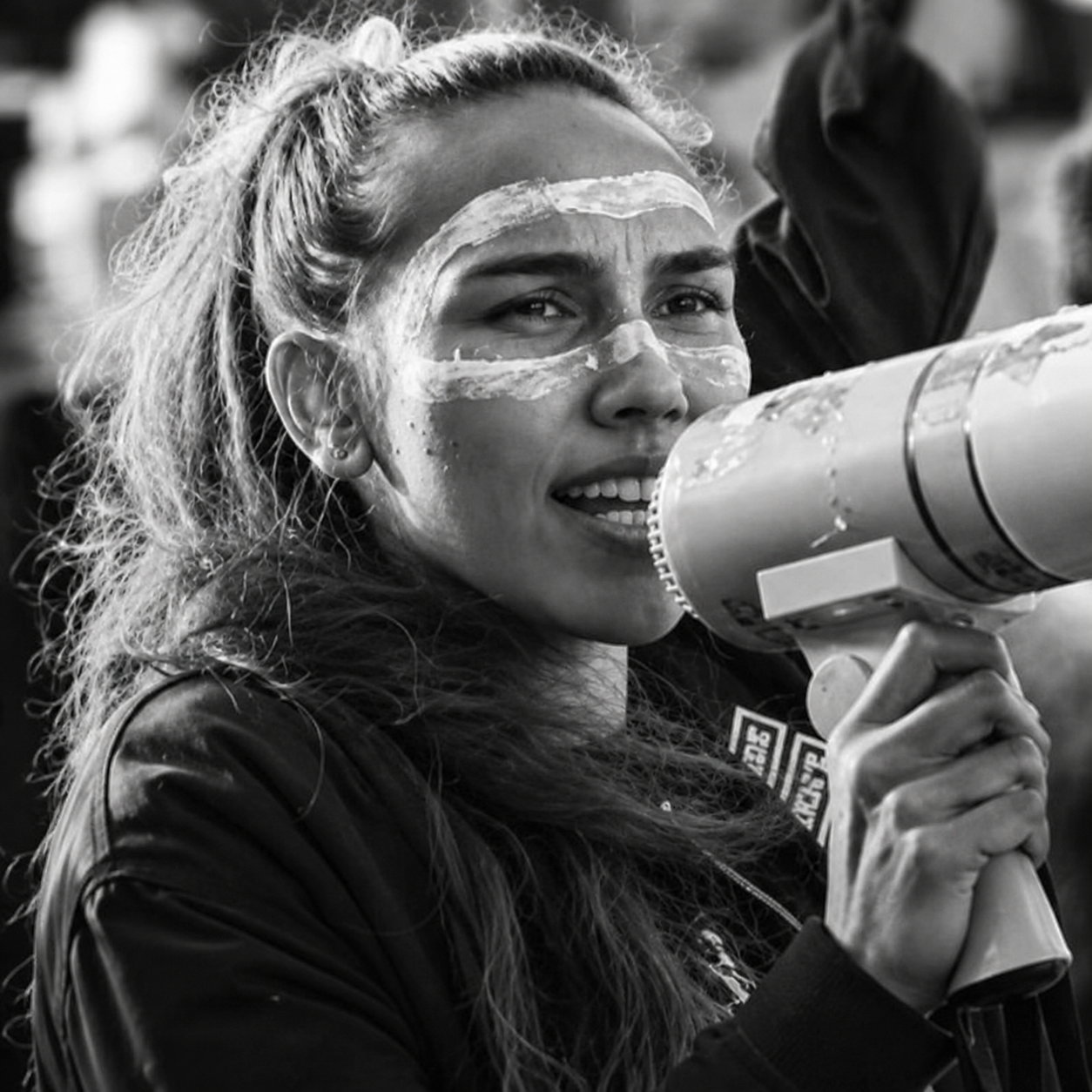
As part of COP31, we speak with Tamika Sadler, an Australian Indigenous rights and climate justice advocate, about the contradictions in Australia’s fossil fuel policies, Indigenous peoples’ rights to their lands, the impacts of natural resource exploitation on communities, the importance of traditional knowledge and food sovereignty in tackling the climate crisis, and the call for solidarity and collective action for future generations.
Eren İleri: Hello. So, for my first question, we've been asking everybody this: Can you introduce yourself and the work you do?
Tamika Sadler: Yeah, definitely. My name is Tamika Sadler. I am a Gubbi Gubbi, Torres Strait Islander and South Sea Islander woman. So I am Indigenous to so-called Australia. I am here at COP31 working with Indigenous communities from Australia to amplify our voices, knowing that Australia has the presidency of negotiations role, and to share our stories of strength and resilience, as well as stories of solutions that our communities are actively implementing where our governments aren't helping communities on the front lines of climate disasters.
How can we, as Indigenous people from Australia, unite with other Indigenous people globally and imagine what's possible when we have self-determination over our own lands, waters and skies?
E.İ.: Thank you so much for being here and coming on Apaçık Radyo. Australia, so-called Australia, is a colonial state, also holding the presidency of COP31 negotiations despite its seeming addiction to coal. What do you expect from this presidency?
T.S.: Yes, well, Australia has had this Frankenstein role going into COP31, where we're hosting the negotiations. I guess what we've seen over the past week is Australia and Türkiye having these formalized roles, attending summits and being able to talk to a breadth of civil society, Indigenous people and young folks.
I think what we're really seeing, from the Australian standpoint, is how weak and divisive our governments are. Going into this COP, the Prime Minister of Australia, Anthony Albanese, and the Minister responsible for negotiations, Chris Bowen, made really big commitments to amplify the Pacific region, put us on the map and show solidarity with small island states facing extreme climate catastrophes.
I think what's been missing from that conversation is what's actually going on in our own backyard, on our continent, and Australia's responsibilities to its people and to First Nations people. We need to talk about the severe climate issues happening in our own backyards before we start branching out and talking about ourselves collectively as a region. Because what we've seen here is that there aren't many Aboriginal and Torres Strait Islander perspectives represented on the ground at COPs.
The way this COP is going to influence Australian domestic politics is going to be significant. If we don't start having frank conversations about climate change, our commitments to the Paris Agreement and keeping 1.5 degrees alive, we're going to start seeing some really devastating impacts on First Nations communities and small island states.
E.İ.: In terms of relationships with First Nations, what is the state of free, prior and informed consent in Australia? What is the state of extractivism, and how is it affecting your communities?
T.S.: What we've been seeing with Australia's role here at COP is that the government wants to make grand commitments to climate solutions, climate finance and ocean protection. What we're actually seeing, though, is that over the past couple of weeks while we've been here, and in the lead-up to COP, Australia has been approving at least eight fossil fuel extraction projects, I believe.
That's completely shameful because of the role we're playing here at COP and the influence that's going to have on other states as well. It's also contradictory because you can't say, as a government and as the head of negotiations, that you're doing your best to solve the climate crisis when you're doing the opposite and completely going against the values that Indigenous people have been advocating for.
E.İ.: You're also here to connect with other Indigenous communities, Indigenous delegates and community leaders who are trying to get their voices heard. What are some common messages and demands that you've been hearing from fellow Indigenous people from around the world?
T.S.: I think, for us as a collective of Indigenous people, you can't have climate solutions without Indigenous rights being at the center of these conversations.
When we're talking about free, prior and informed consent, Indigenous people have a connection to their ancestral lands, waters and skies. All of our traditional communities have said no to extractive industries, and yet our wishes are being completely disregarded.
I think we're also witnessing a changing understanding of how Western science and traditional knowledge complement each other. We see these Western systems of extraction polluting our planet and threatening the viability of life on Earth. Yet, in these conversations, Indigenous people are being heavily relied upon for their cultural knowledge to solve issues they didn't create in the first place.
E.İ.: Not to ask you to solve these issues, but what are some Indigenous climate solutions that you think can inform how people in the Global North approach the climate crisis, and also help communities build resilience, resistance and systems of support?
T.S.: I think there are many ways that Indigenous communities are already organizing and working together to be better prepared for the climate crisis. Because, again, we see governments and states that have access to funding and resources, but those resources are only redistributed once something extreme has happened to our communities. Often, that is too late for us and for our ability to survive and remain on our lands.
What I'm hearing and have started seeing is that people want to take back authority, particularly cultural authority, over their lands. What does that look like? It could mean traditional forms of governance. It could mean driving systemic change through language revitalization.
I also think food sovereignty and bringing traditional food systems back into our communities are extremely important because we're seeing so much pollution from agriculture affecting our water systems and the landscapes around us.
There are so many easily accessible solutions that I think these colonial states are simply turning a blind eye to. When we come together as Indigenous people from around the world, we can share these stories of strength and solutions, but also build solidarity and support one another when times get tough.
E.İ.: It's not lost on us at Apaçık Radyo that part of colonization and genocide is ethnocide and cultural erasure. Is there a cultural practice that's particularly close to your heart that you'd like to share with our audience? An open practice, obviously.
T.S.: I think, for myself, as a Blackfella from a small community, it's really important to recognize the work that my family and my elders continue to do.
Sometimes, when you come into these bigger international climate conversations, it's really easy to walk away feeling disheartened, like you have the weight of the world on your shoulders, especially as a mum.
I have two young boys, and I often think about how I can do my very best to ensure that they have access to the same things I did as a child, if not more. I want them to be able to grow up in their community, have clean, safe drinking water, breathe clean, safe air and have the right to remain on their ancestral lands.
I often think about the generations before me, but also the generations to come, and what role I can play to make sure I'm representing our people in these conversations on a global scale.
E.İ.: Do you have a call to our listeners in Türkiye and around the world, something to give them strength to move forward but also to show them the way?
T.S.: I think what continues to reignite the fire in my belly is: “The people united will never be defeated.”
When we come together as people with a dream, really imagine what's possible, are ambitious and have open conversations about how we can do better and how we collectively have a duty of care for the generations to come, I think a lot can change.
If we can all have these heartfelt conversations and come together, we can really shift some catastrophic developments for the better. I think it starts with this conversation here and how we can create ripple effects, taking these conversations back home to our families, friends and communities.
We can become more aware of what's happening in our communities and find ways to create a positive environment for the generations to come.
Because what we're seeing is mass destruction, extractive industries and greed. Yet there's enough food at the table for everyone. I think it's really about us coming together around a shared purpose and finding ways to shift that power.
E.İ.: Thank you so much for joining us and sharing your perspective.
T.S.: Awesome. Thank you so much for having me.
Who is Tamika Sadler? Tamika Sadler is an Indigenous rights and climate justice advocate from Australia's Gubbi Gubbi, Torres Strait Islander, and South Sea Islander communities. Her work focuses on Indigenous land rights, traditional knowledge systems, food sovereignty, and climate justice.
COP31'de neler konuşuluyor, hangi kararlar alınıyor? Resmî müzakerelerden alternatif zirvelere, iklim hareketinin seslerinden gezegenin geleceğini belirleyecek tartışmalara, Antalya'dan gelişmeleri COP31 Özel Yayını'nda takip ediyoruz.