Image
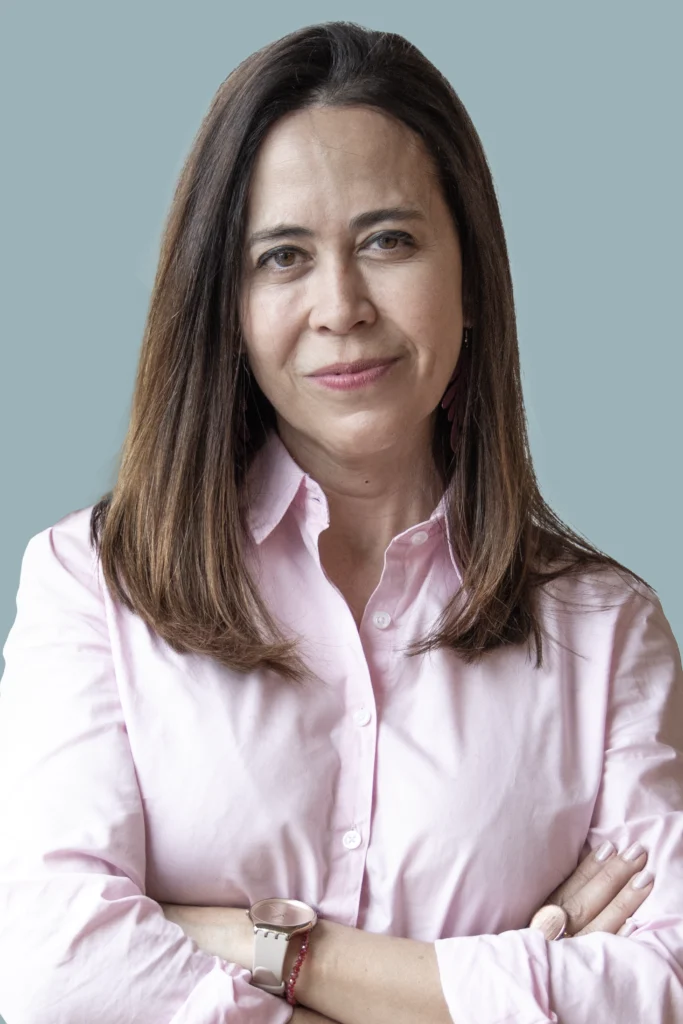
In the COP31 Climate Special Broadcast, Özdeş Özbay speaks with Sol Klas, President of Argentina’s Trade Union Front for Climate Action, about the role of trade unions in the fight against climate change, workers’ rights, a just energy transition, the Milei government’s climate policies, and the shortcomings of Argentina’s new Nationally Determined Contribution (NDC).
Özdeş Özbay: Okay, now we are joined by Sol Klas, the president of Frente Sindical de Acción Climática, which means the Trade Union Front for Climate Action. She is also a member of APOC, an Argentinian trade union.
We are going to talk about the struggle against climate change in Argentina, but we will begin with a few other questions.
Sol, could you please briefly tell us about the Trade Union Front for Climate Action? When was it founded? Which unions or platforms are part of it? And what are its goals
Sol Klas: Okay, well, thank you.
Ö.Ö.: Thank you for being with us, by the way.
S.K.: Thank you for giving us this space. The Trade Union Front for Climate Action was founded in Buenos Aires in May 2019.
Ö.Ö.: Okay.
S.K.: Originally, it was founded by four organizations, four trade unions. AGOEC represents environmental services workers. APOC, my union, represents employees of public oversight bodies.
Ö.Ö.: Oversight.
S.K.: Union. Public oversight.
Ö.Ö.: Okay.
S.K.: Trabajadores de organismos de control.
Ö.Ö.: Okay, then we can translate that.
S.K.: AMRA represents doctors, and FATCA represents brewery and allied workers. These were the original four unions. Since then, we have been joined by maritime workers, tax workers, and workers from various public services. The Front has also brought together municipal workers.
Ö.Ö.: Okay.
S.K.: Maritime officers, dredging and navigation workers, tax employees, and university staff as well. Yes, both teaching and non-teaching staff. So, at the national level...
Ö.Ö.: University staff.
S.K.: Yes, 29. We have 29 national universities in Argentina. So all these workers are represented. We want workers to help decide how to reduce emissions and adapt to climate change while protecting jobs.
Health and incomes. And that requires public policies, public planning, strong public services, and union participation from the very beginning. We train union leaders in collaboration with Arturo Jauretche National University and our confederation, the CGT. We also bring workers' perspectives to international forums, from the Inter-American Court of Human Rights to the UN climate talks. These are our main objectives. Our goals are research, advocacy, and political influence.
Okay, well, that's the idea. I don't know.
Ö.Ö.: So, are you investigating the government's political actions, or...?
S.K.: Yes, we try to influence public policy, not through lobbying, but by making things happen and promoting regulations. We advocate for different pieces of legislation and try to bring about political change.
Ö.Ö.: Implementation, perhaps? Is that what you mean?
S.K.: Yes, implementation within the unions and in public policies. Those are our two main areas of focus, right? Trade unions, and public policies and regulations.
Ö.Ö.: I believe that trade unions play a central role in the fight against the climate crisis. The same is true of issues such as democracy and anti-war activism. But for some reason, we don't often see unions coming together, as yours have, to fight the climate crisis. In your opinion, what role does the working class play in the fight against climate change
S.K.: There is a deliberate effort to pit workers against one another. Argentina's glacier law reform is a good example. The government defended it with promises of thousands of jobs once the law was passed. Mining companies gained greater scope to obtain permits, while those jobs remain promises with no hiring guarantees.
In our view, weakening safeguards for water reserves also puts at risk the livelihoods that depend on them. So our job is to bring those workers together and make their shared interests visible.
Ö.Ö.: Yeah.
S.K.: Pope Francis placed the value of work at the heart of integral ecology in his encyclical Laudato Si’. And now Pope Leo XIV has returned to that idea in his remarks to representatives of the world of work in Buenos Aires yesterday.
Ö.Ö.: Ah.
S.K.: And yes, he placed life and work at the center. Not life for work, but work for life. We need to protect these values and be more systematic in explaining what damage to water, soil, and ecosystems means for people's health, incomes, and jobs. That work begins within our own unions and workplaces. It is difficult work, but we need to do it.
Because many workers still believe in a false dichotomy—I don't know how to say it in English—that it's either jobs or the environment. But we believe that jobs and environmental protection must go hand in hand. We need jobs in a safe and healthy environment.
Ö.Ö.: These are sometimes called green jobs or climate jobs. There are campaigns and trade unions advocating for them.
S.K.: Yes, it is the idea.
Ö.Ö.: Does your Front have any concrete demands along those lines?
S.K.: Yes, yes, of course. Green jobs are important, but the problem is that in our country, green jobs are often associated with insecure employment, a lack of labor rights, and informal work.
Ö.Ö.: Ah, okay.
S.K.: And so it is difficult to establish the concept of green jobs.
Ö.Ö.: Okay, okay.
S.K.: But we are working for—.
Ö.Ö.: Okay.
S.K.: We need to clarify what a green job actually is. A green job must also be a decent job.
Ö.Ö.: Yeah, true.
S.K.: With social security and all the associated labor rights.
Ö.Ö.: Okay, what challenges does the working class face in its struggle against a far-right president? Let's turn to Milei. How strong is the labor movement in Argentina today? It is also said that Milei enjoys some support among certain sections of the working class. What do you think explains that?
S.K.: Okay, I can't really call him my president, although he is my president. We are going through a period of transition. Some leaders are reaching the end of their terms as a new generation emerges, and unions are renewing their leadership through their own democratic processes. This is a slow and complex period for the unions, and a leadership capable of uniting the movement has yet to emerge.
Ö.Ö.: Yeah.
S.K.: And the nationwide strike in February showed that we can still mobilize. The challenge is to turn that strength into a sustained, united response.
Ö.Ö.: True. How many workers joined the strike in February?
S.K.: 1 million.
Ö.Ö.: Okay.
S.K.: We face a government that has downgraded both the labor and environmental ministries and passed a labor reform that restricts strikes and weakens sector-wide collective bargaining.
At the same time, we have to understand why some workers supported Milei after years of inflation, insecure employment, and frustration with previous governments. Some gave him credit for slowing inflation. His emphasis on individual initiative and private enterprise also appealed to people who were already accustomed to making ends meet on their own.
So rebuilding union strength means taking those experiences seriously. We have to pay attention to that.
Ö.Ö.: Okay, as you know, Bolsonaro lost the presidential election, and fortunately, Lula da Silva won. So what significance do Bolsonaro's defeat in the presidential election and Trump's heavy losses in the midterms hold for the workers' opposition in Argentina?
S.K.: Yes, we are very happy. We had gone through a bleak period in which the global advance of the far right seemed almost impossible to stop. But the setbacks in Brazil and the United States suggest that the tide may be starting to turn.
In the United States, the shift among younger and lower-income voters showed that the far right can lose support among groups it had previously won over. Working people still have the power to change political decisions and directions.
For us in Argentina, that means organizing around the cost of living, public services, and jobs, including reaching out to workers who voted for Milei. And that is what we are working towards.
Ö.Ö.: So, do you think Milei has been somewhat shaken by Bolsonaro's defeat?
S.K.: Yes, yes. He's a crazy man, but I think he's very nervous. Yesterday, when speaking about the Pope, he said that…
Ö.Ö.: He said that he is a close ally of Israel, but for some reason, he has also been saying that he wants to convert to Judaism or something like that. And now he's meeting with the Pope. I don't know.
S.K.: Argentina is a Catholic country.
Ö.Ö.: So, okay. Anyways.
S.K.: Yes, and we have Pope Francis. So we have Maradona, Messi, and Francis. Okay.
Ö.Ö.: All right. Now, turning to climate change and COP31, has the Argentinian government made any preparations for the summit, even though I can imagine the answer? And what is the situation with Argentina's delegation at COP31? Because we remember what happened in Baku, when Milei recalled the Argentinian delegation while they were attending the summit.
S.K.: Yes, and all the civil society organizations that have…
Ö.Ö.: Together with them.
S.K.: Yes. Who had blue badges.
Ö.Ö.: Yeah, they were all forced to go back.
S.K.: Yes, yes, it was very—.
Ö.Ö.: What if they had told you that you also had to return to Argentina? What if you had said, “No, I'm going to stay”?
S.K.: I stayed with the Chile delegation.
Ö.Ö.: You joined Chile?
S.K.: Yes, I was a Chilean girl for two days.
Ö.Ö.: So that means Milei cut your budget, and you were no longer able to…
S.K.: Yes, all the party overflew.
Ö.Ö.: Okay.
S.K.: Civil society organizations have always requested funding from the Foreign Ministry, known as Cancillería. Throughout the history of the COPs, the ministry has provided financial support for civil society participation. This was the first time that such support was denied. And now, under Milei's government, we no longer receive that funding.
Ö.Ö.: Okay, now you don't have—.
S.K.: Now we are observers.
Ö.Ö.: Are you accredited directly by the United Nations as observers, or...?
S.K.: No, in my case, I'm accredited through the International Trade Union Confederation.
Ö.Ö.: Okay, so since Milei came to power, Argentina hasn't sent official delegations to COP summits. Is there no official Argentinian delegation here either?
S.K.: We have a very small technical delegation here. They don't meet with us, but they are participating in some of the negotiations.
Ö.Ö.: They just follow the negotiations.
S.K.: Yes, they are following some of the negotiations because of the EU–Mercosur agreement. French President Emmanuel Macron told Milei, “You cannot withdraw from the Paris Agreement because Argentina needs the EU–Mercosur agreement.” He made this a condition of the agreement.
Ö.Ö.: Okay.
S.K.: Milei wanted to withdraw from the Paris Agreement, following Trump's example. But Macron stopped this. So that's why Argentina is here.
Ö.Ö.: Okay. And does the delegation have a say in the decisions?
S.K.: Yes, yes.
Ö.Ö.: So can they vote?
S.K.: Yes, and I'm concerned about how they will vote, too. But for the Front, the new pledge represents a step backward in both climate ambition and public participation. Argentina submitted its new Nationally Determined Contribution (NDC) to the UN Climate Change Convention two days ago. So last year was the…
Ö.Ö.: Deadline.
S.K.: Yes, that was the deadline. And we submitted our NDC a year and a half later.
Ö.Ö.: And how is it?
S.K.: Awful. It's worse than before. There is no ambition, and changes to the emissions inventory alter the basis for comparison with the previous pledge.
The document maintains the same emissions ceiling of 375 million tonnes and makes no commitment to further reducing that ceiling over the next five years. It also drops the previous pledge concerning carbon neutrality.
Although different sectors discussed the draft, we are very concerned about the process. One NGO found that the External Advisory Council, which is required by Argentinian law to include trade union representatives, was not involved in the process at all.
So we cannot say that a just transition is reflected throughout the NDC.
Ö.Ö.: Okay, thank you so much for joining us for this interview. Once again, thank you for being with us. We were joined by Sol Klas, president of the Trade Union Front for Climate Action.
S.K.: Action.
Ö.Ö.: Trade Union Front for Climate Action, yes. Sorry about that. And I hope to see you again.
S.K.: Thank you very much.
Who is Sol Klas? Sol Klas is an Argentine environmental specialist, trade unionist, and climate activist. She is the President of the Trade Union Front for Climate Action (Frente Sindical de Acción Climática – FSAC) in Argentina and the Secretary for Environment and Sustainable Development at the Association of Personnel of Oversight Bodies (APOC). Her work focuses on climate justice, a just energy transition, workers’ rights, and trade union participation in climate policymaking. She also follows international climate negotiations on behalf of the trade union movement.