Image
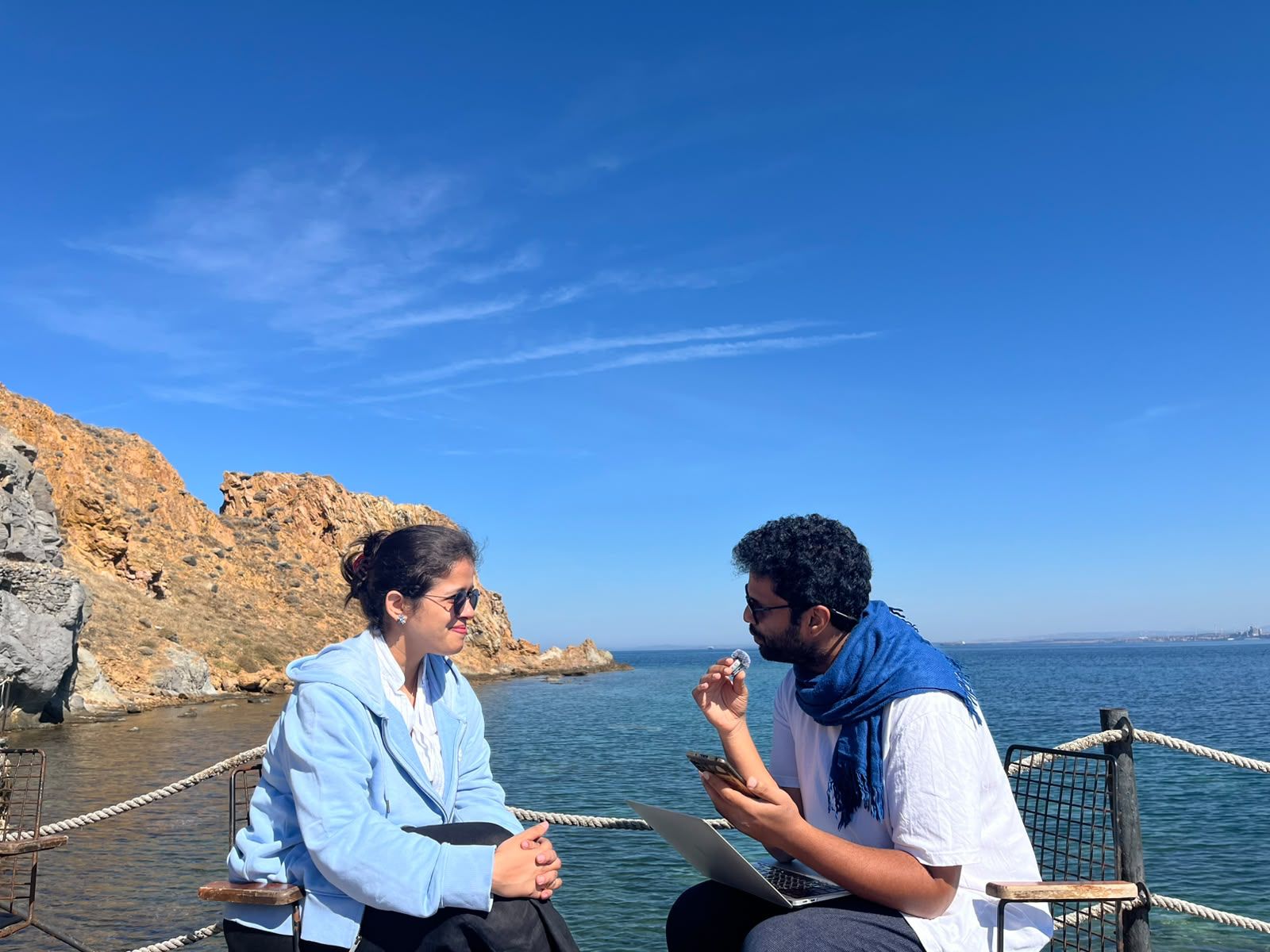
In Hüsnükabul, Waseem Ahmad Siddiqui speaks with Isha Tomar, a programmer at the All Living Things Environmental Film Festival (ALT EFF), about the climate crisis, water scarcity, ecological destruction, and displacement through three Indian documentaries screened at BIFED. They also explore the role of documentary filmmaking, independent media, and community solidarity in environmental struggles.
Waseem Ahmad Siddiqui: We are right now with Isha Tomar. Isha, thank you for being with us. May you first briefly introduce yourself and also where are you coming from?
Isha Tomar: Nice to meet you, Waseem. So I work as a film festival programmer at an environmental festival in India. It's called All Living Things Environmental Film Festival, or ALTEF for short. I have been working with ALTEF for 3 years now, and what we do there is we tell environmental stories from around the world. So I look for stories from all parts of the world, and also we are trying to actively promote Indian environmental stories.
Because India being so diverse and there are so many cultures and regions and diversity, and every area has its own unique environmental issue. So we are also trying to bring in a lot of Indian stories to the world. And we have been seeing over the past 4, 5 years, 6 years that environmental stories is growing in India, whether through documentaries through fiction storytelling, through animation, through student films. It's really growing, and we are trying to bring that and showcase that to the world. And we don't just look at nature documentaries or wildlife documentaries. We really believe in the intersectionality of environmental stories because environment is political. It is about livelihoods. It is about gender. It is about— There is also gender disparity, there is caste disparity, there are so many other things. It's human stories after all. So all of those together, a variety that we try to bring from, from every part.
W.A.S: So right now at BIFED, we've watched 3 films from India. Lost Songs of Sundari, directed by Sudarshan Sawant. I Am Zanskar, directed by Lobsang Wangtek and Akshat Jain. And Waste and the City, this is the last movie, this is the 3rd movie, I believe, directed by Arishma Rao and Vishwesh Bhagirathi Shiva Prasad. This is her full name.
So we are having this short interview at a time when the effects of the floods in the Himalaya region, Nepal, Tibet, and the Indian states of Assam and Kerala have caused massive destruction throughout the region.
And we are having this interview at a time when the lives of the ordinary peoples in the region in particular are in grave danger. I believe it is extremely important to keep our attention to the climate catastrophe and the climate justice. As we are witnessing each day these disasters in our surroundings, massive displacement, death of thousands of peoples in our neighbor countries, but also in the place where we are right now in Turkey. I have only one question for you on this regard. How do these documentaries, which I find highly relevant to our current time, this very present moment, respond to what we are witnessing in terms of climate catastrophe in our region?
I.T.: Yes, it's a very important question, very valid question, and something that we keep thinking about every day because I keep seeing all these films, all these stories, and in the end, they're all trying to address that one question that you just asked. So, you know, the floods that happened in Nepal, Tibet, they also eventually caused a flood in the low-lying lands in India because the bordering states of Nepal, which is Uttar Pradesh and Bihar, they also were flooded eventually because they all— the water came flowing down. But people suffered. There was displacement. People protested. that there is no response from the government, and it did not even get proper media coverage. You know, media is so important, I feel, to voice out people's concerns, but currently in India, the media is just not covering people's questions or issues anymore. And the same happened with Assam, the same happened with Kerala as well. Global media coverage happened, but within India, it is just—Silenced. So out of sight, out of mind for people around the rest of the part of the country. So yeah, and whatever support or whatever, you know, the voicing is happening from those regions is from independent media, you know, social media news journalists or independent small on-ground journalists who are trying very hard to go on ground and cover because big media is not supporting those stories anymore. Yeah, and that is why documentaries right now is very, very crucial in India at the moment. And the 3 films that you mentioned, the first one, which is Lost Songs of Sundari, it is based in Mumbai. And Mumbai is a big city, right? In India, it is the business capital, the business hub, and everybody knows Mumbai. There is Bollywood in Mumbai, you know, it's so famous. But The indigenous communities of the city— Mumbai was just 7 islands actually, it was never a city, it was just a cluster of islands. And it was later land reclamation happened and it was built into a city.
And it was indigenously inhabited by the fishermen called the Kolis, who are still there, but they are just being displaced at the moment by the government because there are a lot of mangrove trees in Mumbai, which is very, very important for the sustenance of the city because it is a coastal city, very prone to flooding. Every year there is flooding happening there, and it is still surviving because of the mangrove trees. But in the film, it mentions that how these mangrove trees will eventually be cut and is being cut because of the coastal roads that are being developed there for personal vehicle traveling. And the Koli community, one of their major livelihoods is fishing and then also the ferry service, which will be stopped. The fishing— already the fishing communities are losing a lot of their supplies because the fish are dying. The mangroves are being cut. The water is being polluted. There is so much damage being done to the water because of all the bridges and the roads that are being constructed on the sea. So they are losing their livelihoods, the sea is losing its life, the mangroves are being cut, which will eventually lead to a lot of erosion, a lot of flooding. And there are being citizen protests to stop the mangrove cuttings, but it is just— the government is not listening.
And scientists, citizen scientists, they're all saying that if you cut the mangroves, the city is just going to drown. But it's still— the coastal roads are being built, all the damage is being done, and we are just waiting to see what is going to happen. And already there is a water shortage in Mumbai. The rains didn't happen this year. So it is really concerning what the future of the city is going to be like. And eventually, Then the issue is very different in Himalaya. In Himalaya also, there is glaciers are melting, snow is not falling, because of which there is water scarcity. And, you know, in the film you saw, now they are trying to build artificial glaciers, which is— there's a very interesting quote also in the film that he says it is just a bandage, you know, it's not, it is not a cure, it's just a temporary thing. You don't know how long that is going to last. And, uh, and in Bangalore there is Also, even though the film was talking about waste, but Bangalore is also a city known for its water shortage because it was a city of lakes. Actually, it was just lakes everywhere, and those lakes have been covered and the city has grown so much because it is now the hub for IT companies. A lot of technical tech companies are coming up, a lot of jobs are coming up, a lot of migration into the city is happening, so all the lakes are filling up. And because of which the housing is growing, because of which now there is loss of the lakes, because of which there is underground water shortage, because of which there is a water shortage every year. Bangalore is known for that. So water really is very important in all of India actually at the moment. And we are just— it is just a catastrophe waiting to happen, which is eventually we are stepping towards it. And But at the moment, I feel these stories are very, very important to be documented and for people to at least realize that what you're going into, you know. I don't know if it will stop or if anything is going to— we'll wait and watch and see what will happen. But it's very important to at least realize and voice out and just not be in a— in living in a delusion that, you know, everything is fine. It's not fine. It's not fine.
W.A.S.: Exactly, I mean, as you are saying, I think right now taking action has become very much crucial because as I was talking with, with a friend, he's a climate activist in India, Soumya Dutta, and he was saying that all these crises are no more only crises. And also, when we use the word climate change, it's no more climate change. It's already a climate catastrophe. And it's not limited to the nation states. This is the regional disaster which is coming on its way. So, Therefore, I also find it very important to, speak with you, even though the directors themselves, they were not here. But I found it very important to watch these 3 documentaries coming from, from India, and I'm from Pakistan. So I do remember the floods of Pakistan in 2022, very relevant of our time. That's the spirit of our time, I would say. Your last words.
I.T.: I feel like you very rightly mentioned, it's not regionally limited anymore. Like, actions of one country very much affect the actions of the other country, or actions of one region or state very much affects the action of another region. So It is very much interconnected now, and we can't just say and be, okay, it doesn't really affect me anymore, because it does in one way or the other, directly, indirectly, it affects all of us. And we cannot just keep our eyes closed and just live in an illusion and be as everything's going to be fine and taken care of, because until unless we speak out or we— even just speaking out is a very important step towards action. A lot of times, you know, in our screenings, people come and tell us, okay, I am not— I don't have the resources or the capacity to do something, you know, on ground.
Maybe I'm not that resourceful, or I'm not that— maybe that is not my expertise. I'm not a scientist, I'm not a researcher, but what can I do? And we just tell them that, you know, you just You coming and watching these films and talking to people and sharing that and taking that forward with other people, that is also a very important step towards— it's a small step, but it is still a step. If you are at least aware, you are conscious of your decisions, you're conscious of the choices that you are making, you're conscious of what is happening even in your neighborhood or in the city that you live in, it is a very, very important step. And you can support people who are doing the good work. the work, the on-ground work, the researchers, the scientists, the activists, support them, uh, you know, vocalize their words, vocalize their thoughts, and share it with people. Social media is— I believe social media now has become a very important platform because, um, recently there were these protests in India, and the only reason it was such a success was because of social media.
W.A.S.: Now I believe, second wave is on the way.
I.T.: There is a protest on Saturday. Yeah, on Saturday again. It got vocalized and people sort of mobilized from all over the country because of social media. And I think if used well, social media can be a very powerful tool as well, along with films. So there are multiple ways in which people can contribute. We have the power. It's just that we have to be conscious enough to use it. And filmmakers are already doing, you know, in their way, trying to voice out the concerns, the issues that they feel so deeply about. So yeah, I think we all have it in us.
W.A.S.: Well, Isha, it was very nice speaking with you, as if I was speaking with one of my neighbors just next home. It was really nice speaking with you. I hope that we choose to see, and because seeing is really very much important for our time. And I also hope, because this is one of the complaints one of one of my interviewers told me, again from Kerala, Bilal Jamal. He's an ordinary citizen there, and he said that, uh, the focus of the protest right now, Koko Janta Party protest, is It's only— I'm talking about the first protest. It was only towards the resignation of educational ministry, but not other issues. However, it was the floods were at the time, I mean, simultaneously, all these events were happening. So he had this complaint. not only complain, but he expected these students to also use the voice of, um, of other issues, which I hope, because it takes time to, you know, include all the issues which we are witnessing. And it's overwhelming, of course, it's overwhelming. I don't know if you, if you would like to say about this coming together of women?
I.T.: Sure, you know, in India it's so— I don't know what to say, but it's so interesting. The whole landscape of voicing out for the last 10 years has been very difficult, very, very difficult, because there has been a crackdown on media, there has been a crackdown on journalists, there's been a crackdown on academicians, scholars, whoever has been trying to even say a small thing about any issue, you know, they are termed as anti-nationals.
They are termed as, you know, somebody against the country, which is not true. If you're commenting or critiquing your country doesn't mean— or critiquing the government, not the country. We're critiquing the government, we are critiquing the way things are going on, the way the land or forests are being just sold off to private companies. We are commenting and critiquing on that because we are citizens and we have a job and a duty to comment and question our government.
It's about educating the place. Exactly. And after all, you're an elected government we elected. You are accountable and answerable to us. But over the last 10 years, the control and the surveillance on media and films has been so, so much that people, I feel, have sort of forgotten what it is like to question And the number of people who are questioning has reduced so much. But with the Cockroach Janata Party, at least they feel that that idea of questioning has started again. I agree, there are a lot of critiques on how they are working. There are flaws, of course, and we can have a whole conversation on that separately. And I agree with what the gentleman said about, you know, there are issues in Kerala, there are issues everywhere in the country, but at least I feel it is a start.
It is a start. Yeah. Now the government knows that we have the power to— and the minister resigned. I don't know what the future is going to be like and what the education reforms are going to happen. I have no idea. We'll wait and see. But at least something happened, you know, a change happened, and it is a positive change, and it is a positive a way that, okay, we can do it. If the education minister can resign, maybe something else in some other part of the country can happen, which is happening slowly. It will take time because after 10, 15 years of just being so numb to things, suddenly waking up, I feel, does take time. But I'm really positive that it will happen slowly.
W.A.S.: Yes Likewise, likewise. Isha Tomar, thank you again.
I.T.: Thank you so much. It was lovely talking to you as well.