Image
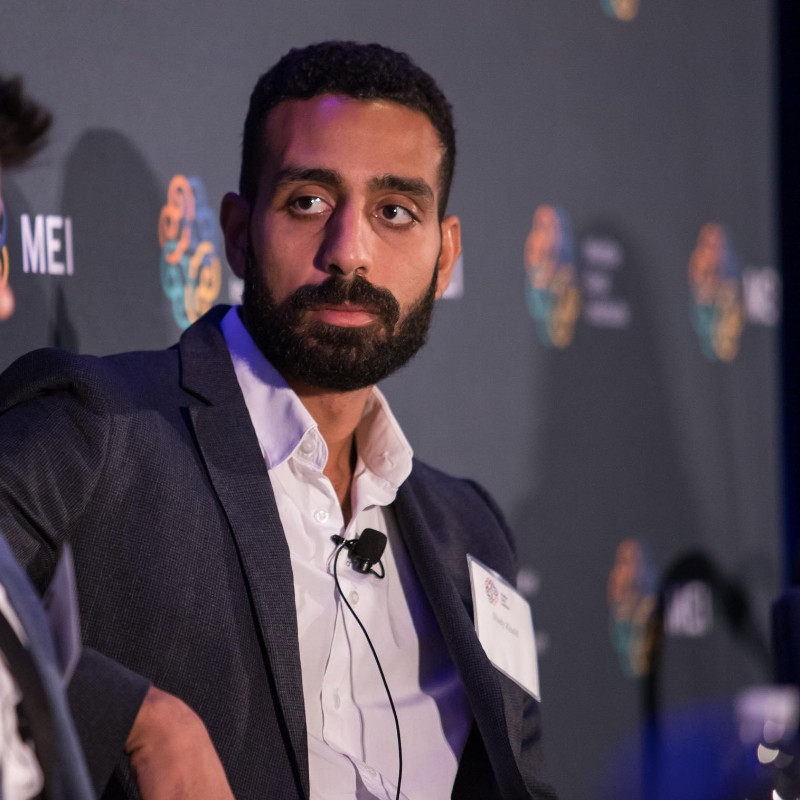
In the COP31 Climate Special Broadcast, Eren İleri speaks with Shady Khalil from Oil Change International about a just transition away from fossil fuels, climate finance, energy security, taxation of fossil fuel companies, and the Global North’s historical responsibility for the climate crisis.
Eren İleri: Hello, today is November 10, 2026, and we are here at COP31 in Antalya with Shady Khalil from Oil Change International. Welcome, Shady. First of all, could you introduce yourself and tell us about the work you do?
Shady Khalil: Yeah, of course. Hi, Eren. My name is Shady Khalil. I'm Egyptian, and I work for Oil Change International, an international organization that works to advance the transition away from fossil fuels and toward renewable energy.
E.İ.: Thank you so much. What are the key agenda items for COP this year, and what are your main concerns?
S.K.: This COP is one of the key COPs where we are addressing the importance of the 1.5°C target and how crucial it is to our climate ambitions. This COP is particularly important because it's taking place at a time when the climate crisis is unfolding everywhere. We are seeing the impacts of climate change all around the world. We are in the middle of a fossil fuel crisis, with huge market volatility. Many people lack access to energy or simply cannot afford it. So I think this is a moment when climate ambition needs to meet the realities of the world.
E.İ.: You mentioned volatility in energy markets, particularly fossil fuel markets. How is that affecting energy affordability for people around the world?
S.K.: I mean, with what's happening in the Middle East, the war and Israel's aggression against Palestine, we're seeing a lot of volatility, particularly around the Strait of Hormuz, for example, which affects access to fossil fuels and energy in many parts of the world. This reminds us why renewable energy is not only a climate imperative but also a matter of energy sovereignty and energy security. Countries that have access to renewable energy resources within their own borders have been better able to absorb these shocks, both for their economies and for their people.
E.İ.: Thank you so much. And what does a just transition away from fossil fuels look like, particularly for workers in the fossil fuel industry?
S.K.: In the context of COP, it means establishing a Just Transition Mechanism that would ensure that the inevitable transition happens in an organized and just way. Workers need to be able to acquire the skills necessary to transition to different industries, and they must be included in the decision-making process. Landowners and communities affected by new projects must also be part of that process. This mechanism is intended to ensure all of that.
When we look at the broader economy, it also means ensuring that adequate finance flows from the Global North to the Global South. This is what we call the debt they owe us for years of colonization, expansion, and industrialization.
We also need to make sure that the technologies and patents they hold for renewable energy are not sold to us at exorbitant prices or used in ways that perpetuate exploitation. We cannot allow countries in the Global South to continue being treated merely as sources of raw materials while solar panels and other renewable energy technologies are manufactured in the Global North.
We need to ensure that these technologies actually reach countries in the Global South so that they can manufacture, develop, and meet the needs of their own people in ways that uphold their dignity and sovereignty over their resources.
These are the principles behind the Just Transition Mechanism we are trying to establish at this COP, which makes this conference particularly critical for the mechanism itself.
There is also the climate finance work program, through which we are demanding adequate funding for adaptation. We need to ensure that communities already experiencing the impacts of climate change have the resources they need to adapt to crises like those we have seen this year, including the impacts of heatwaves.
We also need to address the losses and damages that people and countries are already experiencing through the Loss and Damage Fund.
And when it comes to transitioning away from fossil fuels, we need sufficient funding to help countries expand renewable energy.
Crucially, this funding must not come in the form of loans or private finance. It must be public finance that does not push countries further into debt or place them under the control of major international financial institutions such as the World Bank and the IMF.
These institutions have contributed to many of the challenges affecting people's livelihoods and their ability to put food on the table across the Global South.
E.İ.: Thank you so much, and thank you for connecting this issue to debt. As you know, Turkey is a heavily indebted country, and I think that's something many of our listeners can relate to.
You mentioned two forms of climate finance: adaptation finance and funding for loss and damage. It seems that high-level decision-makers from the Global North are creating a false dichotomy, suggesting that we can fund either one or the other, but not both.
Yet we know that the money is there, given that military budgets are 10 to 20 times larger than the amounts we're asking for in climate finance.
So is this dichotomy real? Do we actually have the money to fund both?
S.K.: Yes, we do have the money. And this is something we keep saying. Governments, as you mentioned, are expanding their military spending. We've seen NATO's calls for increased military spending, and the scale of this expansion is getting out of control. So who's benefiting from this?
The fossil fuel industry is also benefiting enormously from the volatility in fossil fuel prices. They've made record profits this year and this quarter. I think the five biggest oil and gas companies alone are making almost $500 million a day. That's $500 million a day in profits, not revenue.
So they're making enormous amounts of money from the destruction they're causing. One clear solution is to tax them and make them pay. These companies are owned by extremely wealthy shareholders and individuals. They're not going to suffer if you tax them. They're not going anywhere.
We need to tax them and ensure that this money is used to support the transition away from fossil fuels toward renewable energy, to fund adaptation and address loss and damage, and to support affected communities. I think that's a very reasonable demand.
But the problem is the conflict of interest. Many policymakers don't want to do this. The fossil fuel and arms industries have significant influence over policymaking.
That's why we call on individuals and communities to hold their governments accountable and demand roadmaps for transitioning away from fossil fuels. Countries need national plans that reflect their specific circumstances and identify sources of finance, including ways to fund the transition at the national level.
And, of course, we call on countries in the Global North to fulfill their financial obligations and provide the necessary funding. Instead of expanding military spending, they should direct that money toward what we call the business of life, rather than expanding the business of death: wars, genocides, fossil fuel expansion, and polluting industries.
E.İ.: Is capitalism a death cult?
S.K.: That's not an easy question. Capitalism definitely has implications and ideologies rooted in extractivism, relentless expansion, and the concentration of power in the hands of the strongest. I don't think that's the way we should shape our future.
If you look at the values underlying this ideology, the drive for expansion, and what it actually does to people, I don't think this is the future we want to see.
We want a future where people's dignity is protected, where everyone has food on the table, and where we can all live with dignity, collectively, rather than a future in which a small number of extremely wealthy people enjoy comfort while everyone else suffers for it.
So I don't know if capitalism is anything other than that.
E.İ.: Thank you so much. I understand that you're walking a tightrope, having to engage in negotiations while also speaking openly about these issues. Oil Change International has a public finance program, if I'm not mistaken. What role do subsidies play in keeping the fossil fuel industry alive?
S.K.: Subsidies are one side of the issue. To a large extent, fiscal policies end up supporting producers rather than consumers or households. It may seem as though these subsidies are providing support or stability, but they actually put pressure on governments, their fiscal policies, and public goods.
There are different ways to provide subsidies directly to individuals and households, such as giving them money directly or ensuring that these subsidies are redirected toward renewable energy projects that can support households and the expansion of renewable energy.
I think subsidies require a long-term strategy rather than an immediate response to a crisis. And that's the problem with how subsidies are currently being deployed. They are used as an immediate response to volatility in fossil fuel markets. They're essentially bandages, not real solutions.
So I would say there needs to be a process, as part of a broader roadmap, for phasing out subsidies in a way that does not negatively affect households. We need to ensure that people can live sustainably and afford energy in the long term, rather than relying on temporary fixes that may no longer work the following year.
This is because of the fiscal pressures and the strain that dependence on fossil fuels places on governments. They can become trapped in a vicious cycle of accumulating more and more debt just to keep paying these subsidies.
What we're asking is for countries to exercise their sovereignty, expand renewable energy, and provide people with the dignity they deserve when it comes to energy access and development.
E.İ.: That's a great answer. So, are you saying that if subsidies are going to exist, you'd rather see taxes collected from the fossil fuel industry used to help people pay their energy bills, instead of having our taxes subsidize the oil and gas industry, allowing companies to pay higher dividends and buy back more of their own shares?
S.K.: One hundred percent. You nailed it with that framing. I think there is a lot of potential to disincentivize fossil fuel expansion and ensure that the money goes to the right stakeholders: the people, to whom governments are accountable. We also need to make sure that the enormous profits generated by the fossil fuel industry are used to finance this.
E.İ.: Thank you. Something we've heard a lot about during this COP is BAM, the Belém Action Mechanism, and the Belém-to-Antalya Roadmap. Could you explain to our listeners who may not be familiar with these initiatives what the mechanism is and what the key demands are?
S.K.: Yeah. So far, we've been talking about the transition within the COP process, but without clear guardrails or a real understanding of how it can actually be implemented. This creates a significant risk that the transition could be interpreted in different ways in different contexts.
So BAM, the Belém Action Mechanism, and the Belém-to-Antalya Roadmap are intended to provide a framework for this process. They bring together all the initiatives and principles related to a just transition that we want to be governed by collectively at the international level, placing people at the center.
These are not simply high-level policy principles. They're really about people, marginalized communities, those who are most affected, and who gets to sit at the table and participate in decision-making. That's what the entire structure of the mechanism is about.
It also brings together all the government initiatives we're seeing, all the pledges and commitments being announced left and right, under one mechanism and one coordinated process. The aim is to organize these efforts and ensure that we're moving toward our goals in a way that is deeply rooted in our values, centered on people rather than the wealthy.
Ultimately, it's about making sure we're moving toward the future we want to see, where things are done better rather than simply repeating the same old ways.
E.İ.: Wow. I think this will be my last question for you. And perhaps this is a false dichotomy, but in order to enable the transition, do you think we need to nationalize the oil industry, or should we tax the industry's windfall profits and its CEOs?
S.K.: I think taxation is absolutely key. Nationalizing oil and gas companies is a different matter, and the role of national oil and gas companies depends on the specific context, whether we're talking about Gulf countries or other countries.
I think taxation, especially for international oil and gas companies and private oil and gas companies, is crucial. Ensuring progressive taxation on wealth and polluting industries, particularly the oil and gas industry, is extremely important.
These companies make tremendous amounts of money, and that money could provide substantial support not only for the transition, adaptation, and loss and damage, but also for education, healthcare, and public goods. We need to make sure that society benefits from these resources rather than continuing to support an industry that pollutes.
When it comes to national oil and gas companies, they usually exist in countries that are highly dependent on fossil fuels. So I would say that developing clear roadmaps for economic diversification away from fossil fuels is essential for a country's energy security.
It's not in any country's interest to depend on a single commodity that is highly volatile in the global market. Ensuring that there is a clear diversification plan and reducing dependence on national oil and gas companies is therefore crucial for energy security.
You can see this in the case of Saudi Arabia.
E.İ.: And are countries with large national oil companies reinvesting their oil profits in the energy transition and social services? Do companies like Petrobras and Aramco contribute to development, or do they ultimately cause more harm, given the impacts of the climate crisis on countries in the Global South?
S.K.: I think it has to be assessed on a case-by-case basis. You can see, for example, in the case of Saudi Arabia, that they have their Vision 2030 and longer-term targets and strategies for 2045 and 2050, through which they're trying to figure out how to diversify their economy.
But I wouldn't say that oil and gas companies are necessarily the ones directly financing this transition or that they have the potential to finance it.
I think there's obviously a question of equity when it comes to countries transitioning away from fossil fuels, and there are different timelines that take this equity into account. Many countries in the Global North have developed and industrialized using fossil fuels for a very long time. So they have to phase out fossil fuels first and fastest.
But there are other countries that still need to develop and may need to continue producing for a while, without expanding production.
I think COP28 made it clear that we need to commit to the 2030 targets, ensure that fossil fuel use declines, and end fossil fuel expansion everywhere.
So I wouldn't say that expanding fossil fuel production in Saudi Arabia would help the country. Nor would lowering climate ambition to allow further expansion be beneficial.
Saudi Arabia itself is extremely vulnerable to climate change. It faces water scarcity and extreme heatwaves. So I don't know how much money they could possibly make that would compensate for the consequences. If we exceed the 1.5°C threshold, it could be a death sentence for their people. And I don't think there's enough money in the world to protect them from those consequences.
So I would say it's a risky gamble. That's why accelerating economic diversification, stopping fossil fuel expansion, and moving away from dependence on oil and gas are absolutely essential.
E.İ.: So, you're saying we can't buy our way out of the climate crisis?
S.K.: I don't think so. I think some people would like to believe that we can. For example, they put their faith in what are essentially science-fiction technologies, such as carbon dioxide removal and carbon capture, utilization, and storage (CCUS). They believe these technologies will emerge in the future and solve everything, allowing them to continue expanding oil and gas production.
But these technologies have proven inefficient and unsuccessful, while we already have technologies that work: renewable energy. So why not invest in them?
In Saudi Arabia and many other countries, particularly in the Global South, we have abundant renewable energy resources and enormous potential.
So it's really about shifting away from an old system that isn't working, one that will cost us enormous amounts of money in the long term, cost people their lives, undermine their quality of life, and leave them increasingly vulnerable to the impacts of climate change.
Instead, leaders have an opportunity right now to make the decision to move away from that system and invest in renewable energy.
Countries like Saudi Arabia, Russia, and many fossil fuel-dependent countries in the Global South have an opportunity to make this transition and move away from dependence on industries that benefit the Global North more than the Global South.
And, of course, countries in the Global North are also massively expanding fossil fuel production, including the United States and Norway, which we at Oil Change International like to call "planet wreckers," because they still account for the largest shares of planned fossil fuel expansion.
And this is very important to emphasize. They like to vilify Saudi Arabia and other fossil fuel producers in the Global South, while they themselves are responsible for the greatest expansion.
They need to stop expanding fossil fuel production now, pay their climate debt, and provide the financing necessary to accelerate this transition.
E.İ.: What does “free, fast, fair, and fully funded” mean? I've been hearing that phrase a lot.
S.K.: Fast means that we need to transition away from fossil fuels quickly enough to ensure that we do not exceed the 1.5°C limit. And I mean, this is not just a scientific threshold. It's a matter of life and death for people. Even 1.5°C is already a death sentence for some communities, but exceeding that threshold would have devastating consequences. So we need to make sure that we stop fossil fuel expansion.
Fair means that the transition must happen equitably, recognizing that not all countries have the same capacities, circumstances, or levels of responsibility. As I've said, countries in the Global North have a responsibility to phase out fossil fuels first and fastest. We need to ensure that the transition follows this principle rather than taking place in an unfair way.
And the third element, fully funded, means that financing must come through public finance, in the form of grants rather than loans that push countries like Turkey, as you mentioned, further into debt.
We need to make sure that we're not reproducing the same patterns of indebtedness. We always say that debt is by design, not by coincidence. The way countries in the Global North and international financial institutions trap countries in the Global South in debt is by design.
It's a way of controlling their economies and resources, and then using that debt as leverage over their resources and political stability.
So if we want to free ourselves and decolonize ourselves from the power of the Global North, we really need to address debt and ensure that we free our economies from both indebtedness and dependence on fossil fuels.
E.İ.: Thank you so much, Shady. Is there anything you'd like to say to our listeners in Turkey?
S.K.: I'd just like to say thank you for having us. We've had such a great time here in Antalya, and we hope to see really positive outcomes from this COP, because I think that would make it a historic one. We would particularly like to see the establishment of a Just Transition Mechanism here in Antalya, because it would mean a great deal to have it established here.
E.İ.: Inshallah.
S.K.: Inshallah.
E.İ.: Thank you so much. It was a pleasure interviewing you.
S.K.: It is super nice. Thank you.
Who is Shady Khalil?: Shady Khalil is an Egyptian climate justice activist, environmental advocate, and Senior Global Policy Strategist at Oil Change International. He holds a master’s degree in Environment, Development and Policy from the University of Sussex. He is a co-founder of Greenish, an initiative focused on environmental education and climate advocacy in Egypt, and VeryNile, a project dedicated to tackling plastic pollution in the Nile River. He previously served as a Campaign Manager at Greenpeace Middle East and North Africa. His work focuses on a just transition away from fossil fuels, climate finance, energy sovereignty, and the Global South’s demands for climate justice. He also hosts Oil Change International’s podcast series Burned: The Price of Oil.