Image
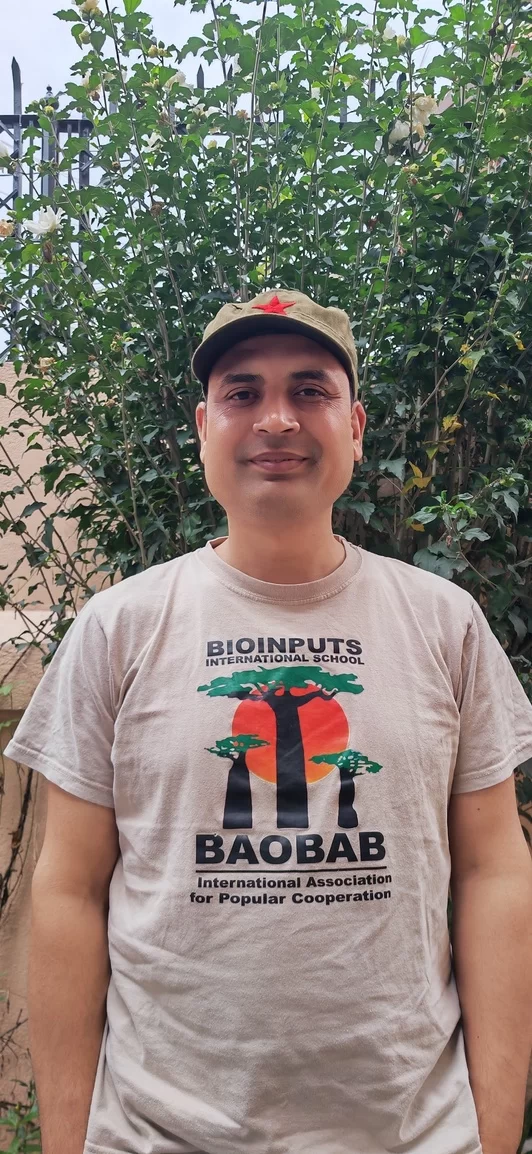
In the COP31 Climate Special Broadcast, Eren İleri and Waseem Ahmad Siddiqui speak with Nepali farmers’ rights advocate Pramesh Pokharel about the devastating floods in Nepal, climate injustice, the impacts of infrastructure projects, and the responsibility of the Global North. They also discuss the importance of solutions rooted in agroecology, food sovereignty, and the traditional knowledge of Indigenous Peoples.
Eren İleri: Hello, may I please interview you?
Pramesh Pokharel: Yes, thank you.
E.İ.: What's your name?
P.P.: I'm Pramesh Pokharel from Nepal.
E.İ.: Thank you. So, for the first question, could you introduce yourself?
P.P.: I'm a peasant and a peasant activist from Nepal. I'm representing La Via Campesina here at COP31.
E.İ.: Nepal went through a terrible disaster this year. Can you tell us a bit about what happened?
P.P.: Yes, I think we are living in an age of climate crisis. Not only a climate crisis, but a planetary crisis, and we are witnessing climate catastrophes everywhere. Recently, in Nepal, we suffered from the Bhotekoshi flood, what we call a mountain tsunami. It was devastating because, due to global warming, part of the mountain collapsed, impacting many communities living along the riverbanks.
But I think this is happening in different countries, where the crisis is affecting people, especially those living in rural areas, farmers, and Indigenous peoples in least-developed countries across Asia and Africa, where they lack the capacity to cope with these disasters.
It's unfortunate that those who have contributed the least to this crisis are the ones most affected and are suffering the most.
E.İ.: And who contributes the most to this crisis? Who is responsible?
P.P.: It's obvious. It's the developed countries, the countries of the Global North, the rich, and multinational corporations. They are the polluters. And if we look at historical emissions, they have been contributing to this crisis for centuries. Meanwhile, peasant communities are not only defending nature but also cooling the planet. They are the ones on the front lines of this crisis.
E.İ.: And what can communities in the Global North learn from Indigenous and traditional knowledge systems?
P.P.: Yes, developed countries, even during the COP negotiations, which are influenced by multinational corporations and agribusinesses, are only thinking about technocratic solutions and top-down approaches. But people already have the solutions. We are the real solution. We are cooling the planet.
We have different agroecological practices, based on what we call the co-creation of knowledge. We learn from each other. We have seed diversity that helps build people's resilience. We have to learn from Indigenous peoples and how they live in harmony with nature. They have rich Indigenous and traditional knowledge systems.
So the knowledge, skills, and practices that people possess need to be scaled up. That's how we build climate resilience and deal with this crisis.
But here, during these negotiations, they only talk about finance and technology, which I think is just business as usual. These are false solutions.
E.İ.: And what are your hopes for this COP?
P.P.: I'm not very hopeful about this COP because, as I already mentioned, it is heavily influenced and captured by agribusinesses, multinational corporations, and oil companies.
Developed countries, particularly those in the Global North, are not ready to reduce their emissions. They are not ready to phase out fossil fuels. They are not ready for a just transition. They don't talk about building people's resilience. They are not even ready to commit to the Loss and Damage Fund or provide adequate climate finance.
Instead, they continue to promote business-as-usual approaches, such as carbon trading. So I'm not very hopeful, but I'm here to raise the voices of the people.
What do we want? We want justice. We want climate justice. We want reparations. We are saying that polluters must pay.
People already have the solutions. We are saying that we need to strengthen peasant agriculture because it is climate-resilient agriculture. We are saying that agroecology cools the planet. Food sovereignty is the right path to transforming agriculture and our agri-food systems sustainably.
So we are here to raise the voices of the people.
E.İ.: And one last question I've been asking everybody is: If you could tell a journalist what question to ask you, what would you want them to ask, and what would your answer be?
P.P.: Okay. I think the voices of peasants are not being heard, and we have to make them loud and clear. People have the solutions. Peasants are the real defenders of nature. They are cooling the planet. They have the solutions.
So I think that's what every journalist needs to highlight. Let's not just focus on what heads of state or delegations have to say. Let's listen to the voices of the people and bring forward the solutions that come from them.
E.İ.: Thank you so much.
P.P.: Thank you very much.
E.İ.: Waseem, do you have any questions?
Waseem Ahmad Siddiqui: Well, I'm Waseem, and I'm from Pakistan. It's very nice to meet you. I've been following the flood disaster in Nepal from day one, and I spoke with a member of an Indigenous community, a monk named Manju Vaiba. He was telling me, as you have already mentioned very clearly, that hydroelectric power stations were complicit in the floods. What would you say about that?
P.P.: I think you rightly mentioned that we face many natural hazards, but disasters are also an issue of social justice. We live in a very unequal world, and those who live close to nature—peasants, Indigenous peoples, and workers—are the ones defending nature, yet they are also the most affected.
In the case of the Bhotekoshi flood, the scale of the disaster was exacerbated by infrastructure built without proper planning. There were more than a dozen hydroelectric power projects within a 40-kilometer stretch. Almost 40 bridges were swept away by the flood, and this increased the devastation. It wasn't just infrastructure that was lost; people also died.
When we talk about these mega-dams and infrastructure projects, I think we need an alternative development model. We have to put people and nature at the center of development. I think that's the lesson we learned from the Bhotekoshi flood.
And I think we share a similar story because I know about the floods in Pakistan in 2022 and 2024. So we share similar experiences.
W.A.S.: And you know what? Manju Vaiba, from the Tamang community, was saying that the World Bank, Chinese banks, and Indian banks are responsible for financing the infrastructure projects that contributed to these devastating floods.
P.P.: Yes, that's true, because all this infrastructure is supported by institutions such as the World Bank and the Asian Development Bank (ADB). They provide loans to build these projects. Our policies are also influenced by the IMF.
And the companies involved are making substantial profits from these projects. Many of them are international companies, including Indian, Chinese, and other foreign companies.
Meanwhile, it's the people of Nepal who live in the mountains, close to nature, who are suffering. Farmers have their fields along the riverbanks, and they are the ones bearing the consequences.
So that's the story. Thank you.
W.A.S.: It was very nice speaking with you.
P.P.: Thank you for this chance.
Who is Pramesh Pokharel?: Pramesh Pokharel is a Nepali political analyst, academic, and farmers’ rights advocate. He has served as General Secretary of the All Nepal Peasants’ Federation (ANPFa) and has been active in the international peasant movement La Via Campesina. Pokharel teaches anthropology at Tribhuvan University and works on food sovereignty, agroecology, climate justice, and farmers’ land rights. His work focuses particularly on the impacts of the climate crisis on rural communities in Nepal and compensation for climate-related loss and damage.