Image
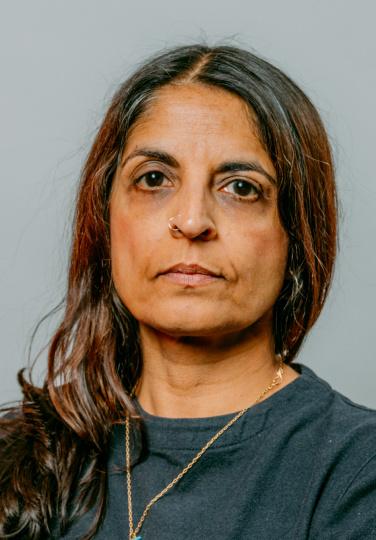
In the COP31 Climate Special Broadcast, Waseem Ahmad Siddiqui speaks with Nina Lakhani, Senior Global Climate Justice Reporter at Drilled Media, about the environmental and climate impacts of the destruction caused by Israel in Gaza, ecocide, the carbon footprint of warfare, and the exclusion of military emissions from international climate negotiations.
Waseem Ahmad Siddiqui: The planet-warming emissions generated during the first two months of the war in Gaza were greater than the annual carbon footprints of more than 20 of the world's most climate-vulnerable nations.
Nina Lakhani, a senior climate justice reporter at Drilled Media, writes about the report titled “Emissions from Israel's War in Gaza Have an Immense Effect on the Climate Catastrophe.”
The report is based on research conducted by researchers in the US and the UK. The analysis includes carbon emissions from fuel used by aircraft, tanks, and other vehicles, as well as emissions from the production and detonation of bombs, artillery shells, and rockets.
It also showed that US cargo planes transporting military supplies to Israel accounted for nearly half of all carbon emissions.
For more on this, we are joined by Nina Lakhani. Nina, thank you for joining us.
Nina Lakhani: You're welcome, hi.
W.A.S.: Can you begin by telling us about this article you wrote a few years ago? I believe, as we were discussing earlier, that you've written more on the subject since then. Can you explain exactly what you've found?
N.L.: Yeah, so the article you mentioned was one I wrote while working for The Guardian, and it was the first of three exclusive reports I did on this really pioneering new research, in which researchers are trying to account for the carbon emissions, the greenhouse gas emissions, associated with war, right?
That was the first report we did, looking at the first two months. The last one I worked on calculated emissions from the first 15 months, and that went much deeper.
Basically, as the researchers developed their methodology, they started by looking at direct emissions. So, the things you talked about: carbon emissions from transporting weapons, exploding bombs, tanks, and direct warfare, as well as the impact, for example, of Israel targeting and destroying all of the solar infrastructure in Gaza, forcing Palestinians to rely on diesel generators, which also produce carbon emissions.
There were also emissions related to Israel targeting food supplies and Palestinians having to rely on food delivered by trucks. So, all of these direct emissions were included.
But they also calculated the carbon cost of clearing the rubble. Israel has damaged or destroyed approximately half a million structures in Gaza. So, there's the carbon cost of removing that rubble and then rebuilding. And it's actually the reconstruction that's going to have the biggest climate impact, right? Because we know that the carbon emissions associated with cement and construction are so high.
In the last story I did, which was in 2025, looking at the first 15 months of the genocide, we found that those 15 months had generated more greenhouse gas emissions than the annual emissions of Afghanistan or Costa Rica. These are large countries, right?
And these are all emissions that could obviously have been avoided. They're linked to illegal wars, they're linked to a genocide, but they're also emissions that aren't accounted for anywhere, right?
So, you're in Türkiye, COP31 is underway, and more than 30 years after the UN climate talks began, there's still this big, gaping hole: military emissions, both those associated with militaries during peacetime and those generated during war.
Countries are not required to account for those emissions when they report their annual emissions to the UNFCCC.
W.A.S.: Yes. And what I want to continue discussing is the question of infrastructure in Gaza. Just to summarize what the UN, among other organizations, has concluded: 84% of Gaza's buildings have been damaged, nearly 425,000 housing units have been destroyed or partially damaged, and there are 55 million tons of rubble, which I believe are still there.
So, what I want to ask is: How would you describe the scale of the genocide, which is so materially evident in Gaza?
N.L.: Well, I think Forensic Architecture, for example, has shown that the destruction of Gaza has been targeted, right? Israel has deliberately targeted infrastructure: homes, schools, mosques, health clinics, bakeries, and other essential facilities. They've also targeted water infrastructure, sewage treatment plants, energy facilities, farmland, and greenhouses.
So, all the things that Palestinians in Gaza need to make life livable, Israel has deliberately targeted. They've made life unlivable.
And when you look at what qualifies as genocide, there are five criteria, and a country only needs to meet one of those for its actions to be considered genocide. Israel has met four out of those five, right?
But on top of that, what Forensic Architecture has shown through its research is that Israel has not only destroyed what makes life livable in Gaza, but has also destroyed the evidence of that destruction.
So, whereas in a conventional aerial bombardment, such as Russia's bombardment of Ukraine, you can use satellites and other technologies to observe and map the destruction from above, what Israel is doing is going in afterward and deliberately bulldozing the destroyed structures.
And that destruction is evidence. Buried beneath the rubble of these approximately half a million buildings and structures are people's bodies, right? So, the evidence of the genocide is being destroyed at the same time.
And I think it's really important to remember that Palestinians, like Indigenous peoples all over the world, are deeply rooted in and connected to their land. What Israel has been trying to do here is destroy them by destroying their land, right?
So, you have the destruction of wetlands that are incredibly important for migratory animals across the region, as well as farmland and olive orchards.
And I wrote a chapter for a book on the ecocide in Gaza.
W.A.S.: I was going to come there.
N.L.: Yeah, and I interviewed a Bedouin farmer whose family had ancestral farmland near the Rafah border. They came in, destroyed the water sources, destroyed the farmland, and deliberately killed all of his family's animals, right?
So, this isn't just about destroying infrastructure. It's about trying to break Palestinians' connection to their land. They're trying to destroy Palestinian identity, right? Because their identity is deeply rooted in where they come from. It's their land.
W.A.S.: That's absolutely right, what you were saying. And I want to turn to the chapter you wrote for the book Gaza: The Story of a Genocide, edited by Fatima Bhutto and Sonia Faleiro and published by Verso. Your chapter is titled “Ecocide in Palestine.”
In your piece, you raise two very important questions about the genocide in Gaza. I quote: “How will we implement a climate adaptation plan when there is nothing left? How can we talk about climate justice while our people and land are being destroyed?” End quote.
Could you speak about these two questions and also address the scale of the widespread destruction in Gaza, which has a name, as you've already mentioned in your chapter's title: ecocide?
N.L.: Yeah, I mean, I think what I was trying to do in that chapter was two things.
One was to explain why the environmental destruction, the deliberate targeting of the environment by Israel, and by that I mean the land, the water, the air, everything, must be seen as a central part of the genocide. They're not separate things. They're part of the same process.
As I said, Palestinians are deeply connected to their land. And there has been a deliberate effort to destroy that land.
In the chapter, I use the genocide in Guatemala as an example. The US-backed right-wing government tried to do the same thing to the Maya Ixil people. They removed them from their land, burned down their crops, burned their fields, and tried to break the connection between the people and their land, right?
And that's exactly what Israel has done, but on a much larger and more comprehensive scale. As you said, more than 80% of the built infrastructure has either been destroyed or damaged, and we don't know how many people are buried beneath that rubble, which Israel has subsequently bulldozed.
The quotes you just mentioned are from Hadeel Ikhmais, who is Palestine's chief climate officer.
And this whole investigation of mine actually began when I met her in Dubai at COP three years ago. I went to meet her when the genocide had just begun. We weren't that far away, geographically speaking. We were in the same region.
And she said to me, "All these people here at COP say they care about the climate, right? Well, even if you don't care about Palestine, even if you don't think the Palestinian people have a right to exist, if you care about the climate, then you have to care about the genocide. Because the climate impact of war, genocide, and military occupation is enormous, and it's not being accounted for. So even if you don't care about Palestinians, you should care about this."
And that's what really got me thinking. I went home from that COP and started looking for researchers who were interested in this issue. And that's how we ended up collaborating.
Because, first of all, the Middle East, I mean, the whole planet is now experiencing climate breakdown, right? But that region is particularly vulnerable to desertification, drought, and other forms of ecosystem loss. So even if you don't care about Palestinians, you have to care about this.
But I'm so tired of meeting people who claim to be climate justice advocates, who say they care about climate justice, but don't want to talk about genocide. They don't want to talk about war, right?
If you can't bring yourself to care about the genocide of a people, whether it's in Sudan, Myanmar, or the Uyghurs in China, then how can you try to convince anybody else to care about droughts or floods?
All of this matters because of people. All of this matters because of humanity, right? And a threat to one community is a threat to us all.
So those quotes from Hadeel, and that conversation I had with her back in Dubai, what was it, three COPs ago? Four COPs ago? I can't even remember now. That was what really got me thinking about all of this and prompted me to start investigating this massive gap in how we account for military emissions.
W.A.S.: And now, my final question, as we only have about two minutes left.
I want to ask you about this very important intersection you've already touched on: the relationship between climate change and genocide.
Have you seen any change over the years in how the COP process and the international community more broadly have approached this reality that we're facing right now?
N.L.: I mean, I think there is a growing movement, for example, to recognize ecocide under international law. I think there's growing support for that. And within the UNFCCC and COP structures, there is also growing pressure.
But Türkiye is a very important example. Even if we set aside genocide and war, in peacetime alone, the world's militaries are estimated to contribute 5.5% of global emissions. That would make them the fourth-largest emitter in the world—fifth, sorry—after the US, China, India, and Russia, right?
And those emissions aren't accounted for anywhere.
What we know is that military CO₂ emissions increase as military spending increases. And military spending is rising to record levels.
Türkiye, where you are, where we're broadcasting from, Waseem, spent $25 billion on its military last year, a massive increase. It has the second-largest military in NATO. And yet, in its reporting to the UNFCCC, it declares no emissions from its military. No military emissions, right?
The fact is, until reporting military emissions becomes mandatory, we simply cannot deal with climate change effectively because we don't know the full scale of what we're dealing with. There's this massive gap in emissions accounting.
And that doesn't even include the huge surge in emissions associated with the genocide in Gaza, the military occupation in Lebanon, the war in Ukraine, the West Bank, or the war in Sudan. None of those emissions are being accounted for either.
But even without those, we still don't have a complete picture.
What we do know is that military emissions are increasing, and countries are generally cutting climate finance while increasing military spending.
And yet none of this is on the table in Türkiye at COP31. None of it.
W.A.S.: Nina Lakhani, a senior climate justice reporter at Drilled Media. Thank you so much once again, Nina.
N.L.: Thank you for having me Waseem.
Who is Nina Lakhani? Nina Lakhani is a British investigative journalist and author who serves as Senior Global Climate Justice Reporter at Drilled Media. She previously spent six years covering climate and environmental justice for The Guardian. Throughout her journalism career spanning more than two decades, she has focused on the climate crisis, human rights, repression of environmental defenders, Indigenous peoples’ struggles, the environmental impacts of war, and conflicts over natural resources. She is the author of Who Killed Berta Cáceres? and contributed a chapter titled “Ecocide in Gaza” to the 2025 anthology Gaza: The Story of a Genocide.