Image
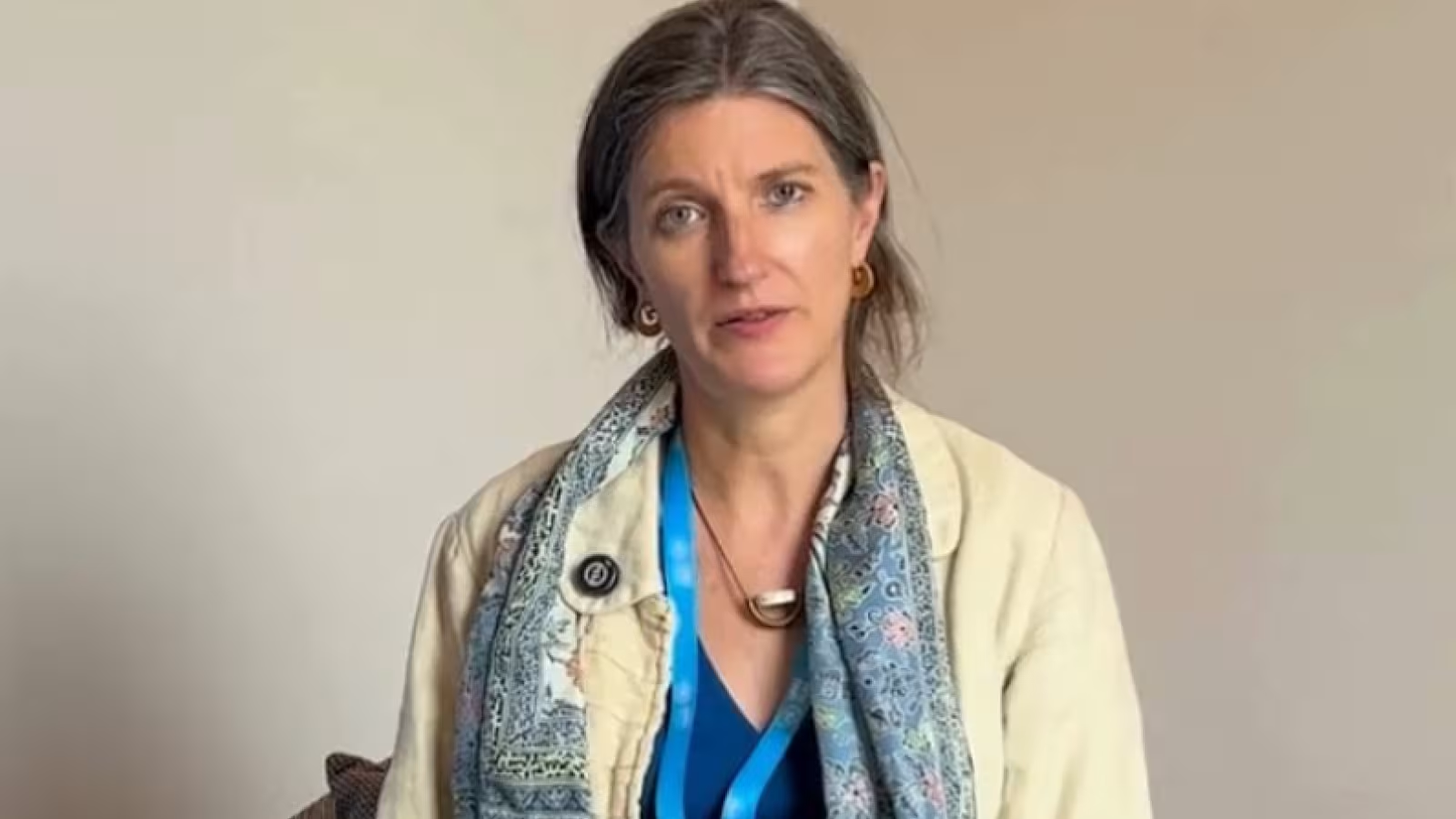
In the COP31 Climate Special Broadcast, Eren İleri speaks with Marta Schaaf of Amnesty International about the shrinking space for civil society, the struggle for human rights in the face of authoritarian governments, the role of international law, and the importance of solidarity in confronting grave human rights violations.
Eren İleri: Good to know. Now I need to be really careful. Let me take this off. November 10th, 2026. May you please tell me your name and tell me that you give consent for me to record and broadcast your voice and/or image?
Marta Schaaf: My name is Marta Schaaf. I give permission for you to broadcast my voice and/or my image.
E.İ.: Thank you so much. Welcome to Turkey. I hope you had good travels. Thank you so much for being here. My first question is, in an environment where civil space is shrinking, what can environmental and human rights defenders do to make their demands heard?
M.S.: I think it's important that we use the full extent of the space that we have, that we do not obey in advance, that we don't— people who are safe and feel secure or who have other kinds of privileges, such as I who have a passport privilege, use all the space we can, exercise our right to free expression and association and peaceful assembly, and talk about how climate change is affecting people and communities and how important it is that we have the right to share information, to access information, and to interact with the governments that are supposedly acting in our interest.
E.İ.: How do we expand civil space in authoritarian contexts?
M.S.: That's a million-dollar question. I think we have seen some really inspiring examples, right, in the last several months even. In Serbia, for example, there was a process of years in the making of students and others walking over the entirety of the country, explaining to others who had been so shaped by years of state-run media, describing who they were and what they wanted and gaining others to join their movement to use actually the ballot box to make a change. So I think, you know, we've seen recent elections in Brazil and the United States that also represented a significant change from the direction that the countries were on. And so it'll be incumbent now on the people elected to act in accordance with human rights and to make further human rights demands. So I would say we saw the ballot box, we saw protest, we see international solidarity, which is part of what Amnesty does, right? Speaking in coalition with others on behalf of others where needed to highlight cases worldwide of what happens when you restrict civic space and also how people are paying with their human rights for climate change.
E.İ.: Thank you for that. That was such a thoughtful answer. My third and last question is, we've been seeing horrendous violations of human rights, uh, livecasted to our Instagram and TikTok streams, uh, from ICE kidnapping our neighbors to children in Gaza dying. How do we hold governments committing these massive human rights abuses accountable, uh, in an international law context where the United States or Israel can just ignore court decisions?
M.S.: That's also an extremely difficult question, but I think we cannot— I don't want to use the word hope, but we cannot lose commitment to multilateral processes because they are what we have. It doesn't mean we shouldn't start and support other kinds of efforts, but recognizing that the International Court of Justice opinion, for example, with regard to Israel and Gaza, to demanding that that be respected and implemented. At Amnesty, we've been working to document the role of many governments and corporations in engaging in supporting the state of Israel and the role that they're playing contributing to the genocide and to other crimes under international humanitarian law. I think there's no easy route around people power as well. And so we can think of international law as one route directly through multilateral processes, but there's also international human rights law It's there to protect people using people power and going different routes, right? Or journalists covering what's happening and using free expression to share what they're witnessing on the ground.
E.İ.: Thank you so much. Do you have any last words to our audience in Turkey who may be listening?
M.S.: Don't give up. Use the space available to you. Do not obey and advance.
E.İ.: Thank you so much. It's been a pleasure to hear your voice.
Marta Schaaf kimdir?: Dr. Marta Schaaf, Uluslararası Af Örgütü'nün İklim, Ekonomik ve Sosyal Adalet ile Şirketlerin Hesap Verebilirliği Programı Direktörü'dür. Sivil toplum kuruluşlarında ve akademide 25 yılı aşkın süredir sağlık ve insan hakları alanlarında çalışmaktadır. İklim adaleti, fosil yakıtlardan adil geçiş, şirketlerin insan hakları sorumlulukları ve çevre savunucularının korunması üzerine çalışmalar yürütmektedir. COP31 kapsamında iklim krizi, otoriterleşme ve sivil toplumun daralan hareket alanı arasındaki ilişkiye dikkat çekmektedir.