Image
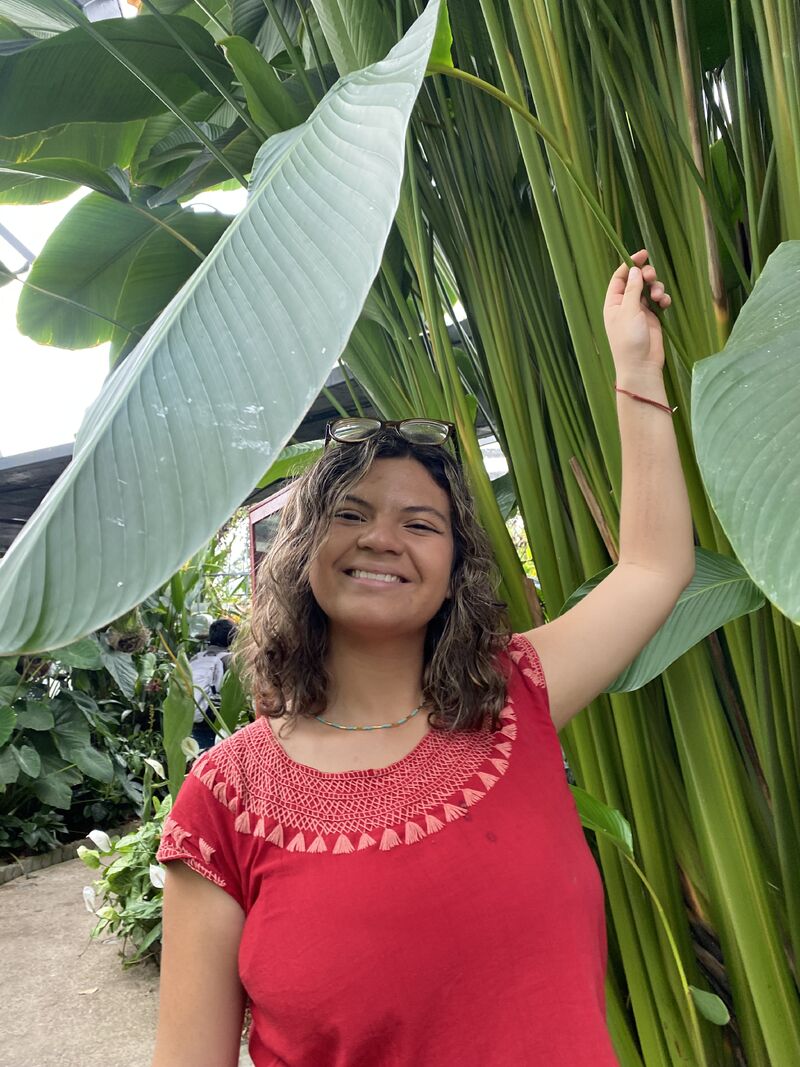
As part of COP31, we speak with Latin American ecofeminist and climate justice activist Laura Guzmán about the ecological destruction caused by militarism, imperialism, and resource exploitation in Colombia, displacement in the Amazon, the threat posed by a military base on Gorgona Island, and the role of women, young people, and grassroots movements in the struggle for climate justice.
Eren İleri: Today is November 11th, 2026. We are Wasim Siddiqui and Eren İleri and here with Laura Guzmán. Laura, To start, can you introduce yourself and tell us about Tierra Nostrada's work?
Laura Guzmán: My name is Laura Guzmán. I'm an ecofeminist, a peace activist, and a climate justice campaigner with Tierra Nuestra, a grassroots movement from the Global South, specifically Latin America.
We work on many different issues, but the main focus of our work is building climate justice from the frontlines, through a grassroots perspective, across multiple Latin American countries.
We have chapters in Colombia, Mexico, Peru, Ecuador, and Argentina, and we address various climate and human rights issues affecting frontline communities.
E.İ.: Wow, that's incredible work. Thank you so much for being here. Let's start with the impacts. How has Colombia been affected by extractivism?
L.G.: There are several ways, sadly, but I'd like to focus on one major issue: how militarism and the climate crisis have worked hand in hand, contributing to the killing of climate justice activists.
Sadly, Colombia has been ranked the most dangerous country in the world for environmental activists by Global Witness. Since 2023, more than 173 climate justice campaigners and activists have been murdered.
It's really sad. We're a country that has tried several times to achieve peace. We signed a peace agreement not that long ago, ten years ago, in 2016. And now we have a president who is authorizing bombs to be dropped on people, holding press conferences in cemeteries, and walking among dead bodies.
So Colombia is a very dangerous place for climate activism. And that goes hand in hand with the climate crisis and the terrible things happening to people.
In a place like that, how can you stand up to capitalists and corporations that are forcing us out of our lands, including sacred spaces for Indigenous peoples, places of worship for religious communities, and spaces where civil society and grassroots movements can come together to demand climate justice?
We need to live in a place where human rights are respected. And that's really difficult in the current global political climate.
E.İ.: Waseem, can I pass the mic to you for the next question?
W.A.S.: Laura, yesterday on the panel, you began your speech with a very important statement. You said, "I am angry. I'm angry because my land in Colombia is being militarized and occupied by imperial powers like the United States and China."
The United States and China have a symbiotic but adversarial relationship. While the United States forms the center of the imperial system, China has emerged as a challenger to US dominance.
How does this relationship affect countries on the periphery, like Colombia, and the lives of their people, given that militarization, extractivism, and ecocide go hand in hand in these places?
L.G.: Well, thank you for such a comprehensive question. I agree with you that Colombia finds itself caught in the middle of these economic wars we're witnessing.
As a result, we have what we call sacrifice zones. These are places where powerful actors with enormous economic resources choose to sacrifice people and territories for greater economic gain. And we're seeing this in Colombia and across Latin America.
You mentioned militarization, and I want to highlight a clear example of how militarization, ecocide, and displacement go hand in hand with capitalist expansion: the Amazon.
Colombia contains a large part of the Amazon rainforest. And with these new governments backed by Washington and Donald Trump, who has been pushing for leaders across Latin America who are aligned with Washington's interests, we're seeing the militarization of the Amazon.
People are being forced out of their sacred lands, places of worship, and areas that serve almost as climate oases. And this massive militarization is taking place under the pretext of protecting the Amazon. But how can we protect the Amazon without the people who live there?
This is being done to serve Washington's competition with China, to maintain economic control and remain relevant in an ever-changing world.
And we're seeing that we are the sacrifice zone. We don't matter to these imperial powers. We, the people who are protecting Mother Earth, restoring the Amazon, rebuilding ecosystems, and reversing deforestation, are now being driven out.
E.İ.: Yesterday, we heard about how Pax Silica is going to reshape Luzon. I also know that the United States is building a radar base on Gorgona Island. There are strong connections between Pax Silica and the Barangay Agreement you discussed yesterday, as well as similar projects. What kind of imperialist model is this? What is the United States trying to achieve here?
L.G.: Well, we've seen a significant change in the model of imperialism we were dealing with before. In the past, they tried to hide their intentions. They would say, "We're doing this because we care about you. We're spraying glyphosate all over your crops and giving you genetically modified seeds so you can have better food systems." We know that's false, but at least they tried to hide what they were doing.
Now, however, we're seeing direct attacks on Colombian sovereignty. They want to build a military base on Gorgona Island, where whales come to reproduce after their long journey from Antarctica.
And we're seeing an attack not only on sovereignty, but also on biodiversity, climate resilience projects, and the communities and cultures that will be affected.
They're not even trying to cooperate, reach agreements, or hide their intentions anymore. They're doing it openly because they know they've already bought our governments. There's also a huge amount of AIPAC money going into our elections to manipulate them, for lack of a better word.
We're seeing this across the region, including in Argentina and Chile, where there's also enormous interest in rare earth elements and critical minerals.
I think it's a real shame that we're facing these threats so openly and haven't done enough to stop them. Even here, in the United Nations, these issues are being pushed aside, with people saying, "Well, that's their issue. We can't intervene."
Meanwhile, they're intervening in our countries with enormous amounts of corporate money and with their weapons.
E.İ.: That's dark and concerning. Let's try to find a way forward. You're an ecofeminist. How can ecofeminism show us a way to break free from militarism?
L.G.: I think that's such a good question because sometimes we get stuck focusing on the terrible problems and the dark realities we're facing. We're not only confronting climate change, but also capitalism, corporate power, racism, and sexism.
As a feminist from the frontline communities of Latin America, working within grassroots movements alongside young people across the region, I believe we have the power to change these narratives and dynamics.
For me, ecofeminism is about showing the world the connections between the injustices women face, sexism, and the oppression of Mother Earth. Women and nature are oppressed by the same systems, and capitalism perpetuates this oppression. But we are also part of the solution, and we're bringing these perspectives into the climate crisis discussions.
I think we've achieved a major victory. At COP30 in Belém, we developed the Belém Action Mechanism (BAM) for a just transition. It was built by the people, through constituencies representing women and gender, youth, and climate action.
We were able to bring these demands to governments and say, "We have the solution. This is what the just transition mechanism should look like."
And we achieved a major victory by bringing it here to COP31 and getting countries to sign on to it.
Now we face the enormous challenge of implementing it, making sure countries follow the guidelines we've developed and remain accountable to the people.
But we've built a strong feminist movement, a strong youth movement, and a strong Global South movement that can carry this work forward. And that gives me a lot of hope for the future.
E.İ.: Is there anything you'd like to say to our listeners in Turkey and around the world?
L.G.: I have so many things to say. I think the first would be: never lose hope.
We're hearing a lot of people say that COPs don't work, and I somewhat agree. But the important thing, especially as we discuss exceeding the 1.5°C threshold, is that we don't lose hope.
We won't stop trying. Maybe this space isn't working, but we're going to make it work. We're going to keep making demands.
We can't just sit back and say, "Nothing is working. They're going to destroy planet Earth, so let's just give up."
No. If we see fire everywhere, we have to become the rain. We have to put out those fires.
We need to understand what we're up against, know who we're fighting, but also organize and build communities to confront these challenges.
W.A.S.: I don't have a question, but I'd just like to say something about the hope you were talking about. There's a lot of hope in the demonstrations outside, but unfortunately, we can't see much of it inside. It seems to be a dark place. The light is outside. So we invite you to come outside and join us in the demonstrations. Thank you so much.
L.G.: Thank you. Exactly.
Who is Laura Guzmán? Laura Guzmán is a Colombian ecofeminist, peace and climate justice activist. She works with Tierra Nuestra, a grassroots movement operating across Latin America. She campaigns against militarism, imperialism, resource exploitation, and ecological destruction, advocating for climate justice and the rights of women, young people, and Indigenous communities.
COP31'de neler konuşuluyor, hangi kararlar alınıyor? Resmî müzakerelerden alternatif zirvelere, iklim hareketinin seslerinden gezegenin geleceğini belirleyecek tartışmalara, Antalya'dan gelişmeleri COP31 Özel Yayını'nda takip ediyoruz.