Image
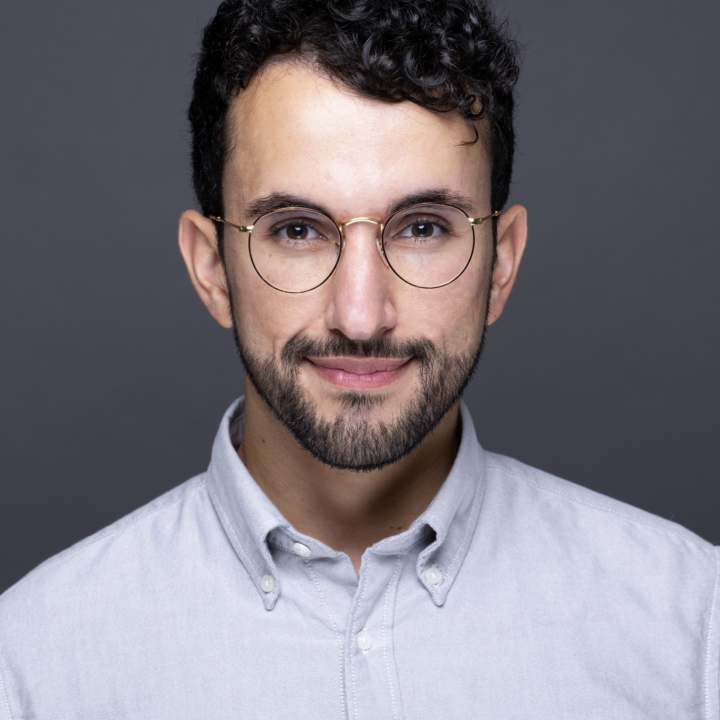
As part of COP31, we speak with Hossein Ayazi about forced displacement driven by the climate crisis, the concept of “petro-oppression,” the right to stay, and the inequalities created by the global economic system built on fossil fuels.
Waseem Ahmad Siddiqui: We are joined by Hossein Ayazi, Co-Director of Research at the Othering and Belonging Institute at the University of California, Berkeley. Hossein, thank you for joining us.
Hossein Ayazi: Thank you so much for having me, Waseem.
W.A.S.:
So, I want to begin with your work. Together with Elsadig Elsheikh, you have been working on global forced migration, beginning with Moving Targets in 2017. Since then, you have written six reports, and I would like to focus on two of them concerning climate refugees, limiting myself to three questions.
The first is a report you co-authored in 2019, The Climate Crisis and Rights Denied. The second is another report you co-authored, published in 2020, if I'm not mistaken, The Climate Crisis, Displacement, and the Right to Stay.
H.A.: Mm-hmm.
W.A.S.: Let's begin with the first report, Climate Refugees: The Climate Crisis and Rights Denied. The climate crisis is already leading to a massive increase in the number of refugees being displaced around the world. This report reveals how long-term disasters, including sea-level rise and desertification, and short-term disasters, such as storms and fires, are especially threatening to people living in the Global South and island nations.
In this report, you mention that "climate refugees" is not recognized as a legal term. We are here in Antalya at COP31, the United Nations Climate Change Conference. What is happening behind closed doors is something we cannot see. But what is happening outside is where we see hope.
What would you say about climate refugees at this particular moment? And could you also explain what you mean by "petro-persecution" in your report?
H.A.: Wonderful. Thank you so much for the question, Waseem, and for highlighting this work.
I think the most useful way to start is to emphasize that, yes, climate displacement requires future planning, but it's exactly what you said: it's already a reality for millions of people around the world. These are people who are displaced by increasingly severe storms, wildfires, droughts, sea-level rise, as well as slower processes that gradually undermine the conditions necessary to sustain livelihoods and communities.
I think it's important to understand that these environmental processes unfold within a particular set of political and economic arrangements that shape who is exposed to those impacts, who has the resources to recover, and who is actually able to remain in place and live a healthy, secure, dignified life with their communities.
On the question of legal recognition, I think this is a very important one because it often tends to dominate conversations around climate-induced migration and displacement. You're right that the term "climate refugees" is not actually recognized as a distinct legal category under the 1951 Refugee Convention, where the term "refugee" is recognized as a legally protected category.
This stems from a couple of dynamics. The Convention was developed around a particular understanding of persecution. Generally, you have to identify an agent of persecution, a government or some other entity within that nation or territory, and establish that the persecution is connected to one of the Convention's protected grounds, such as race, religion, nationality, membership of a particular social group, or political opinion.
That's useful in its own right, of course. The 1951 Refugee Convention is incredibly useful in its own right, as has been demonstrated. But it creates a profound problem when it comes to the climate crisis.
The forces that compel climate-induced migration don't operate neatly within national borders. We know this very well. Fossil fuel extraction, financial institutions, international trade, and development arrangements are transnational and global dynamics.
And that's what takes us to this notion of "petro-persecution." We're working with this existing legal category and construct, but we're also trying to rework and reinterpret it in a way that's broad enough to recognize some of these larger determinants of people's need to move.
That's what we're trying to capture with the concept: the relationship between dependence on fossil fuels, which is where the "petro" part comes in, and an uneven world economy that is also connected to the production of climate vulnerability and, subsequently, the displacement of people.
It's also useful in this regard to speak historically for a moment. We're obviously in the middle of the climate crisis, and it's worsening. It's important to recognize that colonialism and imperialism, over the past several centuries, have integrated many countries of what is now considered the Global South into the global economy through resource extraction, land dispossession, foreign ownership, corporate incursions, and forms of labor exploitation.
All of these continue to shape economies today. They're still ever-present, both in the colonial era and in the supposedly postcolonial era.
These processes have historically been powered by fossil fuels, and there are new forms of dispossession taking place around green economies, green technologies, and emerging forms of renewable energy.
So there's nuance that even this term "petro-persecution" requires, because green extraction can be present as well.
These historical and present-day structures created the climate crisis and the uneven distribution of its consequences.
The second point I want to share regarding petro-persecution concerns not just what has given rise to the climate crisis and people's need to move, but also how those consequences are subsequently addressed and governed.
How are countries and communities actually responding to these dynamics?
What we're often seeing, and what we're trying to identify through this body of work, is that rather than addressing the specific structures that produce displacement, wealthy countries tend to respond in ways we're now quite familiar with: increasing border militarization, increasing surveillance, and increasing restrictions on human mobility.
Basically, it's a very carceral and punitive approach to people's movements, regardless of their circumstances in many ways.
And that's the major contradiction at the center of what we're describing here: the same global economic arrangements that allow capital, investments, and resources to move across borders with relative freedom are simultaneously restricting the movements of people fleeing the consequences of those arrangements.
It's important to note that this isn't the case for everybody. Certainly, movement is allowed, but we often see it taking shape in ways that reinforce precarious labor conditions and the vulnerability of people who move to other locations.
They're certainly integrated into those places, but only as subordinated classes.
So this is the contradiction that we're really grappling with. And that's why climate displacement is a question of global justice, a question of accountability, and a question of reparations.
And if you'll permit me, I can speak for a moment about COP31.
W.A.S.: Sure.
H.A.: What you said is exactly right. There are conversations happening behind closed doors, and we're only privy to a very small part of them.
I think that in the spaces we occupy at COP, it's so important not to separate discussions about loss and damage from discussions about climate finance, from discussions about just transitions, or from the realities of displacement.
All of these things are deeply intertwined if we adopt a perspective that recognizes their structural origins.
The establishment of the Loss and Damage Fund a few years ago was an incredibly important achievement. It emerged, as we know, from decades of organizing, particularly by small island developing states that were, and still are, at risk of complete inundation.
They argued that loss and damage must be a central framework through which we understand reparations and advance climate action.
The question is whether these mechanisms will actually deliver the scale of resources, the forms of accountability, and, in many ways, the institutional changes necessary to address the harms people are experiencing.
Certainly, a fund was established, but who's in charge of it? Who's required to contribute to it? How are these resources distributed?
All of these are ways in which powerful, transformative demands and organizing efforts can be watered down, contained, or diminished.
I think that's the connection we need to reassert over and over again, and we need to understand how it's taking shape in this particular moment.
W.A.S.: Exactly, exactly. And here I want to turn to your second report, where you conceptualize the idea of the "right to stay" by saying, and I quote, "It is not only the right for climate-displaced people to safely resettle when their lives are uprooted; it is also the right to stay in place amidst the climate crisis and against the extractive and exploitative structures that are forcing them to move."
Hussein, your report doesn't just look at climate refugees in the sense of people who are forced to flee across borders, but also at people who have been forced to flee their homes within their own countries—internally displaced people.
Could you talk about that? What did you find in this second report, and how many people are affected, and where?
H.A.: Thank you very much for this question. This is such an important dimension of our work and the work of so many of us who recognize the many dimensions of displacement and migration.
I think it's important to emphasize this because so many public conversations about climate refugees tend to focus almost exclusively on people crossing international borders. And while this is certainly a prominent expression of these dynamics, focusing on international migration can detract from a deeper understanding of all the ways people are moving, including those who might not even be able to move across borders.
We don't want to center movement across international borders in a way that might reinforce the perception that the threat is people's movement rather than the systems that force people to move.
So climate displacement, as you said, actually takes place predominantly within countries, particularly in the Global South. These are people who are forced to leave their homes but remain within national borders. That's what internal displacement means.
And they face fundamental questions of protection, rights, and access to the resources necessary to rebuild their lives.
Our research brief in 2023 documented the scale of the problem, and there's more recent data from the Internal Displacement Monitoring Centre, which provides an important update.
In 2025, there were approximately 27 million weather-related internal displacement movements worldwide. That was in 2025 alone.
W.A.S.: Mm-hmm.
H.A.: So, of course, we want to be careful with that figure. It counts movements, not necessarily distinct individuals.
W.A.S.: Yeah.
H.A.:
And there are challenges in determining whether every weather-related disaster can be attributed directly to climate change, though we know that climate change is exacerbating weather-related disasters. But it gives you a sense of the scale of the problem, at least at a glance.
We know that these impacts are especially pronounced across Asia and the Pacific, Africa, and Latin America. They affect people in rural and agricultural communities. If people are farming in ways that rely on a dependable climate and predictable weather patterns, but those conditions are no longer available, that often forces them to move from rural and agricultural areas to urban centers in search of work that is frequently more precarious and offers fewer labor protections.
These dynamics affect coastal communities. They also affect urban settlements, which are often located on floodplains. Many of these settlements were established there for very good reasons, such as fertile soil and access to resources. Increasingly, people in these areas are experiencing extreme heat and chronic water stress.
So people are moving internally from all these different places to wherever they can maintain the greatest possible quality of life, or at least some semblance of it.
I think this brings us to an important understanding: displacement is caused by much more than a specific hazard. Certainly, sea-level rise is a key factor. Droughts and intense heat are also key factors. But these hazards don't affect everybody equally, and that's the crucial point.
The consequences of these hazards depend on where people live, what they do for their livelihoods, whether they rent or own their homes, whether they have strong community networks, whether they have secure access to land, and what kinds of livelihoods they depend on.
Another important factor is whether infrastructure is available, whether emergency warning systems are in place, and whether people have access to public resources and institutional support.
This is where the "right to stay" framework becomes especially important. The right to stay means that people should have the political, economic, and ecological conditions necessary to remain in their communities if they choose to do so. That's the right to stay: to have everything one needs to remain in place.
It also means addressing the structures that make staying increasingly impossible: land dispossession, extractive development, whether fossil fuel-based or green, inadequate public investment, precarious labor conditions, and the erosion of essential services.
When we talk about petro-persecution, as we touched on in the previous question, neoliberalization and austerity regimes are key dimensions through which communities are persecuted under this global political economy. That's an important emphasis of this framework.
I also want to affirm, through this framework and our conversation, people's actual right to move. People must be able to move safely and with dignity when staying is no longer possible or desirable.
They must have the right to resettle, to maintain their cultural and community ties where possible, and to have the possibility of return, the right to return.
We see that notion intersecting with many other similar demands, particularly the right to return in contexts deeply shaped by extraction, exploitation, exclusion, and so on.
So the right to stay is really about expanding people's choices rather than allowing political and economic conditions to dictate where they can and cannot live.
This work is also very relevant in California and the United States. I recently led a report with the California Governor's Office as part of its climate change assessments, focusing on climate-induced displacement and migration and how some of these dynamics are unfolding here as well.
Because, again, these dynamics are ever-present.
To give you some figures from California, which is such a small part of the world but so significant in some of the work we do here, between 2017 and 2019, one million Californians were ordered to evacuate because of persistent wildfires.
If you're in this part of the world, you can see that these areas are becoming drier, hotter, and more prone to these kinds of events.
So we paid attention to the same dynamics that we would anywhere else in the world. We're looking at housing, labor, transportation, health, infrastructure, and governance.
All of these factors shape whether a community can stay in place or whether its members must move. And that's what I would like us to keep in mind.
W.A.S.: And here, I want to ask you my last question. Do you see a connection between the pressures of climate change, the massive displacement of climate refugees, and the rise of right-wing and authoritarian governments? Do you see a connection between the rise of authoritarian governments and the pressures created by refugees trying to leave areas affected by the climate crisis? We only have two minutes.
H.A.: Okay, I took up so much time with those other wonderful questions.
I think the first thing I would say is that climate change doesn't automatically produce authoritarianism. There are other pathways we can take.
I think it's also important to recognize the relationship between how political and economic systems respond to the crises they themselves helped produce.
If we look historically, the climate crisis is unfolding within a global political economy characterized by enormous inequality, extractive development, and the unequal distribution of wealth and resources. These conditions generate a great deal of material insecurity, undermine livelihoods, and so on.
But rather than confronting those conditions and structures directly, authoritarian or right-wing political movements often redirect public frustration and hardship toward migrants, racialized and ethnic communities, and other groups portrayed as threats.
So these structural and material problems are reframed as cultural or identity-based threats. And that's where these politics become especially important.
That's also where we need to intervene, not just in how these threats are constructed, but also in the building of walls, militarized borders, detention systems, and surveillance mechanisms that increasingly restrict migration and are also used to control domestic populations. These things are not separable.
So we're actually in deep solidarity, whether we're coming from near or far, whether we're staying in place or moving. There are people and communities who recognize the convergence of our struggles.
These are the things we need to grapple with as we move forward and as we continue this work at COP.
W.A.S.: Hossein Ayazi, Co-Director of Research at the Othering and Belonging Institute at the University of California, Berkeley. Hossein, thank you so much.
H.A.: Thank you so much, Waseem.
Who is Hossein Ayazi?: Hossein Ayazi is Co-Director of Research at the Othering & Belonging Institute at the University of California, Berkeley, and a Senior Policy Analyst with its Global Justice Program. His work focuses on the climate crisis, forced migration, climate refugees, environmental justice, global inequalities, and exploitative economic systems. Ayazi earned his PhD from the University of California, Berkeley, and has contributed to numerous studies and reports on climate-induced displacement, migrants' rights, and the right of people to remain in their communities.