Image

In Future Economies and Social Entrepreneurship, Erdem Cansızoğlu speaks with Özge Doruk, Green Economy Project Coordinator at the Green Thought Association, about the difference between greenwashing and genuine transformation, Türkiye’s climate policies, a just transition away from coal, and young people’s participation in the fight against climate change ahead of COP31.
Erdem Cansızoğlu: Hello, dear Açık Radio listeners. You are listening to "Next Economies and Social Entrepreneurship" as part of Açık Gazette. I'm Erdem Cansızoğlu. Today I'll be hosting alone. Normally Zeynep Erduran would be here with me, but she is a little sick. From here, we wish her a quick recovery. This week our guest is Özge Doruk, Green Economy Project Coordinator at Yeşil Düşünce Derneği, the Green Thought Association. With just days to go before COP31, we will talk with Özge about what is behind the word "green", what the green economy promises, and where it falls short. Welcome, Özge.
Özge Doruk: Hello, thank you for having me.
E.C.: I want to start right away with the question I'm most curious about. In recent years we see the word "green" everywhere, on everything. Green loans, green bonds, green transformation... At the 14th Green Economy Conference, you asked a similar question: Is the green transition really an opportunity, or does it stay only in our words? And in your toolkit, you talked a bit about what the green economy is not. For example, it is not greenwashing, and it is not the "bridge fuel" fairy tale... In a few days, world leaders will meet in Antalya for COP31, and they will use the word "green" hundreds, maybe thousands of times. So let me ask you: why is it so hard for an ordinary listener to tell what is really green from what is just painted green? Where should they look?
Ö.D.: Yes. I think it is no accident that people find it hard to tell what is really green from what is just painted green. Because today we use "green" both as the language of a demand for change and as the language of a marketing strategy. On one side, social movements that want to leave fossil fuels use the same word. On the other side, a company that changes only a very small part of its business can use it too. The problem is not only that listeners don't have enough technical knowledge. The problem is that environmental claims often show one chosen success story instead of the whole business. That is why, at the 14th Green Economy Conference, we discussed how the green transition is talked about in Türkiye and how that shows up in policy. In the toolkit, too, we made a conscious choice to explain what the green economy is not. We said it is not greenwashing. We questioned the fossil fuel sector's "bridge fuel" story, for example the story that keeps natural gas in the system for good. We also stressed that unplanned renewable energy investments will not automatically lead to good ecological results. So in this process, we need to look not only at which technology is used, but at all the results of an investment. Let's think of an example. A bank may issue a green bond. That doesn't stop us from asking which projects the money goes to, how much those projects really cut emissions, and what the bank does with its other investments. In the same way, a company putting solar panels on its factory can be a positive step, yes. But if the same company is growing its fossil fuel investments at the same time, and ignoring the total impact, then we can't really talk about a green transition here. I can suggest a few questions. First: can the claim be measured? Do they only say "net zero by 2050", or are there near-term targets, yearly data, and independent checks? Second: is the whole business changing? Not one product or one project, but the whole organization, and where its money flows. And finally: who pays the ecological and social cost? A project that leaves local people out of the decision needs to be questioned. We can use the same test before COP31. Instead of how ambitious the leaders' statements sound, we need to look at the timeline for action, the decisions on fossil fuels, the sources of finance, and accountability. The proof of being green is not the words we use. It is whether the results are open to the public and can be checked. That's how I would sum it up.
E.C.: You really gave our listeners a very useful tool there. I also want to go a little into the definition of the green economy. I looked at how the United Nations defines it, and it says: an economy that improves human well-being and equality while reducing harm to the environment. In your toolkit, you find this definition not enough. You say the economy we want should protect the right to life of all living beings, not only people, and it should respect the planet's limits. In this program, under the Next Economies umbrella, we talk about many movements, from doughnut economics to degrowth, from the solidarity economy to the wellbeing economy. So where does the green economy sit in this family? Is it a separate movement, or something that covers all of them? And why wasn't the UN definition enough for you? We'd love to hear it in your own words.
Ö.D.: I think the green economy is not a school cut off from the other approaches. But it's not an umbrella that claims to cover all of them either. We did use it as a framing definition, for example, but I see it more as a field that feeds, and is fed by, many different economic debates. When we prepared the toolkit as a team, we didn't focus only on renewable energy or resource efficiency. We placed related ideas, like degrowth, the doughnut economy you mentioned, decolonization, and the Green New Deal, inside the same historical and intellectual debate. The definition you quoted is in the UN Environment Programme. We don't reject it. It's an important starting point, yes. But as an association, we wanted to go a bit further. Because nature is not just a resource used to keep human well-being going. The habitats of other living beings, the integrity of ecosystems, and the planet's ecological thresholds are also central subjects of economic decisions. Also, if a solution offered for a region does not fit its climate, its water, and its ecological conditions, then looking low-carbon on paper is not enough. Here the doughnut economy asks an important question: can we meet everyone's minimum social needs without going above the ecological ceiling? Degrowth, for example, questions what happens when we treat endless growth in production and consumption as the goal, especially in economies where consumption is already very high. The solidarity economy asks how ownership and decision-making can be shared. Of course, there can be serious differences between these approaches. For example, they don't say the same things about the role of growth, where the market should stop, or what public planning should look like. That is exactly why I don't want to squeeze them all under one label. But their shared questions are very valuable. Who is the economy organized for? What does it grow? What does it make invisible? And which limits does it break? For me, the transformative side of the green economy is how it answers these questions. If it is reduced to just making today's economy run more efficiently, it risks reproducing old inequalities with new technologies. But when it is thought together with ecological rights, social justice, and democratic participation, I think it is a concept that can build a very strong shared ground for debate with other economic approaches.

E.C.: Thank you so much. Now, COP31 starts in Antalya in five days, and it's the first time Türkiye is hosting this table. This August at Yeşilkamp, the Green Camp, you called the camp's declaration "The Two Faces of Climate Policy." You mentioned it a moment ago. There you say: you can't have a climate law without an emissions reduction target or a net zero date. And you say a pledge that promises "reducing the increase" instead of real reduction cannot meet what Paris requires. To put it in kitchen language, it's a bit like saying, "I was going to gain 20 kilos this year. If I gain only 10, I've lost 10." Do you think hosting COP31 is a chance for Türkiye to close the gap between these two faces? Or is it just a way to polish the shop window and leave the back room as it is? What do you think, and why?
Ö.D.: Hosting COP31 is of course an important diplomatic opportunity for Türkiye. But we should also say from the start that hosting does not automatically mean progress in climate policy. As you said, in a few days, from November 9 to 20, we will be in Antalya. This conference in Antalya will be a space where people ask not only what Türkiye tells others, but also what it does at home. As I mentioned, we published a declaration at Yeşilkamp this year. We criticized the climate law for not having a concrete emissions reduction target and a clear date. We questioned why the nationally determined contribution settles for the logic of "reducing the increase" instead of a real drop in emissions. This difference is very basic. A country can say, "If I had done nothing, my emissions would have grown much more. I am limiting the increase." But doesn't that mean current emissions are not going down in absolute terms? The result that climate science asks for and a political success story are not the same thing. And climate policy should not be reduced to carbon accounting alone. New mining projects, the protection of forests and other carbon sinks, the impact of energy investments on local living spaces, the future of workers, and the right to take part are all part of the same debate. Making strong climate pledges at an international meeting while going backwards in these areas at home weakens trust. The most concrete example that comes to my mind: at a time when we should be talking about leaving coal, and about a more planned mechanism and real steps for a just transition, we see a new coal power plant in Çanakkale and the expansion of an existing one. This came onto our agenda just a few months ago, this year. So, opportunity or shop window? In short, I would say this: it's not decided in advance. It will be decided by the steps taken. If Türkiye announces a timeline and a roadmap for a just exit from coal, if it strengthens its emissions targets, if it shapes current projects around that, moving forward with a real focus on exit instead of new power plants, if it builds accountable systems for adaptation and climate finance, and if it gives civil society a real, meaningful role, then hosting can turn into a real gain. But if it settles only for visibility and promoting investment, sadly, the gap between words and action will continue. The regular consultation we ask for as the Climate Network, which Yeşil Düşünce is also a member of, is part of this. Civil society should not just be invited to events during the summit. It should be at the table before and after the negotiations, while policy is being made. I think we will know whether COP31 was a success not by how crowded the halls in Antalya are, but by which concrete decisions start to be put into practice in Türkiye a year from now.
E.C.: You're absolutely right. So far we have mostly talked about the big picture. You also mentioned how this affects different groups, like workers.
My next question goes in that direction. You coordinated a report called "From Coal to Green." In Zonguldak, you talked to 34 people, from miners to miners' wives, from young people to union members. There is a line from a miner in it: "Closing the mine is like wiping Zonguldak off the map." And a miner's wife says all she wants from the transition is a steady job. Just transition is now defined in the climate law. It will be talked about a lot in Antalya. Why do you think this idea still doesn't reach a kitchen in Zonguldak? And what would make it reach there?
Ö.D.: For us, the Zonguldak example shows very well why the just transition debate is not only about choosing between energy technologies. In a coal city, coal is not just a fuel or a source of jobs. It is tied to families' livelihoods, to professional identity, to memory, and to the way the local economy is organized. So a sentence like "Let's close the mine and new sectors will open" doesn't answer the real questions of the people living there. Which jobs, for whom, when, and with what security? When these questions are not answered, when they are brushed aside, the idea of transition itself becomes scary. As an association, with our research "From Coal to Green: A Participatory Transition Model for Zonguldak", we tried to show that this change must be handled in its social, cultural, and governance sides as much as its economic side. It was also very important in this process to listen separately to the experiences of women and young people. The hidden labor around the coal economy, and people's worries about the future, are often reduced to the number of jobs for mine workers. But there is a whole other story there. If we ask why these voices are not heard enough in the negotiations in Antalya, I think the problem is partly about representation and scale. At the international table, mechanisms, funds, and indicators are discussed. But the bridges built to translate them into the language, needs, and decision-making power of local communities are, sadly, weak. You can't prepare a just transition plan for a region without asking the region. Workers, unions, women, young people, small businesses, and local governments need a say in every stage of the transition. In 2025, at COP30 in Belém, it was agreed to set up a just transition mechanism. Yes, the talks in Antalya on how this mechanism will work matter. The mechanism should not stay just a place where countries share experiences. It should truly support local planning, capacity, finance, and participation. Which tools and resources it will provide is, of course, up to the negotiations, and we can't talk as if it's already decided. For Türkiye, I think the needs are very concrete. Along with a timeline for leaving coal, regional plans to diversify the economy should be made. Workers' incomes, retirement, retraining, and security when moving to new jobs should be guaranteed. Environmental restoration and public investment should be planned. But not with the idea of "let's prepare these packages in Ankara and announce them in Zonguldak." They need to be designed together, in Zonguldak. And I think there is really good, strong civil organizing in Zonguldak on this. People really follow the issue closely. Taking that seriously is very valuable. The success of a just transition is not measured on the day a power plant closes. I think it's measured by what happens to people's living conditions after it closes.
E.C.: Yes, you talked about just transition and leaving coal, and there is nuclear power, which Türkiye sees as an alternative. The first electricity from the first reactor at Akkuyu is expected by the end of this year or next spring. The government presents nuclear to us as a clean solution on the road to net zero. But in the Yeşilkamp declaration, you say nuclear is neither carbon-free nor clean. There's something I'm curious about. According to the IPCC, across its whole chain, nuclear releases about as much carbon per kilowatt-hour as wind. How do you read this? What makes you so cautious about nuclear, especially beyond carbon?
Ö.D.: Let's make a distinction. Nuclear power plants do not release carbon directly while running, the way coal plants do. That's why international climate debates treat nuclear as one of the low-carbon options. But being low-carbon does not automatically mean it is risk-free, low-cost, or ecologically harmless. Uranium mining, building the plant, fuel supply, the long-term management of radioactive waste, high investment costs, and large-scale safety risks all need to be looked at together. As the Green Thought Association, we have done a lot of work for a long time on why we oppose nuclear and why it is "not green." We also ran active campaigns on this. One of our members, Pınar Demircan, comes to mind first. Just a week ago she published her latest piece on this in the Green European Journal, and I'd say you can look there for that debate. Then, besides nuclear, the situation with coal is also very clear: high greenhouse gas emissions, air pollution, and the costs of health and ecological damage. Also, reducing energy security to a country's ability to produce electricity at home is misleading. Imported fuels, dependence on foreign finance and on large central facilities, and price swings are also part of security. That's why, in the call we made in June with the Climate Network, we dealt with a just exit from fossil fuels together with energy security. Now, I've talked about both nuclear and coal, but I'm not saying the alternative story is just "wind and solar instead of coal." We need efficiency policies that don't push electricity use up for no reason, better buildings, stronger grids, storage and demand management, and more renewable power with the right choice of sites. It also matters who runs the production, who pays the cost, and whether local people have a say. To sum up, the story we need to tell may be a shift: from seeing energy just as a product to make more and more of, to seeing it as a reliable public service that everyone can access.
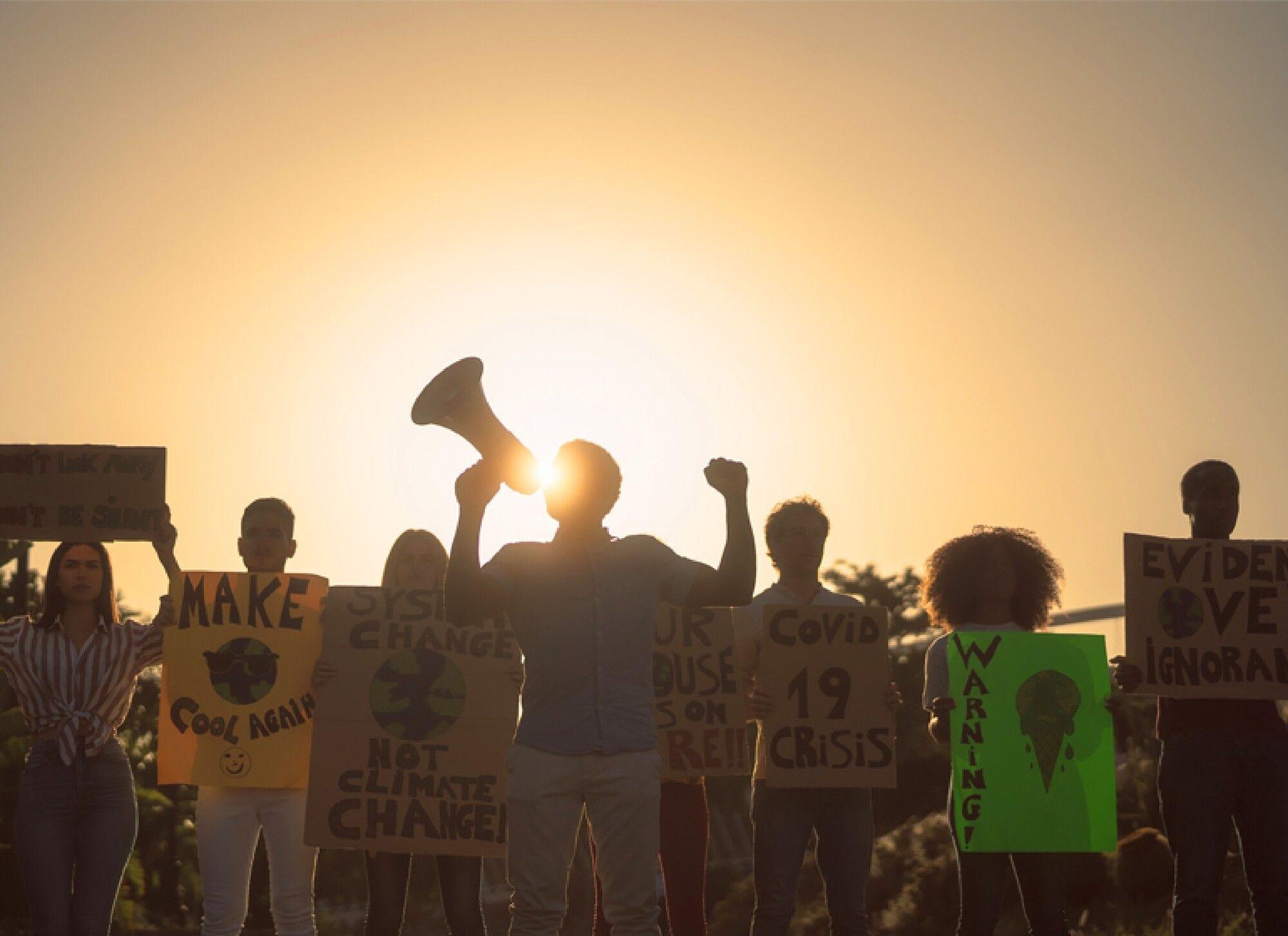
E.C.: As we come to the last minutes of the program, I have one last short question. Something in the Zonguldak report caught my eye. Young people often found the language of just transition debates technical and foreign to them. And before COP31, you started a "COP31 Glossary" series. You make terms like NDC, nationally determined contributions, simpler, with the idea "I can't be part of it if I don't understand it." In the Yeşilkamp declaration, you also wrote that young people are not the subjects of the future but of today. In a few days, tens of thousands of delegates in Antalya will speak a language full of abbreviations. Why do you think climate policy is still spoken in such an expert language? And who does this language leave out?
Ö.D.: Yes, the language of climate policy really creates a serious problem for participation. NDC, the Just Transition Work Programme... In these international policies we often have to carry these terms in English too. Both Turkish and English abbreviations can give negotiators a shared technical language. I can't say this kind of shorthand is completely unnecessary. But when this language is used without explanation, it pushes out many people who are directly affected by the climate crisis and directly concerned by the issue. I think the issue has two sides. The first is access. When a young person, or someone working in a coal region, struggles to understand a climate policy text, they can't judge how the proposed plan will change their own life. The second is power. When only a small group of experts decides what the terms mean, the range of which problems get negotiated, and whose voice counts, can get narrower. Access to information becomes a precondition for the right to decide. That's why, as I mentioned with the Zonguldak research, making young people's participation in these debates visible is valuable. Young people are not just a group that will be affected in the future. They need to be actors in today's planning. We stressed this in the 2026 Yeşilkamp declaration too: young people are not the future subjects of the climate struggle, but today's. Watching presentations or speaking at a symbolic session is not enough for participation. They should also be able to see how their views shape decisions. This is also how I see the Climate Network's work to make terms simpler. For example, translating NDC as "nationally determined contribution" is not enough. You need to explain that it answers the question: by how much, and by what date, is a country promising to cut its greenhouse gas emissions? A just transition plan should not be just a technical report. It should be linked to questions like: how will this affect my job, my income security, the city I live in, and my children's future? But simplifying doesn't mean turning it into an easy slogan. In short, we need to explain things without hiding the data, without hiding the uncertainty, and without losing touch with the truth. And it's not only language. Concrete conditions also shape participation: meeting times, finding accessible venues, language support, travel costs, and making it easier for people to organize. So that people don't just understand these issues but can also influence decisions, I think everyone working on climate should be a little self-critical and think about how to push the limits of participation further. That's how I'd sum it up.
E.C.: Thank you so much, Özge. And thank you again for joining us. You've been listening to "Next Economies and Social Entrepreneurship" on Apaçık Radio. Our guest was Özge Doruk, Green Economy Project Coordinator at the Green Thought Association. Before COP31, we talked about the difference between greenwashing and real change, about just transition, and about the language of climate policy. If you'd like to listen to the program again, you can visit the Apaçık Radio mobile app and website. We sincerely thank our whole team. See you next week with another guest. Goodbye.