Image
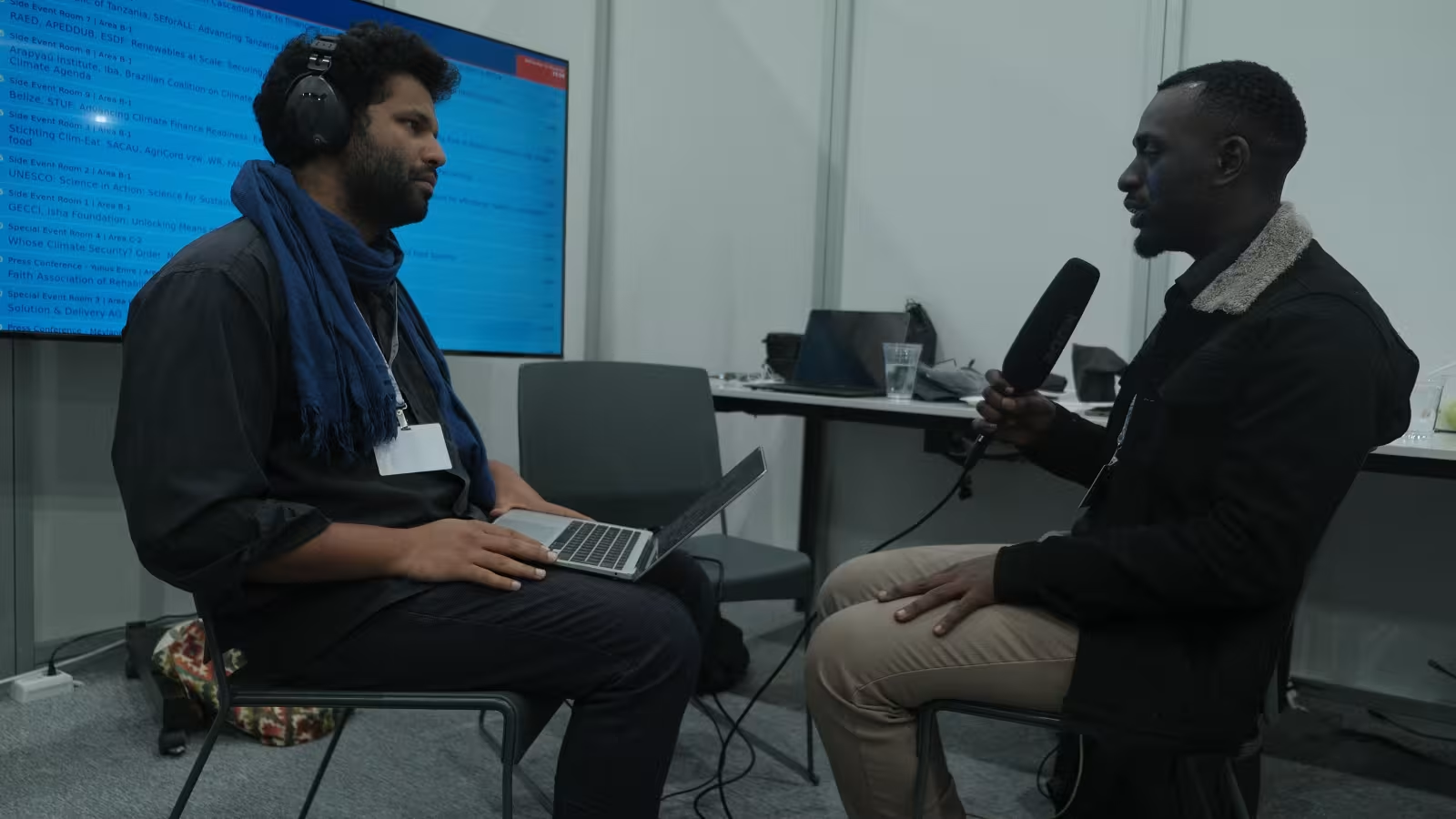
As part of COP31, we speak with Ugandan climate justice activist Edwin Namakanga about the disproportionate impact of the climate crisis on Africa, the droughts, floods, and landslides affecting Uganda, the injustices of climate finance, and the importance of including vulnerable communities in decision-making processes.
Waseem Ahmad Siddiqui: Africa is a continent whose 1.3 billion people are responsible for less than 4% of the world's carbon dioxide emissions. Yet Africa has already been battered by some of the most dire consequences of climate change through no fault of its own: rising sea levels, deadly droughts, higher temperatures, water shortages, and food insecurity. Recently, a locust plague hit parts of East Africa. Here, the most important question is: What should the world understand about what's happening in Uganda, but also across the African continent, as we deal with this global climate emergency?
Edwin Namakanga: Yeah. Hello, everyone. My name is Edwin Namakanga. I'm a climate justice advocate from Uganda, and right now I'm here at COP31. Thank you so much for that amazing question.
So I'll start by briefly explaining what's really happening in my country. But before I go there, I would like to point out that, historically, as you mentioned earlier, Africa contributes the least to climate change yet suffers the most from climate-related catastrophes, such as floods, landslides, and prolonged droughts. This is our daily reality in Uganda.
I'll briefly share what's happening in my country. In the northern part of Uganda, particularly in the Karamoja region, people are suffering from prolonged droughts. These droughts cause water scarcity and poor crop yields, which sometimes lead to climate-induced displacement, especially since these communities are predominantly pastoralist.
Secondly, in the western and eastern regions of Uganda, particularly in areas such as Kasese and Bududa, communities are experiencing severe flooding and landslides. In Kasese, around 2020, they experienced devastating floods after days of heavy rainfall caused the Nyamwamba River to burst its banks. The floodwaters entered people's homes, washed away their crops, and forced many people to leave their homes.
I could go on and on, but this is the daily reality that we, as people from the most vulnerable communities, experience. That's why we need change so that we can take responsibility and care for our communities.
W.A.S.: Edwin, you come from Uganda, and you're a climate justice activist. I've seen that you began a campaign with the statement, "Nature is not cheap."
It's heartbreaking, as you write, that despite knowing the full extent of the climate crisis devastating vulnerable nations, the world's wealthiest countries have chosen to offer only a fraction of what's needed—just $250 billion a year—while the true costs of climate action run into the trillions.
Could you talk about the scale of this problem and also about the campaign you launched with the statement, "Nature is not cheap"?
E.N.: Yeah. So, regarding that statement, thank you so much. I would say that, yes, nature is not cheap because we don't have another planet to live on. And that's why we need to protect our planet.
Right now, we are young, but in a few years, we are going to grow old. So, if we at least try to live in harmony with nature, we need to take care of the environment by conserving it.
If I may share an example, Mabira Forest is one of the biggest forests in our country. But over time, it's being depleted by some investors who establish monoculture plantations, particularly sugarcane plantations, in these areas. So they are destroying this important carbon sink, which helps absorb carbon dioxide from the atmosphere.
It's all about raising awareness among people and showing them the reality of what's happening. Because everything we're experiencing, from flooding to prolonged droughts, is partly a result of our failure to take care of the environment.
And that's why we need to stand up and speak up.
W.A.S.: In the same campaign, if I'm not mistaken, please correct me if I'm wrong, you also write, "You can't cheat nature." That's another statement you make. And you write that the world is burning, that we have the highest level of carbon dioxide in the atmosphere in three million years. No, sorry, it was three meters, as I'm reading from the statement. But politicians ignore scientific studies and the solutions proposed by scholars.
So, could you also explain this statement? And could you talk about the place you come from, Uganda? What do these extremely high levels of carbon dioxide mean for the land?
E.N.: Yeah, I'll reiterate the statement: Yes, you cannot cheat nature.
I'll give an example from my home village, Namesi, which is located near the slopes of Mount Elgon. This area has two hills on either side, with the village situated in the valley between them.
A few years ago, it rained for days, and then, out of the blue, the soil started becoming unstable, and rocks began falling from the hills. They washed away people's crops, killed people, and more than 50 people lost their lives.
This is a reality that many communities experience. And it's not only happening in my home region.
Around COP27, I happened to meet a colleague from Tuvalu. Many parts of these islands are already affected by rising sea levels because they're located in the South Pacific. And when he shares what's really happening there, you can see that his culture is at risk of being lost. Future generations, all the children, may not be able to experience or embrace their culture because there may be no land left for them as more and more land becomes submerged due to rising sea levels and the melting of glaciers and ice sheets over time.
And this is largely caused by high-emitting countries. Human activities, particularly the burning of fossil fuels, greatly affect the atmosphere, contributing to global warming and the melting of ice.
So, in that sense, you cannot cheat the planet or nature because this is the reality that these communities are experiencing.
Sometimes I feel like I can't find the right words to explain the problems that the most vulnerable communities are going through.
Because if right now we are at around 1.2 degrees of warming, what will happen if we exceed the 1.5-degree threshold set out in the Paris Agreement? That means Earth will become hell for us.
So we need to make sure that high-emitting countries abide by the Paris Agreement and reduce their emissions so that we can all survive in the future.
W.A.S.: My last question is about your position as a climate justice activist. What I want to ask you about is freedom of speech and how the system protects that freedom.
Could you talk about the situation in Uganda? What opportunities do activists have to take to the streets and express their demands publicly? To what extent are they able to exercise their freedom of speech?
E.N.: Yeah, I believe we all have a role to play. Solving this climate crisis is not one person's responsibility. Let's say you're a professor, I'm an activist, and someone else is a lecturer. There are also scientists, because science is real. Scientists and lawyers contribute to the preparation of IPCC reports. Teachers then try to explain these findings to activists and students.
We, as activists, amplify people's voices and help others understand that what they're experiencing is connected to the climate crisis. So it's everyone's responsibility.
And if I'm to talk about how politics works, our leaders know what they need to do, but the system is failing us. We see these negotiations going on for days, even weeks, and yet we still fail to reach a consensus.
Because if we're demanding a just transition, a just transition pathway, let's make sure that people in places like my homeland can afford the alternatives being introduced. Let's make sure they have the opportunity to learn about and understand what's being implemented and what's being proposed.
So I would say that the system needs to be aligned in a way that ensures the most affected communities and their voices are included in the decision-making process.
Thank you.
W.A.S.: Edwin Namakanga, a climate justice activist from Uganda and an active Greenpeace campaigner. Thank you so much.
E.N.: You're welcome. Thank you so much.
Who is Edwin Namakanga? Edwin Namakanga is a Ugandan climate justice activist who has been involved in the Fridays for Future and Rise Up Movement initiatives and has participated in Greenpeace climate campaigns. His work focuses on the rights of communities most affected by the climate crisis, climate finance, and ensuring that the voices of the Global South are heard in international negotiations.
COP31'de neler konuşuluyor, hangi kararlar alınıyor? Resmî müzakerelerden alternatif zirvelere, iklim hareketinin seslerinden gezegenin geleceğini belirleyecek tartışmalara, Antalya'dan gelişmeleri COP31 Özel Yayını'nda takip ediyoruz.