Image
On Future Economies and Social Entrepreneurship, Yunus Erduran and Uygar Özesmi speak with Bahraini social entrepreneur Tariq al-Olaimy about the post-growth economy, the concept of partnering with nature, the potential of Islamic finance in addressing climate change, and the possibilities for building a just, sustainable, and people-centered economic system ahead of COP31.
Yunus Erduran: Hello everyone, and welcome to Next Economies and Social Entrepreneurship program here on Apaçık Radio. I'm Yunus Erduran, and I'm here with my co-host, Uygar Özesmi.
Uygar Özesmi: I'm Uygar Özesmi.
Y.E.: As we started talking in the last episodes around the world, more and more people are asking a simple question, but a radical one: what is the economy actually for? From well-being economy to the commons, from degrowth to regenerative economy, new movements are trying to answer it, not only in theory, but in practice.
That's what this program is about; every week, we explore one of these movements with the people who are building it. So, today's topic sits right at the heart of that search. Life without economic growth, treating nature not as a resource, but as a partner, and we are lucky to have a special guest with us.
U.Ö.: Yes, today we are joined by Tariq al-Olaimy: he's a social entrepreneur from Bahrain whose work spans more than 90 countries. I think he's a serial or parallel social entrepreneur, I should say, because he has founded so many organizations. One of them is “TBL Associates”, a people and planet strategy consultancy, along with initiatives like “Public Planet Partnerships”, “Recipes for Wellbeing”, and also “Future Faith”, with which he is also a partner of the Next Economies Forum that is going to take place 3-6 April 2027. He advises many global organizations from the UN Decade on Ecosystem Restoration to Greenpeace MENA (Middle East and North Africa). And his work brings together three themes we rarely hear in one conversation: post-growth economics, partnering with nature, and “Faith”- Islamic finance for climate action. Tariq, welcome to the program.
Tariq Al-Olaimy: Thank you so much for having me and the generous introduction, I’m really excited for this conversation.
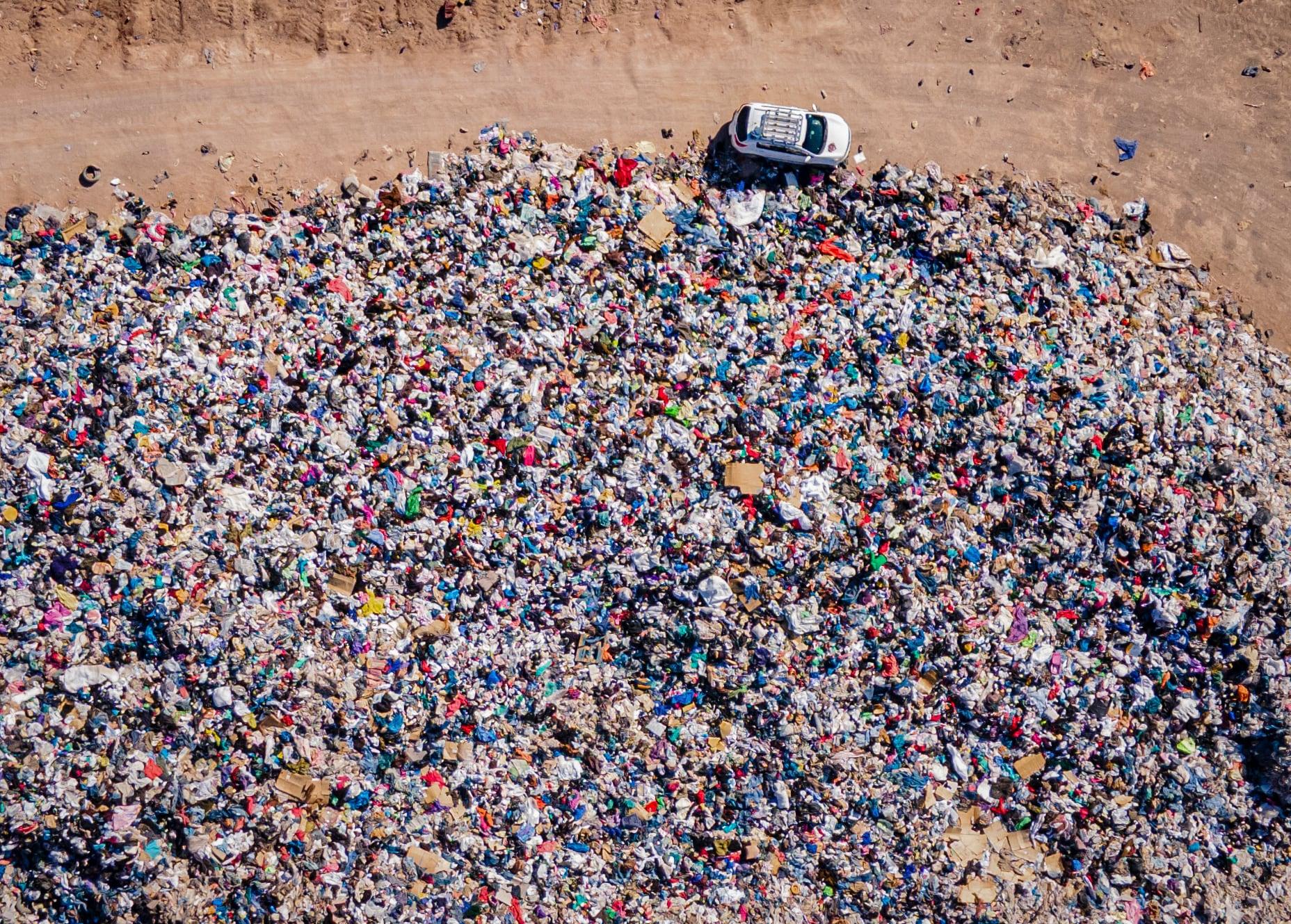
Y.E.: Tariq, let's start with a phrase of yours that really made me stop and think, in 2022, with your interview with the World Economic Forum, you said: “there is economic growth and there is un-economic growth”. So, “we want more schools, more hospitals, but do we really need more t-shirts that we wear twice and throw away?” was your essence. And we have very good news from France; they took a step in that direction in June with a law that fines ultra-fast fashion platforms and bans their advertising. So why is it so hard for all of us to say: “this part of the economy should stop growing”?
T.O.: You know, I mean, one, on the basis of it, economic growth often means producing more goods and services. For the human being, we associate that with “it can improve our lives”, and obviously it does improve our lives when it does give people, as you said, healthcare, education, secure housing. But of course, more production can also mean more waste, more pollution, more pressure on the rest of the living world. So, the quality of growth matters. What is truly economic and what is uneconomic? What is expanding, and does it meet a real human need? And even as it meets needs, what are the costs?
I often think of it like this: if you think of your neighbourhood bakery where you buy your “simit”, they make good bread, they pay their staff fairly, it may just have one or two people, usually owned by a family. Usually, they may not have an ambition to open up a second branch. And for the everyday person, we can recognize that as a successful business. It supports the entrepreneur, supports the family, it supports community cohesion. It's where we get our chai as well. Yet, if an investor looks at that, they may look at it and see it's actually a disappointing lack of growth. And that's the gap that is sometimes very difficult: the tension between “what serves life” and also, “what attracts capital” are two very different things. And it's also very difficult because growth is entangled with our sense of security. A worker may hear the words “you need to produce less”, and automatically their minds will go into being worried about their job. The government may worry about “how do you fund hospitals”?
So those nuances are important. And that example from France; when they banned fast fashion in their advertising, it goes into the very premise of, we have, one: enough clothes. We, in fact, according to Oxfam, have enough clothes to dress the next six generations of human beings, even if we didn't produce anything. So, we ultimately go into the question of, is there a real need to produce more clothes? The question is no. There's a distribution problem, of course. There's then also the challenge of your local tailor or your local shoemaker being affected if we continue doing fast fashion this way. So, it brings us to these really interesting questions that are both psychological. The question of some people looking at a turning point in our economy, ‘where’ we should be really investing more in. Usually, the answer is not to invest more in cheap t-shirts, it is not investing in the things such as military arms and emissions; whereas we can invest more into the local neighbourhood baker, the local pharmacies, the local healthcare system, the local education systems, and we're in this premise of making a choice, but those choices are very difficult because the economy is not designed to make it easy for us as human beings to make those choices.
U.Ö.: And of course, all those fast fashion t-shirts, which are actually plastics, synthetics, then go into nature, and then they pollute, and they come back to us as microplastics, and they poison us at the end of the day. You propose something which is called Public-Planet Partnerships, and that we should ask the simple question, countries sign trade agreements with each other all the time. So, what would an agreement between a country and nature look like? How do we sign that? How would that partnership with nature really come to life?
T.O.: I think it's a great comparison to the example you mentioned around plastic because the premise around that kind of thinking is our economy depends on relationships with living systems. I always say 100% of our economies is entirely dependent on the soil that grows our food, the pollinators that help plants reproduce, the rivers that provide our water. Yet, we often make invisible those parts of the economy in how we build, how we trade, how we negotiate. And that's where the idea of Public-Planet Partnerships came to be, which is to look at how can we think more consciously, also about innovation day to day in partnership with nature. And there's a number of amazing companies that do this work.
For example, Biodiversity is a company that partners with bees to monitor environmental health. And bees from a single colony, and which—I love this stat—approximately visits 4 billion flowers annually within a 700-hectare zone. So just think about the amount: 4 billion data points from a single colony, and that's able to provide valuable data on biodiversity and pollution levels, as opposed to the type of drone technology that we're looking at; as opposed to looking the kind of destruction, the destructive methods of trying to monitor ecosystems. There are others like that, such as the Frog Census program in Melbourne, I believe, that uses amphibians, and how the water level quality changes. You can tell that from the basis of how the frogs croak and how they sound, and they look differently. In Italy, researchers are able to track goat movements to predict volcanic eruptions. In Peru, they've fitted GPS devices to vultures to help locate illegal garbage dumps.
These are nice, fun innovation examples, but it also just shows our level and the way we can think about sustainability and innovation, which can really be widened in our imagination when we start to think of nature as a partner on a product or innovation level. And then my work also relates to “what does this look like into governance”? So, we have an organization called “Nature on Board” that asks the question, “what would it look like for nature to be on your board?” You know, if as a factory you depend on the river next door, what would it mean to bring that river onto your board, to have that represented on your board; actually govern with, for, and as that board, as that ecosystem on your board itself.
It's a very different way of thinking of governance that flips it on its head, that also asks: “how are we tied as a company to our local ecosystems?” “What can we do to make sure the local ecosystems of species are represented in our decision making?” Not at the end of the year when we want to write a nice check to nature, but in the way that we run our organizations themselves. And Public-Planet Partnerships tries to really move that from a relationship often with nature that is extractive, to the question of what would it look like to collaborate with the species in my neighbourhood that I pass by every single day, but don't often think about what our partnership looks like.
Y.E.: We have the next question, coming through a bit of Islamic finance. It might look like a niche topic, but in Turkey, we have interest-free participation banks, as you already know, and it's coming to 9-10% of the banking sector. It's quite a lot of money, and I'm sure you have even bigger numbers in the Gulf area, thinking about the region. So, you see Islamic finance has a different relationship with money: no interest or riba, money shouldn't be made just by being lent out. Instead, the lender and the borrower share the risk like business partners. You connect these two simple ideas of Islamic tradition. The first is “al-Mizan”, a balance: nature has its own balance, so we shouldn't break it. And the second is “Khalifa”, trusty ship: the Earth isn't ours to own, we are here to look after it. So those are the message and the traditions that you are feeding into.
This is very similar to what post-growth thinkers are going through. So, if the principles are already there in our tradition, in different religions and different spiritual movements as well, why hasn't Islamic finance become a real post-growth alternative is the question?
T.O.: I love this question. I'll try to also unpack it in the different forms and ways you've also asked. Islamic finance is—I always call it the largest moral economy movement in the world. It's a $7 trillion financial system operating today, projected to be 13 trillion by the year 2032.
I've studied post-growth and degrowth, I've done a master's in those topics. I've been part of the founding movements of the international degrowth networks. I've been in many of the spaces in the post-growth space. And when I tell you that maybe 0.2% of all people I've encountered in that space have heard of Islamic finance and have even understood it. It's quite astounding because when I first started to learn about degrowth, I was like: “this is exactly like Islamic finance”. If we look at the Islamic finance system, its premise and principles are the systematically redistributing concentrated wealth through mandatory mechanisms: core degrowth principle. It explicitly prevents investment in speculation, predatory lending, and environmentally destructive industries. Core principle of the well-being economy. It requires all production to be asset-based and tied to real economic activity, automatically filtering out what is parasitic and destructive for people. That's the premise of also a new economy movement. And it centres the protection of life, dignity, intergenerational justice through risk sharing, which is the premise of social justice economics.
This is something that Islamic finance has built and operationalized as a system for over 50 years. So, for me, Islamic finance is a real working example and a basis of a new economy and a post-growth movement, one in which I think we can learn a lot of lessons from, especially in Turkey and EU, where they're looking at a lot of beyond growth proposals that actually Islamic finance has piloted, failed in some cases, tried and re-shifted. I think the onus is on that movement to learn from Islamic finance, and at the same time Islamic finance doesn't go far enough, actually, in really meeting its full values and principles, which is why we're working with organizations such as Greenpeace MENA to really, make the shift from what we call as a ‘halal’ and ‘Sharia-based’ approach, which is around compliance, to what would it mean to have a more Tayyib-inspired we’re working currently with the Greenpeace on a Tayyib framework that looks at what would it mean for Islamic finance to better invest in and fund credible transition from coal to renewable energy. Islamic finance still invests in coal, what would it look like to invest in community water infrastructure, which it should be doing more. The very first blue sukuk was launched this summer, I believe, in Malaysia and Indonesia. So, there's, I think, a premise and a promise to Islamic finance. But I have to say, from a post-growth perspective, it has trailed many of the premises, many of the theories of change of the post-growth and well-being economy movements, more than, I think, what that movement actually understands. And it’s not been successful in a lot of the cases as well and it's learned, and it's re-shifted, and it's put things into better regulation.
U.Ö.: Tariq, in Turkey people are very sceptical in terms of Islamic banking, for example. They think that it has no whatsoever difference from the existing current non-Islamic banking, or that Islamic finance is not any different than conventional finances as well. Obviously, they're also operating in the same casino and that therefore they have been corrupted. And what is your reaction to that? How would you counter that critique, or that realisation?
T.O.: I wouldn't say corrupted. I would say that one, I really have to acknowledge the pioneers around Islamic finance, we stand on their shoulders, and they did something which was very difficult, which is to create an alternate financial system—considering Western colonial economics, and how difficult that is to do. I think a lot of those criticisms are very understandable. As a consumer, you go to a bank, and depending on which Islamic bank, if you want to have a housing agreement, get a car and purchase it through an Islamic finance product, your experience as a user and a consumer is what you're going to be basing on, and what is it that you are ending up going to pay, what goes out of your pocket. And I think a lot of those are contentious issues, still, that Islamic finance is figuring out—what would it mean to go more towards its principles. But, at the end of the day, you go into some of the base principles around the risk that's involved, who's centred in your consumer protection, who's centred in some of the justice and what's fair, it’s all for your consumer and, in some cases, unfortunately you may be paying more as a consumer for those benefits- that's also something that consumers usually won't like.
Number two, a lot of those criticisms around Islamic finance is what I would call around Islamic finance 1.0, where, if you're used to it in the 90s and the early 2000s, you look at how the structure of those products are, I'd very much agree 100% that is the criticism. The industry was trying to build something, in a way, through its regulations and processes, to be able to get to the point that it is. I think where we need to be is to support Islamic Finance 2.0, which is very much centred around the border question around Next Economies.
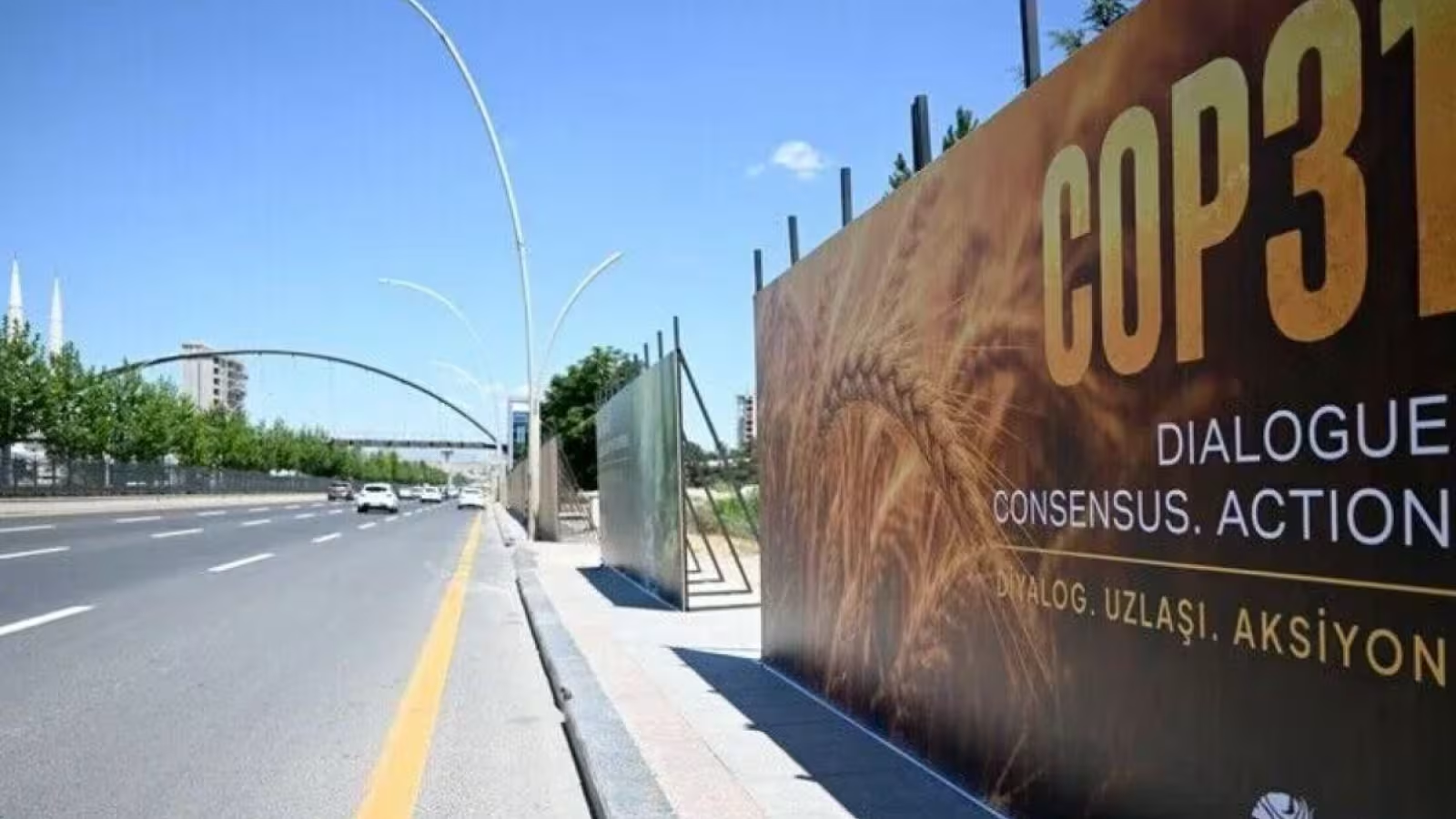
U.Ö.: Let's come to something more urgent right now. In less than a month, COP31 opens in Antalya, the UNFCC. Essentially, Conference of the Parties, and the first climate COP in Türkiye. You come from Bahrain, a small island you've described as threatened by rising seas and extreme heat. As you work together with Greenpeace MENA and the Global Ethical Finance Initiative, we know that only just 5% of Islamic finance assets go into renewables. Actually, it could be a lot more. So, why isn't the money there, and why aren't the voices there in the region shaping the climate talks in the way that it could?
T.O.: Thank you. And I also have to say, all my respect to the Turkey Presidency, who are now building up for probably the most intense month of their lives and for everyone in this space.
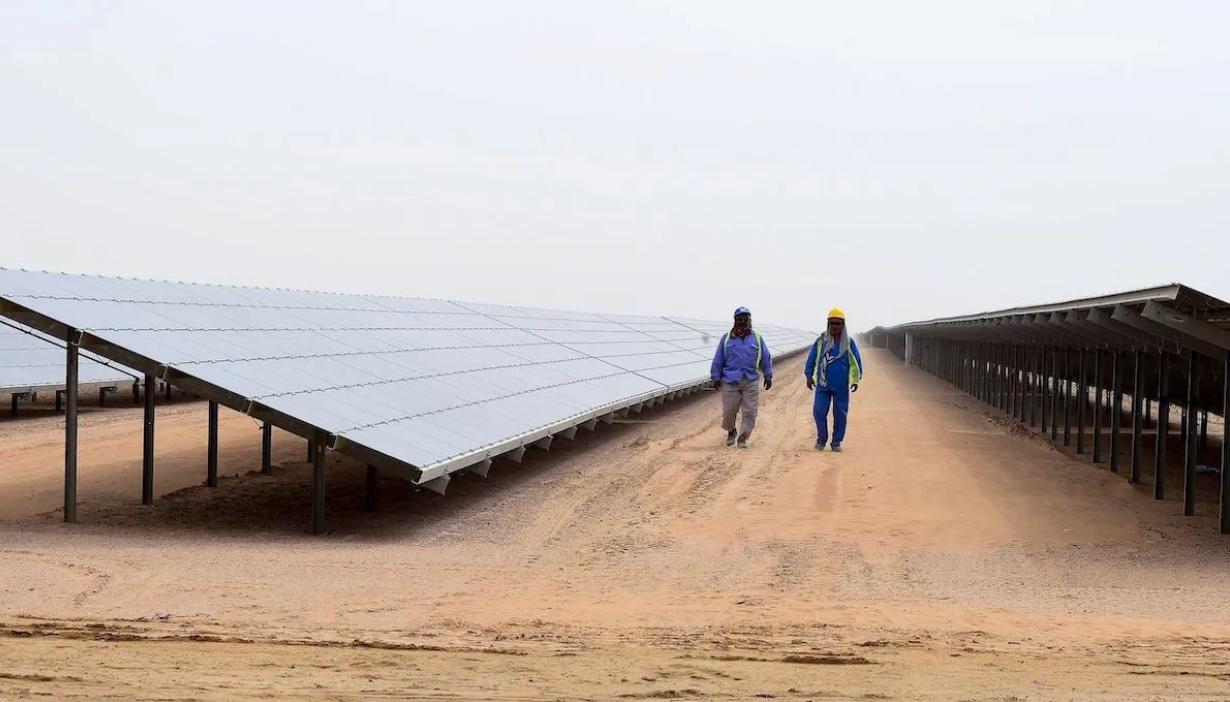
Unfortunately, with that stat, it's what I think we hope to move towards. It's not even 5%. You know, I think linking back to the last question, we know that given the alignment of Islamic finance, in principle, to nature and climate issues, less than 1% of Islamic finance asset actually goes into things such as renewables and others. And actually, if we just had 5% of those, we could mobilise around $400 billion by 2030, which is more money than what any Islamic country has received or will receive through the Loss and Damage Fund as it stands today. So, I think for us, it's also pushing the Islamic finance industry to really make that commitment and really to say: “now is where and now is the time”. Now that we see that, very sadly, given global climate architecture, that the funding isn't getting to the Muslim majority countries that require the funding, and it is with them, our responsibility. It is an institutional responsibility and it's a religious responsibility as well for that funding and finance to start to go into communities that are both the hardest-hit around the world that require the transition finance that is needed to switch from dirty coal, for example, to renewables, to also really building the kind of adaptation infrastructure that is required across parts of Southeast Asia.
At the same time, I think there is a real link and connection to the other COPs as well. So, I was in Mongolia in August for the UNCCD COP, which is the Desertification COP. In a couple of weeks' time, I'll be in Armenia for the Biodiversity COP. These are all linked and will come down the road to Antalya. We can’t be negotiating the same river and same finance across different conventions—these all come together. We've seen Islamic finance show up very strongly as a wider industry in the Justification COP, for example, the Islamic Development Bank has made one of the largest commitments, finance-wise, in the Diversification COP. That same commitment isn't being made necessary in the Biodiversity and the Climate COPs for obvious reasons. The politics around that are a bit more contentious but beyond what is being negotiated, beyond what is actually going to be agreed.
In Antalya, none of that actually stops Islamic finance institutions putting that finance in the mechanisms, the products, the structures that exist today; which are available, which don't need to be negotiated, and really requires both ambition and also moral fortitude from the industry to really take that next step.
Y.E.: Yes, our final question is about Recipes for Wellbeing initiative. We are getting lots of pessimist news from the globe and especially the young generation: they feel more demotivated, and they look for more meaning in their lives, especially in working lives. So, well-being economy in general becomes very important on that front. How are we going to give more hope, through well-being economy, to people among the many news that are not good?
T.O.: It is heartbreaking to see the state of the world, and the grief people are going through. Recipes for Wellbeing is an organization that I co-founded to support changemakers, climate activists, and those in the front lines of change in the new economy, to support them and their well-being. I have to say, it was started through a conversation in Turkey. We attended a social entrepreneurship retreat not too far off Bolu. We are in a beautiful location with climate activists. And you know, climate activists are often the most burnt-out people. We know that 59% of all young climate activists have experienced some degree of burnout. We know that, the hope you get from what we hear from changemakers, is the hope that you put in, ultimately. If we looked at what is external to us, if you looked at the state of the negotiations, if you looked at whatever it is that COP31 will end in as an agreement, there will be a sadness, a grief that comes from it, no matter how ambitious I think it may be, just because of the state of the world. And the hope, I think, comes often—if I go back to your premise around post-growth world—the post-growth world is a community-centred world. It is a world of care. It's a world of care-based infrastructure. It's a world of really looking at safety and livelihoods for humans in the more-than-human world, and the economic choices that we make. I don't think our souls are necessarily going to be soothed, unless we go back to some of those principles of community-based economics, and actually have that show up in our day-to-day lives, sadly.
But it is something which I also learned from the many faith leaders we work with, you know, in future faith. It's why I think a spiritual practice, no matter what that may be, is important. The spiritual practice can be in the type of economics that you profess. The spiritual practice can be organizing the next economy summit. You know, all of those are these micro-spiritual practices as well of moving towards something that you as a human being are able to put your energy, your grief, your anger, your anxiety, your brilliance into something as an input that can create a more hopeful world for you. So yeah, thank you.
Y.E.: You have been listening to Next Economies and Social Entrepreneurship here in Apaçık Radio.
U.Ö.: This week, our guest was Tariq al-Olaimy. We talked about un-economic growth, partnering with nature, Islamic finance, COP31, and changemaking.
Y.E.: Tariq, thank you very much for joining us. It was lovely to host you here.
U.Ö.: You can listen to this and all our previous episodes on Apaçık Radio app, and of course, on the websites. Our sincere thanks to our whole team.
Y.E.: We will meet again next week with another guest from another Next Economies movement. Take good care of yourselves and see you on the next episode.