Image
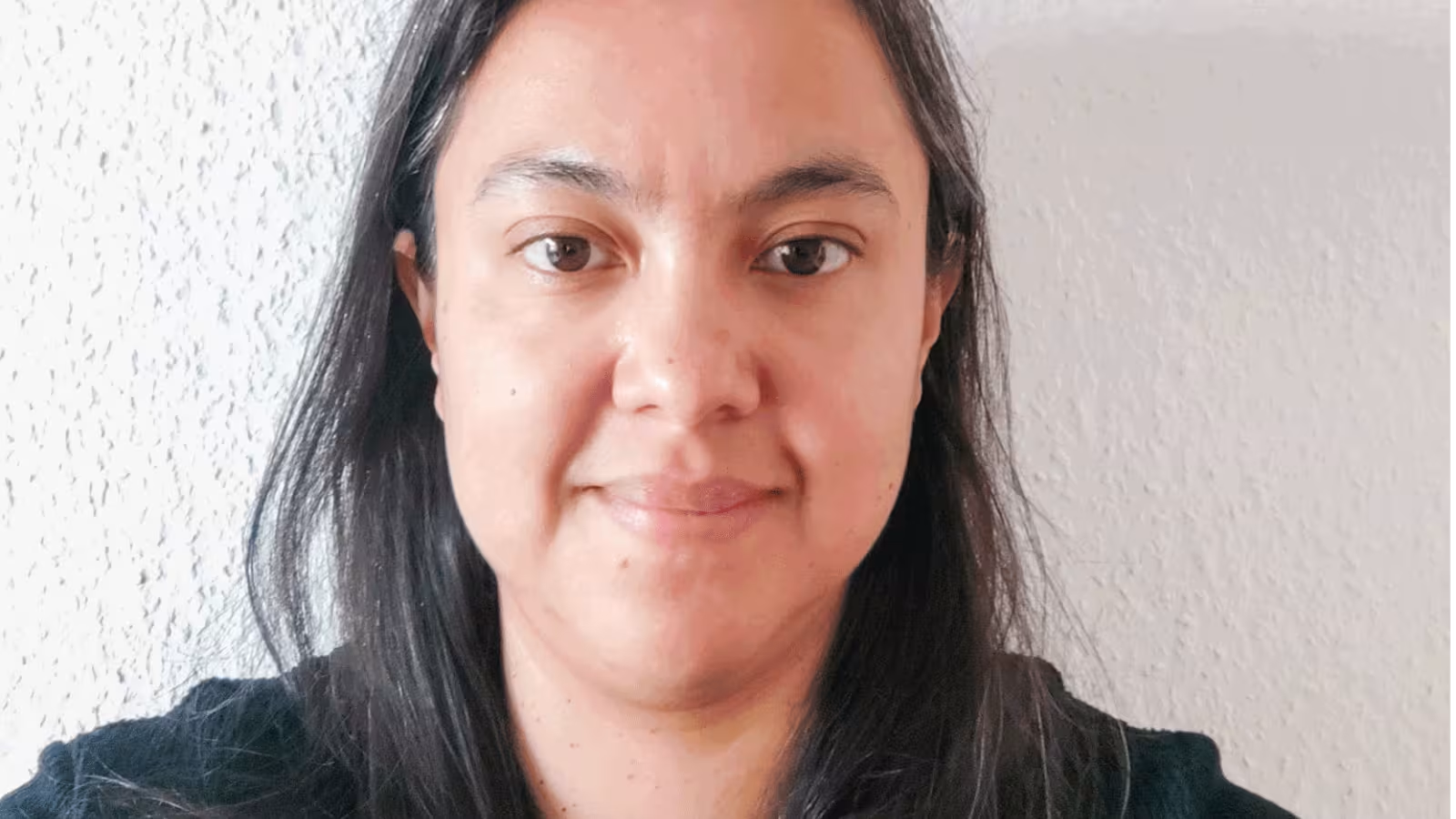
As part of COP31, we speak with Bertha Iris Argueta Tejeda, Senior Policy and Advocacy Officer for Climate Justice at Eurodad, about the debt burden facing Global South countries, the impact of the debt crisis on climate action, calls for debt cancellation, austerity policies, and the importance of public finance for climate justice.
Eren İleri: Today is November 10, 2026. I'm here with Bertha from Eurodad. Bertha, could you introduce yourself and tell us about the work you do at Eurodad?
Bertha Iris Argueta Tejeda: Yes, I'm a Senior Policy and Advocacy Officer for Climate Justice. My focus is on connecting climate justice demands with broader economic justice issues. Since this is the work Eurodad does, it includes debt, taxation to a certain extent, and development finance, as well as related issues such as the role of multilateral development banks (MDBs) and other providers of finance.
E.İ.: Thank you so much. Debt is such a big issue. We've heard from many advocates about the connection between debt and climate change. Could you explain why debt is such an important issue, especially given that Turkey is facing a currency and debt crisis?
B.I.A.T.: Of course. The issue is that debt constrains countries' ability to implement public policies, whether related to climate action, development, or a just transition. High levels of debt limit their ability to invest, plan, and implement policies. And there are many ways in which this happens.
One of the most obvious is the restriction of fiscal space. If countries have to repay their debts, and debt repayments are usually treated as a high priority, they have very limited resources left to invest in resilience, adaptation, mitigation, and basic public services such as education and healthcare.
The more countries have to spend on debt servicing, the fewer resources they have available to invest in the future and the well-being of their populations. And that's a major issue.
But there are many other mechanisms at play. For example, debt and the way it is currently treated by international organizations often push countries to continue extracting fossil fuels and other natural resources because they need foreign currency to repay their debts.
And one way to obtain that foreign currency is to continue extraction, including fossil fuel extraction. So this actually works against many of the just transition and mitigation discussions we're having here.
E.İ.: So, is debt cancellation a climate solution?
B.I.A.T.: Absolutely. You cannot have meaningful climate action or invest in resilience, mitigation, and adaptation without sufficient fiscal space. The reality is that even if we pursue other alternatives now, they won't solve the problem of the enormous debt burdens countries already face.
The only way to address this problem and give countries that are already struggling with high levels of debt, expensive borrowing, and substantial debt repayments some breathing room is to move towards debt cancellation.
E.İ.: And if I may add my own opinion, it seems ridiculous to think that Global North countries would adequately fund the Loss and Damage Fund and the Adaptation Fund while continuing to reap windfall profits from debt repayments by Global South countries.
B.I.A.T.: Yes, and even worse, they continue to pile on more debt at the same time. We see, for example, that much of the climate finance being provided comes in the form of debt-creating instruments.
There's also this push for private sector finance, which creates additional debt through contingent liabilities and other mechanisms.
We now have evidence, actual figures, showing that private investors are receiving more in debt repayments from developing countries than they are investing in those countries.
So we also need to challenge the logic of continuing to accumulate more debt in the name of climate action.
E.İ.: Thank you so much. That was a great answer. As I'm sure you know, people around the world are facing an affordability crisis. How is this affecting our listeners?
B.I.A.T.: Well, I think the affordability crisis is affecting everyone. The problem is that we're not yet pushing our governments to provide the right solutions.
This crisis is linked to many geopolitical factors, including wars that drive up fuel prices and so on. But it's also closely connected to the idea that the only way to deal with the current economic situation is through more austerity, cutting public services and public investment.
And obviously, this affects people's everyday lives and their ability to access essential public services such as education, healthcare, transportation, and many others. It makes life harder and less affordable for everyone.
E.İ.: But doesn't a decarbonized economy and a care economy require moving away from austerity and making substantial public investments?
B.I.A.T.: Indeed. It requires a fundamental shift in how we frame and think about growth and development, but it also obviously requires public investment.
You can't have a care economy, an economy that puts people first, if it's based on the privatization of services and everything else.
I've even heard discussions about how there isn't enough private financing for water. But water is a human right, not a business.
So this idea that we need more private financing instead of the obvious alternative of public provision is just crazy.
E.İ.: Plus, I feel like Coca-Cola is already privatizing enough water for us not to want any more private interests involved in it.
B.I.A.T.: Yeah, we're already doing terribly. We don't need to make things worse. We don't need to go even further down the path of turning everything into someone's private business.
E.İ.: What are the main outcomes you hope to see from this COP?
B.I.A.T.: I want recognition that debt is an issue and that it is a climate justice issue, as you framed it.
I want more public finance. I want these discussions to recognize the central role of public finance in climate action and move away from the narrative that there isn't enough public funding, because that's simply not true.
We've discussed this before. Huge amounts of public money are being invested in wars and all sorts of destructive activities.
So I want recognition that public finance is the central solution when it comes to financing climate action, and that debt is one of the reasons why this is so important.
E.İ.: And if you had one message for our listeners, what would it be?
B.I.A.T.: Keep putting pressure on our governments. The solutions won't necessarily come from this multilateral space. Obviously, a lot needs to happen here, but we also need to go back to our own countries and make sure our governments are truly advocating for the real solutions we need, for people, and for our futures.
E.İ.: And are you hopeful? What gives you hope?
B.I.A.T.: I don't know. I don't think I'm very hopeful anymore, but I believe in the good old saying, "Pessimism of the intellect, optimism of the will."
I do think that no matter how hopeless we may feel, we need to keep going because this is about our survival.
E.İ.: Thank you so much. It was an honor and a pleasure talking with you.
B.I.A.T.: Thanks.
E.İ.: Have a wonderful day.
B.I.A.T.: Yes, you too. See you around.
E.İ.: See you around. Bye.
Who is Bertha Iris Argueta Tejeda? She is an economist, climate justice advocate, and policy expert. She serves as Senior Policy and Advocacy Officer for Climate Justice at the European Network on Debt and Development (Eurodad). Her work focuses on climate finance, debt justice, just transition, and development finance. She has previously worked with organizations including Germanwatch, the World Bank, GIZ, and UNDP.
COP31'de neler konuşuluyor, hangi kararlar alınıyor? Resmî müzakerelerden alternatif zirvelere, iklim hareketinin seslerinden gezegenin geleceğini belirleyecek tartışmalara, Antalya'dan gelişmeleri COP31 Özel Yayını'nda takip ediyoruz.