Image
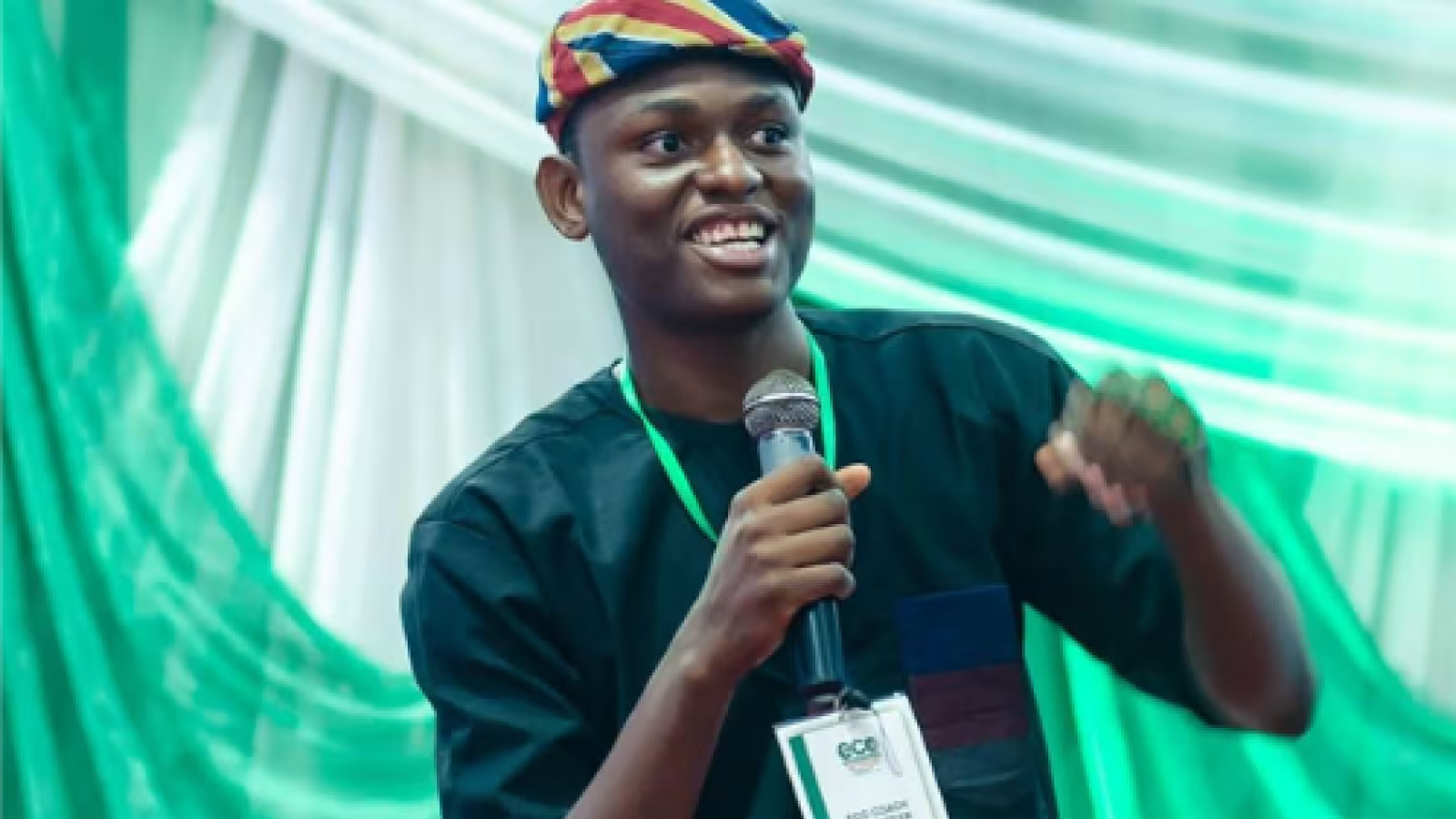
As part of COP31, we speak with Nigerian climate justice activist Ayooluwa Folakunmi Ogunsola about the relationship between the climate crisis and debt, the economic inequalities faced by countries in the Global South, the exploitation driven by fossil fuel extraction and mining activities, the struggles of communities in West Africa, and the importance of debt cancellation for climate justice.
Eren İleri: Hello. So the first question we ask everyone is: Can you introduce yourself, Debt for Climate, and the work you do?
Ayooluwa Folakunmi Ogunsola: My name is Ayolua Folakunmi Ogunsola, and I'm from Nigeria. I work with Debt for Climate. We advocate for debt cancellation. Most African countries, or even Global South countries, if I may say so, have to borrow money to be able to adapt to the impacts of the climate crisis. And so we see that the level of borrowing has increased significantly. We know that debts have been canceled in the past for other, wealthier countries. And we are demanding debt cancellation because, to be able to adapt to the impacts of the climate crisis, we need to cancel these debts. There's no way any country is going to survive if it keeps borrowing money and diverting funds from education and healthcare into debt repayment.
E.İ.: And how does that affect individuals on a personal level? We're talking about sovereign debt here.
A.F.O.: Very recently, I traveled from Guinea all the way back home to Nigeria on a West African caravan. We went through Guinea, Togo, Ghana, Benin, and Ivory Coast. We sat down with people—fishermen, farmers, and others affected by the impacts of the climate crisis—and had conversations with them.
They talked about how sea level rise, for example, is affecting a community in Ghana called Avogado. In Ivory Coast, people have to engage in local mining, which affects their health, because the government cannot provide support for them.
And education, for example: Nigeria has one of the highest numbers of out-of-school children in the world because we spend so much money on debt repayment. And this is exactly how it affects people, especially those who are most affected by the climate crisis despite contributing the least to it.
It's in everyday life. It's waking up in a house that doesn't have a roof or sometimes doesn't have proper windows because the government cannot subsidize rent for people. It's going to the store to buy food and not being able to afford it because people's wages aren't sufficient to live on, and because the policies imposed by lending institutions affect the strength of the currency.
So it's in people's everyday lives.
E.İ.: Thank you, and thank you for giving us a picture of what that means. You talked about the West African Caravan, right? What was that project?
A.F.O.: We went on a caravan. It was very, very serious. So I traveled from Nigeria. We had friends from Germany and different parts of the world, really, and we were heading to the World Social Forum.
We visited local communities. And I'm not talking about the fancy communities you see on social media. I mean real communities, where we went and talked to their chiefs, the women, the men, the farmers, the fishermen, and everyday people. We had translators when we needed translation between different languages, and we talked to them about the impacts of the climate crisis on their lives.
We wanted to have conversations with them: What impacts is the climate crisis having on you? How can we help create a declaration based on these experiences? Something that could be taken to an event like this, where there are people who can bring about change.
And so it was very difficult because it meant leaving your comfort zone, right? Sometimes we had to stay in places that weren't very comfortable, sleeping in schools, hospitals, churches, or mosques, and eating food that wasn't necessarily what we were used to.
But this is why it's important, right? It's the reason we have to do this. We have to get closer to the communities. There's such a huge gap between NGOs or civil society organizations and the communities most affected by the climate crisis.
And if we don't find ways to connect, to move from our positions at the top down to the places that are most affected, there will be a disconnect, and the solutions won't reach the people who need them most.
So, yeah, it was a tough but great experience.
E.İ.: And was this a similar idea to the Mesoamerican Caravan that happened earlier this year?
A.F.O.: Yes, it's very similar. Going to communities, talking to people, organizing actions, and meeting people.
And you know what's interesting about this? When we visit a community, the people don't want us to leave, so they join us on the caravan, right?
It's one of the best experiences of my life. It was tough, but it showed how human these experiences can be. And yeah, it was an amazing experience, very similar to the Mesoamerican Caravan.
E.İ.: Wow, that sounds like the experience of a lifetime and such a great learning opportunity, too. I want us to dream a bit. Do you like dreaming? We've canceled the debt. We've won. What does the world look like now without sovereign debt?
A.F.O.: I think when the debts are canceled, we'll have a resilient world. That's the best way to put it. We'll have a world that is able to support people. And when I say people, I mean rich or poor, Black or white, mixed-race, straight or gay, or whatever, right?
It's about being able to create a system where everybody can survive in the situation we're in. We cannot deny what's happening, right? It's right in front of us. There's no way to deny it.
And the longer we delay canceling these debts, the worse things will get because people are human beings, and they want to survive.
Once these debts are canceled, countries will be able to support their people. People will then be able to demand accountability, right? Because it's difficult to demand accountability when so much money is going toward debt repayment.
And so this is the world I envision: a more resilient world, a world that is able to support people.
E.İ.: Thank you so much. And what's the connection between debt and extractivism?
A.F.O.: Oh, tell me about it. I like to share stories because they help bring you into my world, the things I've experienced, and the places I've seen.
In Nigeria, I visited a community called Andoni and another community called Soku, where oil and gas extraction is very prevalent. Andoni was one of the first communities to experience oil extraction. One of the first, not the first.
When you visit these communities, you see the impacts of the climate crisis and exploitative extractivism. You would expect communities with oil to have access to healthcare and education, but there's nothing like that.
The schools that big corporations claim to have built are there, but they've been falling apart for years. Some were built around 2000 or 2006. Someone born in 2006 is already much older now, and children still can't attend these schools, right? These are supposedly part of the corporate social responsibility initiatives of these corporations.
There's no healthcare in these communities either. They're completely cut off from the world, as though nobody knows they exist.
Now, why am I telling you this story? I want you to understand it from the people's perspective. And now I'm going to talk about it from the country's perspective.
Before oil was discovered in Nigeria, the country was exporting agricultural products. We were doing amazingly well. We were lending money to other countries, right? We were a very wealthy country.
And then, when oil exploitation and extraction began in Nigeria, particularly exploitative extractivism, the country found itself in a situation where it started borrowing money.
And there's no two ways about it. It's very clear. Extractivism, the oil and gas industry, and exploitative mining are all centered around one system: capitalism.
And the idea of capitalism is profit-making. Capitalism doesn't care who you are or whether you want to do good or not. Capitalism cares about profits.
And in some ways, that's how this system has affected Nigeria, turning it into a country that borrows billions, sometimes trillions, of dollars while being unable to provide healthcare for its average citizens.
If you look at history, because history tells us how things have happened, right, you see a country that was developing, doing very well, and was very wealthy. Then it gains access to oil, and you would expect it to become even richer, right?
If we're looking at it from a capitalist perspective, that should be the case. But capitalism is profit-oriented and supports a particular group of countries. And the country then declines to become one of the poorest countries in the world.
So it's very clear that there's a strong connection between exploitative extractivism and borrowing money because deals are signed under certain circumstances, and they're usually not favorable.
E.İ.: Thank you so much for sharing. I'd like to leave you with one question: What would you like to say to our listeners in Turkey and around the world?
O.F.A.: Okay, I would say we should see ourselves as people. The more I travel around, meet people, and connect with them, whether at the highest levels or in local communities, rich or poor, straight or gay, Black or white, the more I realize that, at the end of the day, we're all just people.
Obviously, there are parts of the world where people are intentionally doing terrible things. But the more we see things from a human perspective, the more hope we find, because the world isn't looking so great, is it?
I think when we start to see people as imperfect but wanting to do good, we realize that if we really look at ourselves, we have a lot of imperfections, but there's also perfection. You believe in yourself, right?
And that's how we should see other people, reflecting the love, positivity, and energy we have for ourselves and spreading them around.
That's what I would say to people. And yeah, share love. It's important.
E.İ.: And hopefully, if we do that, people won't fall into debt because we won't be extracting wealth from one another. Thank you so much, Ayo.
A.F.O.: Thank you so much for having me.
Who is Ayooluwa Folakunmi Ogunsola? Ayooluwa Folakunmi Ogunsola is a Nigerian climate activist, sustainability expert, and founder of the African Climate Change Movement (ACCM). He works on climate justice, environmental education, sustainable development, and strengthening solidarity among environmental organizations across Africa. He advocates for communities most affected by the climate crisis and for stronger African representation in global climate policymaking.
COP31'de neler konuşuluyor, hangi kararlar alınıyor? Resmî müzakerelerden alternatif zirvelere, iklim hareketinin seslerinden gezegenin geleceğini belirleyecek tartışmalara, Antalya'dan gelişmeleri COP31 Özel Yayını'nda takip ediyoruz.