Image
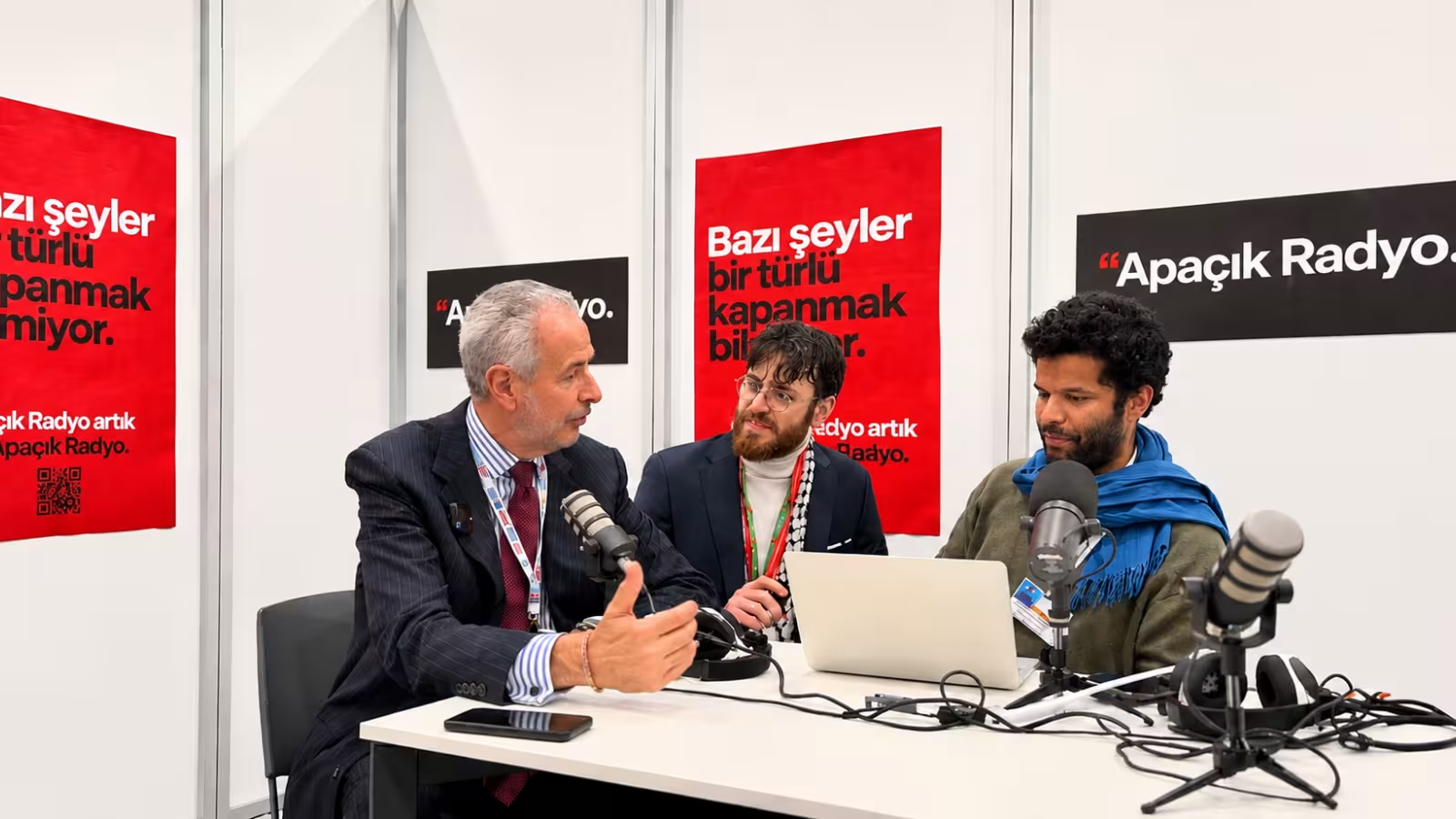
We speak with COP30 President André Corrêa do Lago about the roadmaps for transitioning away from fossil fuels and combating deforestation, the challenges of mobilizing climate finance, and the limitations of international climate negotiations. Drawing on Brazil’s political struggles, we also hear his message of hope to young people in Türkiye.
Waseem Ahmad Siddiqui: So, we are here with André Corrêa do Lago, Brazilian diplomat and COP30 President, right? I have a direct question for you. Considering that the urgency of transitioning away from fossil fuels has been recognized for years, why has Brazil waited until 2026 to establish guidelines for a national roadmap? Isn't this rather late, particularly given the country's enormous renewable energy potential and its international climate commitments?
André Corrêa do Lago: Well, in fact, it hasn't been that many years because, as you may remember, the first time the words “fossil fuels” appeared in a decision under the international climate regime was in Dubai, three years ago. So, a decision was made in Dubai to transition away from fossil fuels. Then, at the following COP, people wanted to talk about it, but they couldn't, so nobody did.
When the conference took place in Brazil, we were presiding over it, and we decided that we had to talk about it. So we included it in the Action Agenda, which we had restructured to ensure that what had been decided in Dubai would be implemented.
That was when people started talking about it. President Lula gave a speech saying that we needed a roadmap.
W.A.S.: Yeah.
A.C.L.: And so there were 80 countries that wanted it, 80 countries that didn't want it, and some countries that had no opinion. At the end of the COP, since, as you know, a decision can only be adopted by consensus, we were still very far from reaching one.
So what Brazil did was the following: We interpreted that we didn't need consensus to develop a roadmap for transitioning away from fossil fuels because we already had the mandate from Dubai.
At the closing of the conference, I said, “I commit to developing this roadmap, as well as another roadmap on deforestation,” because we were in the Amazon, and deforestation is a very important issue.
After the COP ended, we prepared those two roadmaps. We opened consultations, made numerous trips, listened to different perspectives, and received contributions from many people. And that is what we presented last week.
W.A.S.: Thank you so much. We have this really important agenda-setting work happening at COP, and the narrative has shifted, right? We're talking about transitioning away from fossil fuels. Loss and damage is at the center of the agenda. I think I've heard the term “sovereign debt” maybe a hundred times.
But we have so many issues on the agenda, and we don't have the money. There's $2.9 trillion in military spending worldwide, while the Loss and Damage Fund faces a $100 billion annual funding gap.
Who should be paying for this, and where is the money? Why hasn't it arrived yet?
A.C.L.: Well, I think one of the problems is that when we signed the agreement in Rio de Janeiro, Brazil, in 1992, we thought we would have enough money if we created funds to receive it, because we had the experience of dealing with the ozone layer, and that approach had worked.
But the ozone layer involved only one type of gas. With climate change, you have to transform the entire economy because the entire economy is based on fossil fuels.
So I think we made a very sincere attempt to establish a fund, raise money through it, and support developing countries in making that transition. But the money never came because the amounts required are enormous.
However, there is more than enough money in the world to do what we need to do. More than enough. But that money is never going to flow into a fund under the Convention.
That is why we also presented a third document on implementing the Baku–Belém Roadmap. This is the roadmap we presented last year, which established a target of $1.3 trillion per year by 2035.
And this document, which we also published three days ago, on implementing the Baku–Belém Roadmap, shows that it is possible to mobilize $1.4 trillion annually starting in 2035.
But we have to do this outside the Convention because, within the negotiations, everything becomes completely political. And when it becomes political, it divides countries, and you face the reality that consensus is required.
Outside the Convention, you don't need consensus.
W.A.S.: Very short and last question.
A.C.L.: Yeah.
W.A.S.: The far right, Bolsonaro, defeated.
A.C.L.: Yeah.
W.A.S.: And this gives hope to many people around the world. What would you say to those who are holding on to that hope? What message would you like to share with them?
A.C.L.: Look, I received hundreds of messages from friends all over the world. And the most common sentence in those messages was, “God exists.”
And I think that is very, very true because the first round of the elections in Brazil was very bad for President Lula, very bad for the party, and very bad for all the president's allies.
The president now has to face a very difficult Congress because both the Senate and the Chamber of Deputies have many members who are strongly opposed to President Lula.
But then we had a second round in Brazil because you need more than 50% of the votes to be elected president. And in the second round, it was fantastic.
In just three weeks, President Lula gained another 10 million votes, reaching 64 million votes in the second round. It was almost a miracle. But it wasn't just a miracle, because obviously God helps enormously.
There was also an amazing movement in Brazil, led by a brilliant young politician, that encouraged young people not only to vote themselves but also to bring their grandmothers, great-grandmothers, and grandfathers to the polls.
It was beautiful because these were people who were not obliged to vote. In Brazil, voting is not compulsory for people over 70. So they organized this movement and managed to mobilize 10 million additional votes. It was absolutely extraordinary.
And in Brazil, young people can start voting at 16. They don't have to wait until they're 18. If they want to, they can vote from the age of 16.
So you had young people thinking about the future and older people worried that we might end up with a terrible government led by very reactionary people who were genuinely frightening.
And they said, “We cannot leave this country in such a state for the younger generation.”
It was so beautiful. I think it was probably the most beautiful day in the lives of many Brazilians. Truly, one of the most beautiful days of their lives.
W.A.S.: And one last question: What would you say to young people in Türkiye who are losing hope, to encourage them to keep going?
A.C.L.: First of all, never, never lose hope. I think we are constantly being tested by the world, but there are far more stories in which the forces of good prevail over the forces of evil.
We don't know exactly when that will happen. We went through very difficult years in Brazil, but we must never, never, never lose hope.
And while we're waiting for good things to happen, we have to keep working and preparing for them, so that when the moment comes, everything is ready.
We cannot wait until all the conditions are in place before we start taking action. We have to fight with whatever we have available to us. And when the tide turns, everyone will be ready.
W.A.S.: Thank you so much.
A.C.L.: Thank you.
Who is André Corrêa do Lago? André Corrêa do Lago is a Brazilian diplomat and climate negotiator. He has served in Brazil’s Ministry of Foreign Affairs for many years, working on climate change, sustainable development, and international environmental policy. He served as Brazil’s Ambassador to India from 2023 to 2024. In 2025, he presided over COP30, the United Nations Climate Change Conference held in Belém, Brazil.