Image
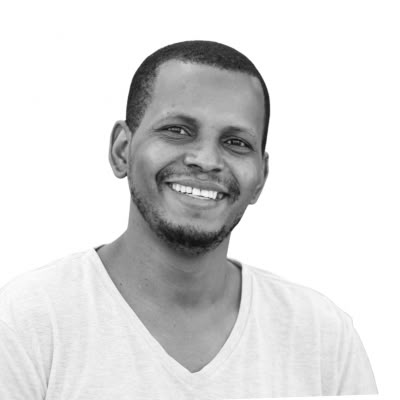
At COP31, we speak with Omar Elmawi, Coordinator of the Africa Movement of Movements, about the exploitation of Africa’s natural resources, green colonialism, Pan-Africanism and a just transition away from fossil fuels. We also explore climate finance, climate reparations and the importance of solidarity between the Global North and the Global South.
Eren Can İleri: Hello, Omar. Welcome to Apaçık Radyo. Thank you so much for being here in Türkiye. Can you start by introducing yourself?
Omar Elmawi: Thank you very much. My name is Omar Elmawi. I am an African who lives in East Africa, in Kenya, and I am here at the Conference of the Parties on Climate Change, COP31, in Antalya, Türkiye, to represent African interests within the COP negotiations and to push for Africa's issues and concerns.
E.C.İ.: What is the importance of having civil society here alongside all the negotiators?
O.E.: Civil society is important because, unfortunately, not all eight billion people on this planet are able to come to Antalya. The institutions that have been able to reach the grassroots have mostly been civil society organizations, working, talking and living within communities and understanding what is important to them and what they want to see reflected in these conversations.
That's why we're here in large numbers: to represent the interests of ordinary people in the Global Majority and ensure that their interests are represented. Governments and parties are also coming here, but sometimes there is a conflict of interest between what governments are pushing for and what is actually good for local people. We're here to ensure that there is no conflict of interest and to advocate for what is good for ordinary people and grassroots communities.
E.C.İ.: Thank you. You're the convener of the Africa Movement of Movements. Can you tell us a bit more about the work that the Africa Movement of Movements does and what your expectations are for this COP?
O.E.: The Africa Movement of Movements is essentially a platform for all Africans. About 1.5 billion Africans live on the continent. It is a space where we can come together, talk and strategize about the many struggles and issues affecting the continent.
Climate change is just one of those problems. There are issues related to food insecurity, climate impacts and gender. Many different issues are affecting the continent. The idea behind the Africa Movement of Movements is to bring together different constituencies and struggles, identify the similarities between these issues and work together towards what we are trying to achieve for the continent.
It is a Pan-African process aimed at ensuring that all Africans get a better deal, improving people's lives and ensuring that they can live with dignity and in harmony.
E.C.İ.: You mentioned that it is a Pan-African movement. What is the importance of Pan-Africanism in fighting resource extractivism and colonialism, whether in the green economy or the fossil fuel economy?
O.E.: Pan-Africanism is very important because it is about putting Africa first. It embodies the spirit of something we call Ubuntu, which means, “I am because we are.” If one person is left behind, then we cannot say that we are progressing as a continent.
Unfortunately, when you look at Africa, it is a place where people come to extract cheap raw materials. Most of these extractive activities are not intended for consumption within the African continent. Whether it is oil and gas, minerals or strategic minerals, most of these resources are extracted and transported to the Global North, where they are processed. They are then sold back to us at much higher prices.
The only things we are left with are the impacts of these activities, which affect people, nature and the climate.
For us, Pan-Africanism is very important because you cannot claim to be developing if the people living in these areas remain destitute, continue to suffer and become increasingly impoverished.
E.C.İ.: Thank you. You used to work with Decolonize Africa, didn't you?
O.E.: Yes.
E.C.İ.: Can you tell us what green colonialism is and what is happening with the critical minerals used in the transition?
O.E.: Certainly. When we talk about decolonization, there was a time when Africa was colonized, as was much of the Global South. Then we attained what we might call, in quotation marks, “independence.” However, the structures established under colonialism have remained, whether in the laws we inherited, the way we work or the people and institutions to whom we are accountable.
These structures remain in many different areas. For instance, most of the companies coming to extract resources from the African continent are based outside Africa. The same applies to the economy. If you look at major financial institutions, such as the World Bank, many of them were established during the colonial era and were therefore not created with our best interests at heart.
Part of what we are trying to do is make people realize that it does not matter whether you are told that you are free if your life is still regulated in a way that deprives you of independence. Elements of colonialism remain on our continent, and we have to work very hard to resist them.
A significant part of this concerns the extractive activities taking place in Africa. They are not intended to meet Africa's needs, ensure its energy security or strengthen its sovereignty, but rather to serve the needs of the Global North.
We have been very clear about these issues. If we are truly free as a continent, then we need to make decisions that put Africa first, rather than serving the interests of our former colonizers.
E.C.İ.: Thank you so much. What does a just transition away from fossil fuels look like for Africa?
O.E.: First and foremost, a just transition for Africa has to put African people's interests first. You cannot continue to justify energy transitions that do not support the 600 million Africans who still lack access to electricity.
It should not be about promoting gas and telling us that gas is a transition fuel when we know that the intention is to extract it and take it elsewhere, especially when we have an abundance of solar, wind and many other renewable energy options within the continent.
For us, a just transition has to be about developing Africa and improving the lives of African people. Once every African has benefited from the transitions that need to take place in energy, food sovereignty and other areas, then we can start thinking about taking resources outside Africa.
Unfortunately, even when you look at food, much of the agricultural production in Africa is not intended for consumption within Africa. We are producing what we do not consume, while importing much of what we consume from the rest of the world, including rice and maize.
We therefore need a transition that puts Africa first. Once every African's needs have been met and people can live comfortably, then we can start thinking about taking these resources outside the continent.
E.C.İ.: You used to work on the Stop EACOP campaign, if I'm not mistaken. That campaign has been very visible in the Global North, particularly in France and the United States. What is the role of North–South solidarity in the movement? And what is your message about solidarity to future climate activists who might be listening to you, whether from the Global North or Türkiye?
O.E.: I think solidarity is extremely important because the different actors involved in the problems we face often come from all over the world.
The Stop EACOP campaign emerged because we saw that the company involved in the project, TotalEnergies, is based in France and is working with the governments of Uganda and Tanzania to build the world's longest heated crude oil pipeline. It stretches for more than 1,000 kilometers from western Uganda to Tanzania, simply so that the oil can be loaded onto ships and transported to the rest of the world.
Solidarity was important to us because, particularly in the Global South and in many African countries, accountability mechanisms are not necessarily guaranteed. Even if you pursue the different options available to you, including taking legal action, our institutions are often not sufficiently independent, and you do not always obtain the remedies you seek.
However, this was a very expensive project. At the time, they needed more than $5 billion, and the cost kept increasing. They needed resources from different actors, not just TotalEnergies. They also needed the involvement of other financial institutions, as well as insurance and reinsurance.
This was helpful because we were able to reach out to comrades, colleagues and friends from around the world, particularly in the Global North. We were able to work with our friends in France to target TotalEnergies and take legal action highlighting the project's harmful climate and environmental impacts.
We were also able to work with colleagues in countries where financial institutions were being approached, including the African Development Bank, the World Bank and other banks in Germany, France and elsewhere.
Many of these financial institutions and insurance companies had already made climate commitments, stating that they would not be involved in projects that would exacerbate the climate crisis. We were therefore able to approach them and put pressure on them to ensure that the project did not receive the financial resources it needed to proceed.
Even if the project receives all the necessary licenses in Uganda and Tanzania, it cannot proceed without financing and insurance. Working in solidarity with all these colleagues was extremely helpful.
Another important aspect of solidarity concerns the significant human rights violations taking place on our continent. Sometimes, solidarity was a way of protecting our colleagues in these countries. If they needed to speak out about an issue but feared reprisals from institutions or the state, we relied on the solidarity of our colleagues abroad.
This helped save lives and protect the freedom and safety of many of our colleagues back home.
Finally, international solidarity also helped restrain our governments. Our governments do not always care about what is happening within our countries, but they do care about how they are perceived internationally. Having the solidarity of colleagues on the international stage provided protection and prevented considerable harm to our colleagues back home.
E.C.İ.: What happens if you protest against EACOP in Uganda?
O.E.: Most of the people who protested were arrested. They spent a great deal of time in court. Although no one has been sentenced to prison, if you spend an entire year repeatedly appearing in court, even if you are eventually released, that is a whole year of your life lost.
Normally, when you are facing criminal charges, you cannot even travel. Your life comes to a standstill, affecting every other aspect of it.
This has had a significant impact on people, not to mention those who have experienced violence, torture and other forms of abuse.
For instance, one of the organizations we worked very closely with in Uganda is called AFIEGO, the Africa Institute for Energy Governance. Around eight members of its team were arrested.
One of them was a mother who had recently given birth. Her baby was less than two months old. The mother, who was simply doing financial work, was detained while her baby was at home, depending entirely on breastfeeding for nourishment.
She was detained for two or three days before she was able to return to her child.
These actions affect not only the people on the frontlines but also their families and those who depend on them on a daily basis. The impact is significant.
However, the other side of this is that if remaining silent means having to live with this project for the next 20 years, some people decide that it is better to risk their lives now to ensure that they and those who depend on them do not have to live in a society severely affected by the project for the foreseeable future.
E.C.İ.: You talked about stopping the financing of harmful projects, but another major conversation taking place at COP concerns how we finance adaptation and loss and damage.
Alongside that, there is a broader discussion about the historical significance of debt and how much of this financing should come in the form of grants rather than loans that will keep countries dependent on the Global North and require them to continue making payments to it.
Could you tell us a bit about what we might call the positive side of financing, particularly climate finance for adaptation and loss and damage?
O.E.: Definitely. Financing is the backbone of making everything happen. We could come here and agree that we need adaptation, mitigation and all the other measures necessary to achieve climate action. But if we do not provide the resources and means of implementation, it is like trying to build skyscrapers in the air.
That is why I appreciate that the African Group of Negotiators, its chair and African countries have been very clear that we need to have a discussion about finance. We have to ensure that people have access to financing.
The reality is that most of the climate impacts affecting Africa and much of the Global South are not the result of their own actions. Our historical carbon emissions are minimal, and therefore we should not be expected to use our own budgets to address these issues.
It is unfair to expect Nepal or African countries to deal with floods, landslides and other disasters using their own money when they have not caused the problem we are facing today.
It is encouraging that, at least for now, there is no major disagreement over the agenda. It seems that they will agree on it fairly quickly today. Unless things change, there appears to be an agreement that there will be a discussion about climate finance and what it should look like.
However, we know that, first, what is being promised is not enough and, second, it is not being delivered. People are making promises but failing to fulfill them.
We are hearing representatives of countries in the Global North saying that they do not have money for this. Yet, the last time I checked, governments were spending more than $3 trillion on military and defense expenditure. They are spending enormous amounts of money on wars and have spent more than $7 trillion on fossil fuel subsidies. And yet they keep saying that there is no money for climate action.
Clearly, there is money. The question is how we prioritize its use. That is why this conversation is so important.
I am hopeful because, at least, the discussion is taking place. Hopefully, we will make some progress towards securing these much-needed resources.
E.C.İ.: Thank you. One particularly interesting way of framing this issue that I have heard over the past few years is to talk about climate finance in terms of reparations: reparations for colonialism and reparations for climate harm.
Could you explain what reparations are, for those who may not be familiar with the concept, and what they might look like in practice?
O.E.: In simple terms, reparations are about making someone whole again. An injustice may have been inflicted upon someone, and reparations involve taking the necessary measures to restore them, or at least return them to the position they were in before the harm occurred.
Some of the existing demands for reparations concern colonialism. People have been calling for reparations for resource extraction, slavery and other historical injustices.
Now, there is a growing conversation around climate reparations. People are saying that it is unfair to expect the Global South to continue paying for climate action when it has not caused the problem we are facing, while the Global North has caused the climate crisis and benefited from the processes that created it.
What they are saying is that the cost of any climate interventions we need to undertake should be borne by those who owe us that climate debt.
It should not be about negotiating or obtaining loans to take climate action. It should be about receiving grants because this is a debt.
When you owe someone a debt, you should not impose conditions on how you are going to repay it. Your responsibility is to give that person the money you owe them.
That is what the conversation around climate reparations is about. We are seeing more and more people speaking out about it, primarily from the Global South, but we are also increasingly receiving support and solidarity from colleagues in the Global North.
E.C.İ.: Thank you so much, and thank you for taking the time to speak with us. My very last question, which is one of my favorite questions to ask people, is this: Is there a question you wish a journalist would ask you but that you are never asked? And what would your answer be?
O.E.: I do not think there is necessarily a question I wish every journalist would ask me, but I always try to remain grounded in what I am trying to achieve.
I think it is important to understand what motivates someone to become involved in these conversations.
Not many people know this, but my background is in law, and I could be making a lot of money working for law firms or other legal institutions.
However, I am doing this work primarily because I understand the immediate threats we are facing and because I know that most of the communities I work with and come from do not have a voice to raise these issues.
I also have two young daughters who depend on me and look to me to provide them with a world that is good and beautiful, rather than one that threatens their lives.
That is primarily why I do this work, and it is something I try to remind myself of whenever we are having these discussions, particularly when things become difficult and I feel like giving up.
You need to know what you are fighting for and what is important.
The same applies to journalists. It is important for them to understand why they do what they do. It is not necessarily just about the news itself, but also about how these issues affect them personally and the people back home who depend on them.
E.C.İ.: If you don't mind me asking, how old are your daughters?
O.E.: I have two daughters. They are eight and six years old.
E.C.İ.: Masha'Allah. May they grow up in beautiful times. Omar, thank you so much for being here, for sharing your voice and for your advocacy.
O.E.: Thank you for having me. Hopefully, we will have something to celebrate when these two weeks are over. Insha'Allah.
Who is Omar Elmawi? Omar Elmawi is an environmental lawyer, human rights defender and climate justice activist born and raised in Lamu, Kenya. He is the Coordinator of the Africa Movement of Movements. He previously coordinated deCOALonize, a campaign opposing coal-fired power plant projects in Kenya, and Stop EACOP, a campaign aimed at halting the East African Crude Oil Pipeline. Fighting against the exploitation of Africa’s natural resources, Elmawi is known for his work on Pan-Africanism, energy sovereignty, a just transition away from fossil fuels, climate reparations and the rights of local communities.