Image
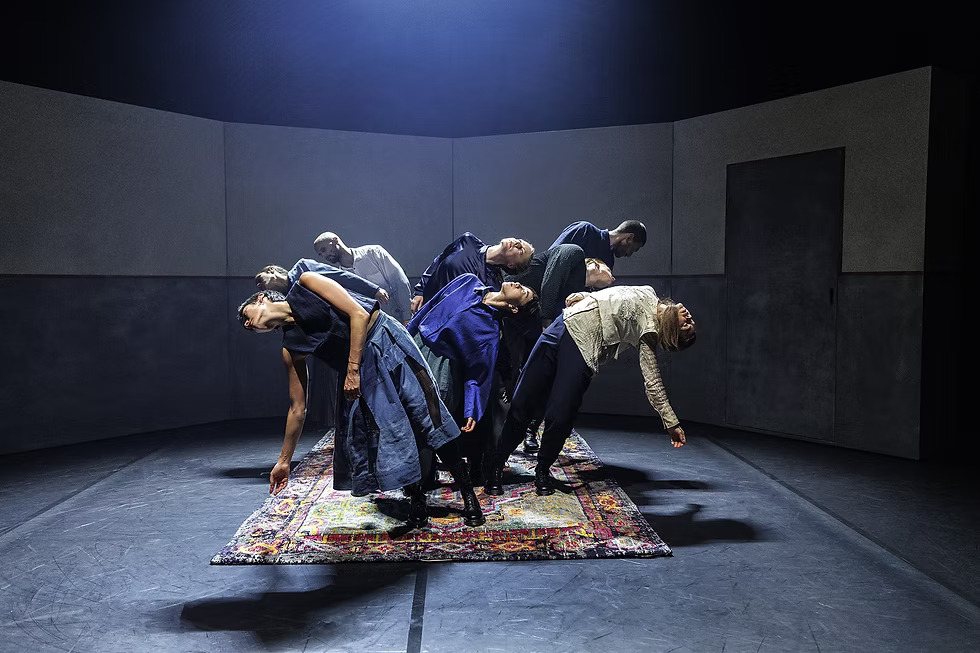
Inspired by the paintings of Vilhelm Hammershøi, Brazilian-born choreographer Fernando Melo’s Leaning Tree explores the forces that shape us, the boundaries between what is visible and hidden, and the fragile balance between stability and collapse. Originally commissioned by Danish Dance Theatre, the work was reimagined with MDTistanbul for the 30th Istanbul Theatre Festival, in collaboration with the Istanbul State Opera and Ballet. We spoke with Melo about the creative process, the relationship between bodies and space, and why he believes going to the theatre is an exercise in empathy.
İlksen Mavituna: Let's start with the title, Leaning Tree. It brings to mind a tree bending towards something, perhaps trying to reach or communicate with it, or withstand an external force. But a leaning tree can also be on the verge of falling. What does this image mean to you, and where did the idea for the piece begin?
Fernando Melo: In the creative process, there comes a point when, for various reasons, you need to choose a title. To me, it feels a little bit like naming a baby before you've seen the baby.
I was already two or three weeks into the creation when I started looking for a metaphor that could express how external things shape us: our thoughts, our feelings, the people in our lives, and sometimes the things around us, like our devices. All these external influences shape who we are.
The metaphor I found was a leaning tree, physically shaped by its environment. And, as you said, it can reach a point where it might collapse, or become completely crooked, yet still hold on to its roots to stay alive. I felt this was a good metaphor for the ideas we were exploring in the studio.
I wanted to start with something very basic and human: our feelings and emotions, and how they shape us. We explored what lies inside us and the façade we present to the world — what we allow others to see.
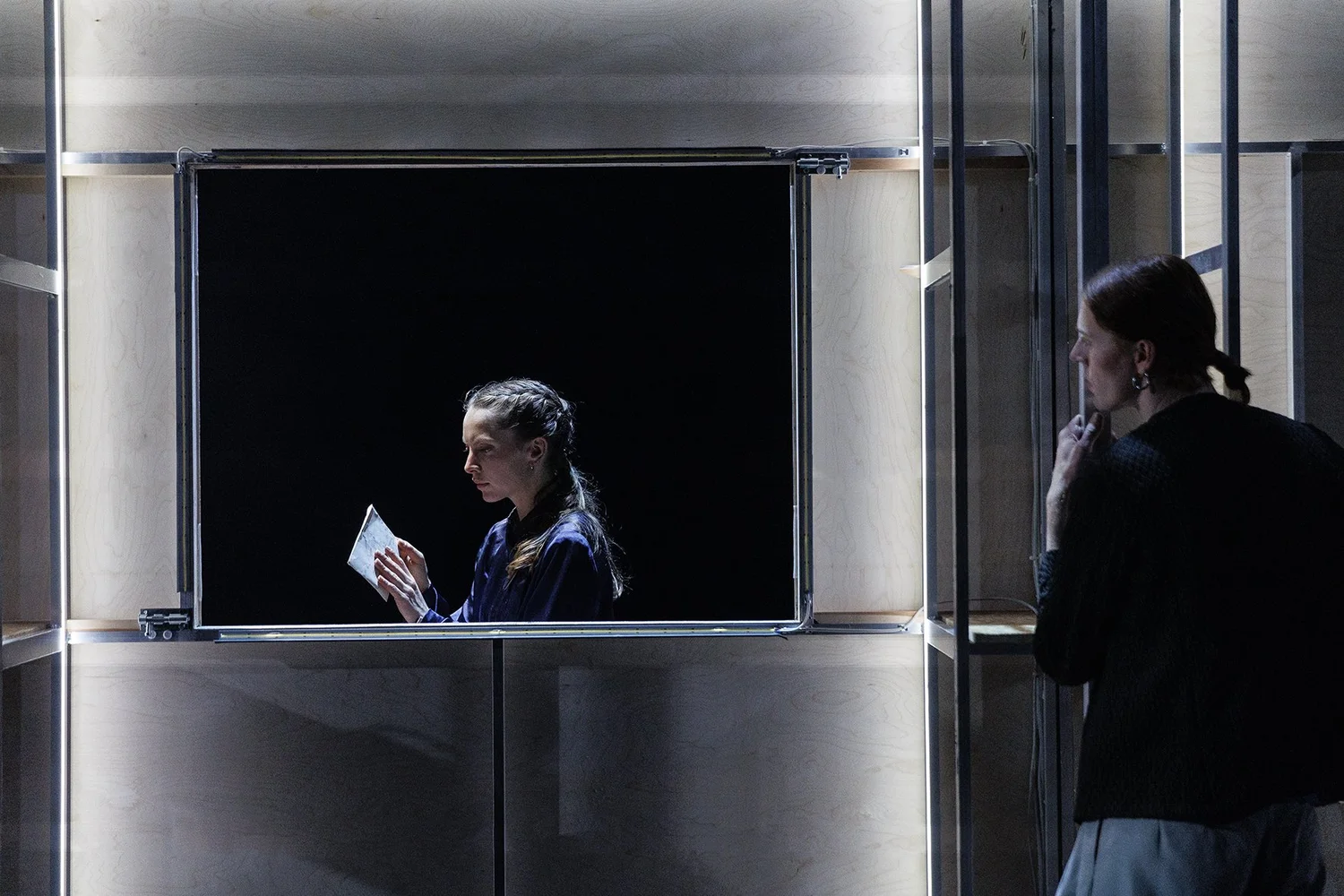
That idea also influenced the scenography. I started designing at home, cutting paper and building models of a structure that would allow me to show two sides of something: what happens in front and what happens behind.
As you saw in the performance, there is a wall that is choreographed beautifully. It dances. It's almost the protagonist of the piece. Who would have thought of a dancing wall? I love working with scenography. The wall allowed us to explore the façade — what you see on the outside and what's actually happening inside.
İlksen Mavituna: Vilhelm Hammershøi's paintings seem to offer more than a visual reference. There is a sense of isolation, distance from the outside world, and of being simultaneously visible and invisible. What was your encounter with his work, and how did it influence Leaning Tree?
Fernando Melo: I've been a fan of his work for many years. I first discovered his paintings online, then went deeper into his work. Eventually, I remember making a trip to Stockholm because I wanted to see his paintings in person. I walked for two hours to reach a museum in a park, because I needed to experience them live. It's different when you're standing in front of a massive painting. You learn so much more about the artist's work.
As an artist, I think it's important to keep your well of ideas filled. You're always walking around with your antenna switched on, looking for things that inspire you.
When I began designing the scenography, I needed images to communicate with everyone involved in the process. I was looking for a painting or a colour that could influence the appearance of the stage, and Hammershøi came to mind. His work was probably the Danish art I knew best.
Looking through his paintings again, I found exactly what you described: a sense of mystery. That was the atmosphere I was looking for. He often paints people with their backs turned to the viewer, surrounded by mysterious interiors.
I also wanted the audience to be able to relate to the feelings and emotions in the piece. These things happen in familiar places: in a room where you have a difficult conversation with your wife, where you think, or where you receive a letter bringing bad news. So the work needed to take place indoors, in a world that felt like Hammershøi's.
What's beautiful is that, once the piece was performed in Copenhagen, people who knew his paintings well would come up to me and say, "Oh my God, it looks exactly like this painting!" Or, "That woman looks exactly like the woman in that painting." I went back, watched the video and compared it with the paintings. They were right.
Without consciously trying to reproduce his work, we had recreated that atmosphere in our own way. You can trace the inspiration back to him, and I think that's beautiful about art: we build on the shoulders of others, creating our own worlds from what has inspired us.
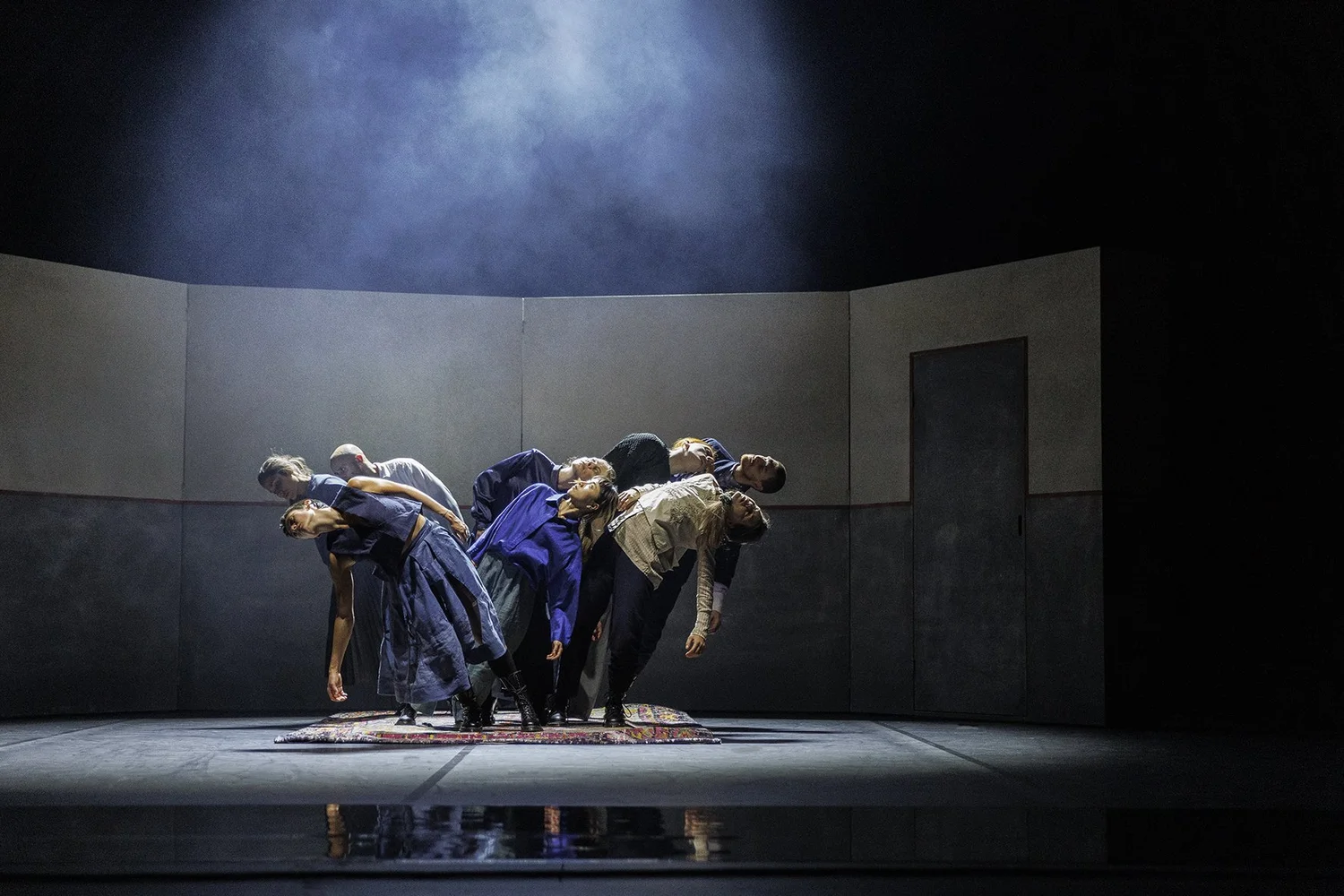
İlksen Mavituna: Yet I felt there was something more in your work than a recreation of Hammershøi's atmosphere. From the audience's point of view, we can see the inside and the outside at the same time. The distinctions between them seem to collapse. Rather than creating a claustrophobic space, the piece produces a kind of vertigo, as we try to follow the movement through the different spaces. At what point did your work move beyond Hammershøi's world — or did it?
Fernando Melo: I think that when you surrender to a creative process, it starts to have a life of its own. Through experience, I've learned not to interfere with that too much.
As I said, we're constantly creating scenes and exploring ideas. In that process, beautiful things happen that I hadn't even imagined were possible.
There are illusions in the piece, for example. I've read reviews describing them as magic tricks, but I never set out to create illusions. They're discoveries we make along the way. You try something and suddenly realise that, if you do it in a particular way, something disappears. And you think, "Okay, it makes total sense that this person needs to disappear here."
That's what I find beautiful about the creative process. You surrender to it, and it takes you somewhere you didn't know you could go. The work develops a life of its own, through the artists working together in the studio.
İlksen Mavituna: Let's talk about the next stage of the work: your collaboration with MDTistanbul. The dancers were extraordinary. At times, I could hardly believe what I was seeing. Was it a surprise to encounter this new version of Leaning Tree with the Istanbul dancers? How did the collaboration develop, and how did it compare with the original production?
Fernando Melo: It was a surprise, actually. I hadn't worked in Turkey before. When you work in Europe, you often have some idea of an artist's background: the schools they've attended, the choreographers they've worked with, the experiences they've had. Even if you haven't worked with them yourself, you have a sense of what they might bring to the studio.
Here, it was a completely blank page. We walked into the studio, and I thought, "Who are these people? What are they capable of? What are they going to do?"
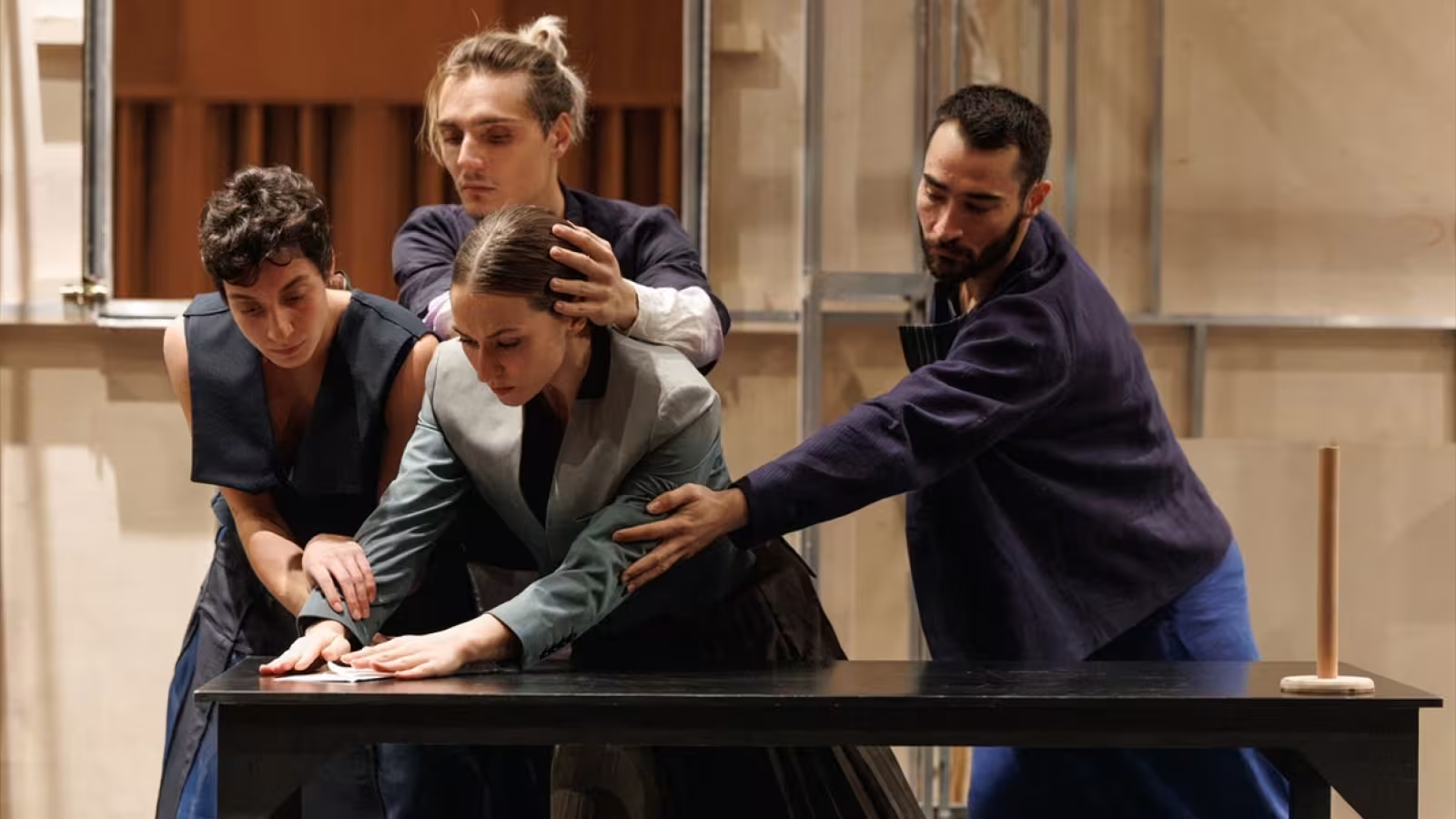
I was really blown away by them. They were so interested in the work, so dedicated and motivated, and they had a brilliant attention to detail. That's particularly important for this piece because it's technically very, very complex.
What's beautiful for a choreographer is watching how the dancers' interpretation of an existing work completely changes it. It's also my responsibility not to force anything from the previous version onto them. If anything, my role is to guide and inspire them to interpret the work and make it their own.
That came very naturally here because they were so inspiring to me. It was a back-and-forth process: they inspired me, I inspired them, and together we achieved a brilliant result.
Watching this version now, I love it even more. You get to revisit the work and see it gain a completely new life through new dancers, new ideas and new proposals. It's another level.
İlksen Mavituna: We should also acknowledge the festival team's role in bringing this collaboration about. The idea was not simply to present an international production, but to work with local dancers and leave something behind here. How important is that kind of initiative to you?
Fernando Melo: I think it's a brilliant initiative on the festival's part. A festival's job is to curate a programme and bring amazing works from Turkey and elsewhere to its audiences. But here, the idea was also to work with local artists and build something with them — to leave the work, the experience, the sweat and the tears here, and allow audiences to experience it through local performers.
I think that's wonderful, and the result was fantastic. I really hope they do it again, because there is so much potential here, both with MDTistanbul and with the opera and ballet.
It was a very positive experience, and I hope it was the same for the audience.
İlksen Mavituna: During the festival, you also gave a lecture. What did you want to share with the audience?
Fernando Melo: When I was invited to give a workshop, a talk or a lecture, I thought it would be a good opportunity to share some knowledge. I prepared it by asking myself: if I were a 20-year-old Fernando, living and working in Istanbul, what would I want to hear from the older Fernando?
I wanted to share my experiences of art and talk about why we do what we do. I think that's really important. If you're able to articulate your purpose — why you wake up in the morning and go to the studio, why you keep doing this even when there's no money, and how you find the money to keep going — that matters.
I wanted to share my experience and the thinking behind my work, rather than simply showing people how impressive my pieces are. How do I arrive at an idea? How do I find inspiration? How can other people do the same?
I wanted to give people something to take home and think about, whether they're choreographers, painters, other kinds of artists or simply curious audience members.
İlksen Mavituna: You mentioned that theatre has an important role in society. What do you think that role is, particularly in the world we live in today?
Fernando Melo: I think theatre has a really important role in society. When you go to the theatre, you sit in a dark room with a community of people who have come together for that experience. They've bought tickets, perhaps gone for a drink beforehand, got dressed up and made plans. They've put their devices away — hopefully — and they're sitting there for an hour to watch whatever you have to tell them.
There's a lot of responsibility in that.
I'm not saying that artists have to be imams or priests, or that they have to preach a message. You put yourself on stage as a human being, with your feelings, emotions and experiences, and people relate to that. I think that's beautiful.
Most importantly, when you're in the audience, you're observing another human being. You switch off your device and watch someone for an hour. You get to put yourself in that person's shoes and experience a different perspective.
In a way, you're exercising empathy. You're practising what it means to be someone else.
My hope is that when you leave the theatre and return to the real world, you've practised that a little. Perhaps you're more tolerant, more understanding of a situation that isn't your own.
I like to think that this is why I make art, and what inspires me to keep doing it. Whatever work we're putting on stage, wherever in the world we're doing it, I hope people are exercising empathy — and taking that experience back into their own lives.