Image
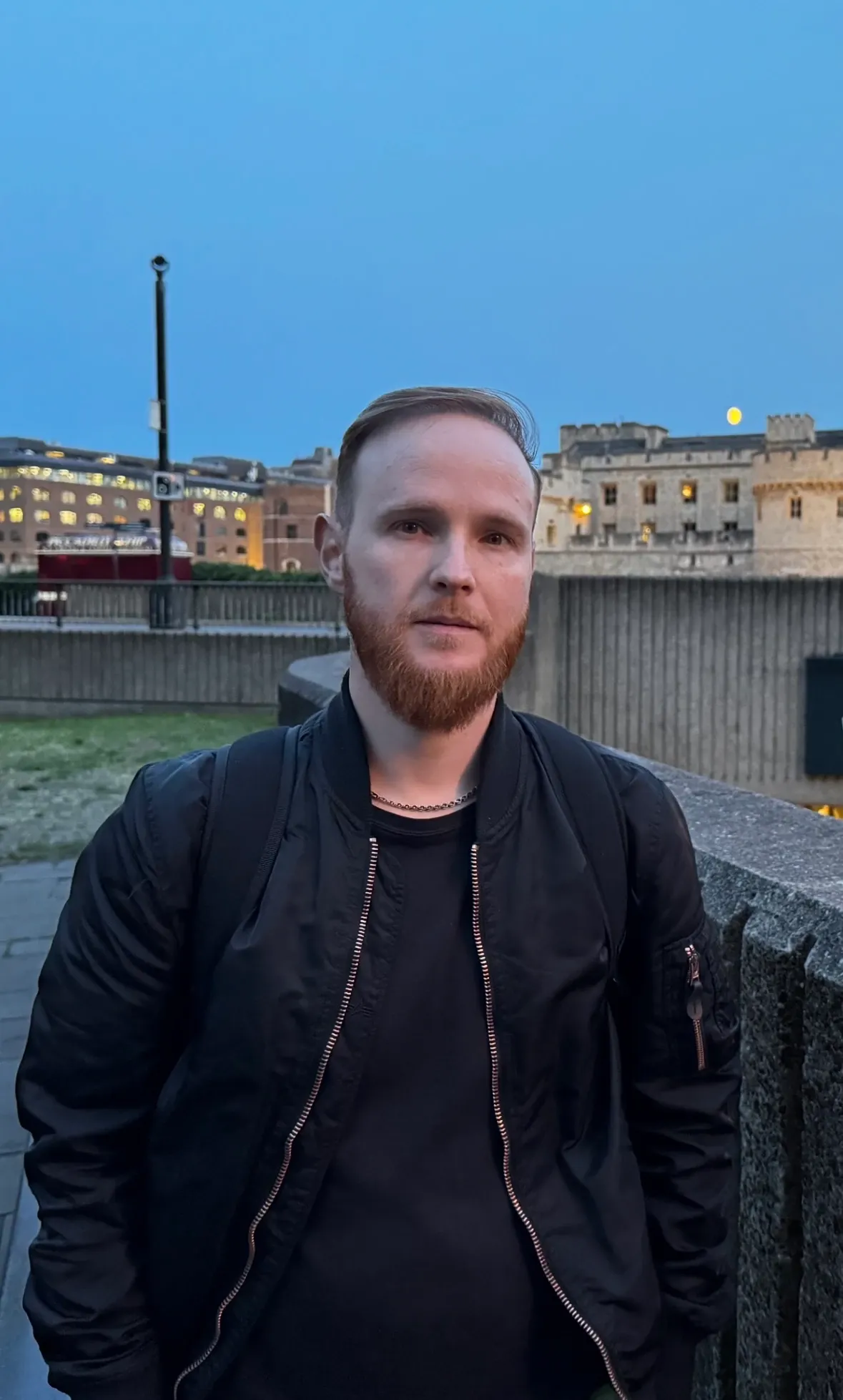
As part of COP31, we speak with Ukrainian socialist and trade union activist Artem Tidva about the relationship between Russia’s invasion of Ukraine and fossil fuel policies, the ecological devastation caused by the war, threats to workers’ and trade union rights in Ukraine, and post-war reconstruction. We also explore the importance of the struggle for energy democracy, public ownership and a just transition.
Özdeş Özbay: Today, we are joined by Artem Tidva, a socialist and trade union activist from Ukraine. We are at the TUED Energy Democracy Conference, one of the alternative summits organised in Antalya as part of COP31.
I would like to begin our conversation with the relationship between the war and fossil fuels. When Putin launched the invasion, he claimed that Ukraine historically belonged to Russia, that no such country had ever existed, and, if I remember correctly, that Lenin had created Ukraine. Much like Israel claiming that Palestine and Palestinians do not exist.
On the other hand, fossil fuels are one of the main driving forces behind this war. Alongside the enormous loss of human life in Ukraine, there is also massive ecological destruction, even ecocide. Could we elaborate on the relationship between Putin’s war and fossil fuels?
Artem Tidva: Yes. Putin’s dictatorship is one of those fossil fuel dictatorships that profit from creating disasters. Historically, it has created a system in former Soviet countries such as Ukraine, Armenia, Georgia, Moldova and others that leaves people with no alternative but to work abroad.
In Armenia, for example, Russian capital is so powerful that they bought up industrial enterprises and prevented local companies from developing. In Ukraine, they attempted to do the same before the full-scale invasion. At the time, we had a term called the ‘oil and gas war’. They tried to acquire certain oil and gas resources in Ukraine without developing them. When these facilities are not maintained, water can enter them, potentially causing ecological disasters. This happened several times, but the government intervened.
So, even before Russia’s full-scale invasion, there was a process that we referred to as the ‘gas war’. Russia applies this predatory capitalist model to all our countries. In Georgia, for example, part of the country’s territory is occupied by Russia. In Moldova, Transnistria is controlled by the Russian army. In Ukraine, the Donetsk and Luhansk regions, as well as Crimea, were annexed.
All of this forced millions of people who had previously lived in these areas to leave. None of these so-called republics received international recognition. Transnistria in Moldova, Donetsk and Luhansk in Ukraine… None of them were recognised because they are Russian puppet regimes. South Ossetia in Georgia is similarly an undemocratic regime entirely controlled by Russia.
However, this provides Moscow with a source of cheap labour. You have probably heard about Ukrainian, Moldovan and Tajik construction workers in Russia. They are the ones who built Moscow and other major Russian cities. This is part of the model Russia practises.
Imperialist war is the ultimate outcome of the capitalism they practise. Military intervention is an integral part of their capitalist model.
Ö.Ö.: In Russia, anti-war movements, particularly environmental movements and groups such as Fridays for Future, were not very strong, but they were brave enough to take to the streets against Putin when the war began. However, the regime immediately suppressed these movements using brutal force.
How did the Ukrainian working-class movement view Zelensky’s government before the war? And how does it view Zelensky and the Ukrainian resistance today?
A.T.: That is a very complex question. Unfortunately, Zelensky is not a member of any trade union or socialist group. He comes from the business world, and we can say that he has a neoliberal approach. Having come from the media industry, he serves the interests of the business group to which he belongs.
However, the war put him in a position where he could either flee or resist, and he chose to resist. That earned him the respect of the people because he did not flee; he stayed in the country. He tries to present himself as someone with good intentions, but the way he implements his policies does not always produce the results he hopes for.
When he was elected in 2019, many people voted for him because of the progressive promises he made during his election campaign. He claimed that he would resolve the military conflict with Russia. He even said, ‘Even if I have to resign as president, even if I become unpopular, I will do it.’
At the time, neither he nor we knew that Russian capitalism had other plans. They do not want peace because this state of tension is inherent in Russian capitalism, particularly its extractivist capitalist model. So, this process has been difficult for him as well.
However, as I mentioned earlier, he is not a friend of the working class. Zelensky’s government has tried to deregulate labour laws during the war. Even before the full-scale invasion, some politicians on his team attempted to make dismissals easier and dismantle trade union rights. Ukrainian trade unions, however, were not prepared to give up these rights so easily.
Martial law imposes restrictions on strikes and public protests. Nevertheless, Ukrainian trade unionists continue their struggle during the war. In recent weeks, we held a large trade union demonstration in Kyiv against new legislation undermining occupational health and safety.
Unfortunately, the legislation was adopted, placing some of the responsibility for workplace safety on workers themselves. It is scheduled to come into force six months after the full-scale invasion ends, which we see as a major risk.
Historically, there is a concept known as the ‘post-war economic boom’. After the Second World War, economies were boosted by substantial investment in public services and welfare states. However, there is also the risk of a post-war economic depression, something we have seen in many countries.
Ö.Ö.: Particularly after the First World War…
A.T.: Yes, after the First World War.
Ö.Ö.: …which led to the rise of fascism.
A.T.: Absolutely. And in Ukraine, we are concerned about what will happen after the war. Hundreds, thousands of people have been injured in the war.
Ö.Ö.: Do you know the actual figures? How many people have died?
A.T.: No, these figures are not publicly available.
Ö.Ö.: They never are.
A.T.: Yes, but some things can be calculated. I know the number of people who have acquired disabilities. I do not know whether these figures have been officially released, but we are talking about hundreds of thousands. Before the war, the number was much lower in Ukraine.
Now, hundreds of thousands of people are unable to care for themselves. Some have lost a leg or an arm, while others have suffered severe injuries and can no longer work. These people need social protection, state-supported rehabilitation and reforms in the labour market. However, I do not see any of these measures in Zelensky’s programme.
Ö.Ö.: We are here at the Energy Democracy Conference. As a Ukrainian trade unionist and socialist, what made you decide to attend this alternative conference organised as part of COP31? What brought you here?
A.T.: Let me continue by partly addressing the ecological destruction Russia has caused in Ukraine.
There are more than five million internally displaced people in Ukraine as a result of the war. It is also estimated that between five and seven million people have lost their homes due to the occupation, the war and shelling. Nine of the 24 regions of our country, which has a population of 40 million, are within the war zone.
We have met many people who have been internally displaced, become refugees or been forced to leave the country because of the war. My hometown, Khmelnytskyi, also hosts these people. The city, which is relatively far from the war zone, is named after Bohdan Khmelnytskyi, whom you may remember from history.
I met refugees and internally displaced people in this city. We converted some of our trade union facilities into accommodation centres to host them. During the first year of the war, we were unable to organise trade union training sessions, so we turned these facilities into places where people could stay.
When I asked one of the displaced people how I could help her, a woman with two children asked me to take her to a forest. In Mariupol, where she came from, all the forests had been destroyed and the wooded areas had been mined. Forests along the front line were particularly targeted because they were places where soldiers could hide.
Ö.Ö.: Yes, because they hide there.
A.T.: Imagine these regions where millions of people live. They consist mainly of steppes and forests. Much of the forested area is filled with mines. As a result of drone attacks and fighting, many forests have been completely burned down. This is a huge catastrophe.
You have probably also heard about the Kakhovka hydroelectric power plant and the Kakhovka Dam in the Kherson region. Russian soldiers reportedly destroyed the dam during the fighting in the area. When the dam was destroyed, enormous quantities of water flooded the surrounding areas. Some towns became uninhabitable, many villages were submerged, and people were forced to leave their homes. This is the ecological destruction they have caused.
I have not even mentioned the missiles flying through the sky, the fighter jets sent to bombard Ukraine every night, the drones that explode or those that remain unexploded on the ground and could detonate at any moment. I hope no one gets hurt, but unfortunately, someone probably will one day. All of this also has an enormous ecological impact.
The seas have also been mined. Mines have been laid to prevent ships from passing through, which is another major catastrophe in itself.
It is absolutely hypocritical to host a country like Russia, which is effectively committing genocide. They are adopting many children from occupied territories and indoctrinating them, which is also an element of genocide.
They prohibit the use of the Ukrainian language in occupied territories and force people to obtain Russian passports. They did this in Crimea even before the full-scale invasion. They prevented people from accessing public services. Until 2022, if you did not have a Russian passport in Crimea, you could not send your children to school or go to hospital yourself. These were the conditions under which people were forced to live.
Now, people are being abducted in occupied territories. Thousands of people are missing, and all of this must stop. United Nations member states should not ignore this situation. The war is already in its fifth year, and many countries are simply allowing it to continue.
Russian oligarchs’ money is still held in Swiss banks. Belgium-based Euroclear also holds and manages the assets of the Russian central bank. Many Russian oligarchs have purchased expensive properties along the coasts of the United Kingdom, France, Italy and Spain.
If you go to Kaş, not far from Antalya, you can see ultra-luxury yachts flying European and Russian flags. I saw a yacht flying a Russian flag, and I find that unbelievable. It is like seeing a yacht flying the flag of Nazi Germany. It is incomprehensible that these yachts can remain there without anyone intervening or even asking for the flag to be removed.
These wealthy individuals and fossil fuel dictators corrupt people to such an extent that no one takes any action against them. They corrupt politicians and the media. They are also behind numerous media outlets.
There have been several scandals involving connections between Putin’s administration and far-right groups in Germany, France and other countries. They even have connections with some left-wing groups. Because of their opposition to the United States and NATO, these groups refrain from criticising Russian imperialism.
Consequently, there are still unreliable actors on platforms like this who remain susceptible to Russian influence and manipulation.
Ö.Ö.: Finally, I would like to ask why you decided to attend the Energy Democracy Conference. What are your expectations from this conference?
A.T.: It is wonderful to see different struggles coming together here. First and foremost, I am here to learn what is happening in different countries, how capitalism operates, what alternatives trade unions can propose and how our comrades from different countries analyse the current situation.
I see many similarities in the way capitalism operates through different forms of ownership. Private ownership of energy companies is undoubtedly harmful to both the climate and our economies. Moreover, this system lacks transparency, while the rich continue to get richer.
As we have seen with Elon Musk, who attempted to interfere in elections in the United States, the super-rich make no positive contribution to the economy. Tax and revenue authorities are unable to properly monitor profit shifting and so-called tax optimisation practices. Meanwhile, the number of people living in poverty, experiencing homelessness and suffering from hunger continues to grow. I believe this system is unacceptable.
It is valuable to come together here with people who agree that this system cannot continue and who want to find solutions together. We need to find solutions and cooperate. I am here to meet comrades from different countries and listen to their analyses.
However, COP31 is not the only major gathering that brings together people from different countries. As a Ukrainian, I also follow the reconstruction and recovery plans developed by the Ukrainian government. Many European countries claim to support Ukraine, but very few actually take concrete action.
As part of these plans, leaders from different countries gather annually at the Ukraine Recovery Conference. The Ukrainian government attempts to present its vision of the destruction caused by the war, the fragility of peace and what needs to be done during the reconstruction process. However, I see a lack of meaningful participation by workers’ movements and civil society in these processes.
I came here to explore how we can cooperate with other progressive initiatives and what alternatives we can propose in our own country to rebuild Ukraine in a just, progressive, socially responsible and people-centred way.
COP31, however, is a very business-oriented platform. Today is 13 November, the day dedicated to energy. From what we have heard from participants, the agenda is largely shaped by business interests. If you look at the programme, you will also see that green climate investments are a major focus. In other words, they are talking about investments in private companies.
Private companies lack transparency. We see how super-rich individuals like Elon Musk corrupt governments to ensure that policies serve their own financial interests rather than benefiting the environment.
Ö.Ö.: That is precisely why the theme of this conference is ‘Public Pathways to Energy Democracy’.
A.T.: Yes.
Ö.Ö.: Most activists support electrification. However, they advocate achieving it through public policies rather than through the private sector.
A.T.: Yes, and it is also important to emphasise the concept of energy poverty. Energy poverty cannot be eliminated by private companies. We see this in African countries. New plans to electrify Africa are announced every few years, but many of them end up being associated with corruption.
The resources and the money are there, yet the plans are repeatedly postponed. Some investment companies help others steal this money instead of providing electrification and eliminating energy poverty.
Ö.Ö.: Today, we have been speaking with Artem Tidva, a Ukrainian socialist and trade union activist. Thank you for joining us.
A.T.: Thank you for having me.
Who is Artem Tidva? Artem Tidva is a Ukrainian socialist and trade union activist. He campaigns for workers’ rights, energy democracy and public ownership, and works to oppose Russia’s invasion of Ukraine and address the ecological devastation caused by the war.